SOMA did something I did not expect a horror game to do. It made me feel genuinely terrible about decisions I had no real choice in. Not guilty in a narrative way, but philosophically rattled in a way that stuck around for days. The game is set in an underwater research facility, and the horror is not the monsters, though those are unpleasant enough. It is the question the game keeps posing about what you actually are, and whether that matters. No combat to hide behind. Minimal player agency in the scenes that hurt most. If you want a horror game that leaves a mark on how you think rather than just how you sleep, this is it.
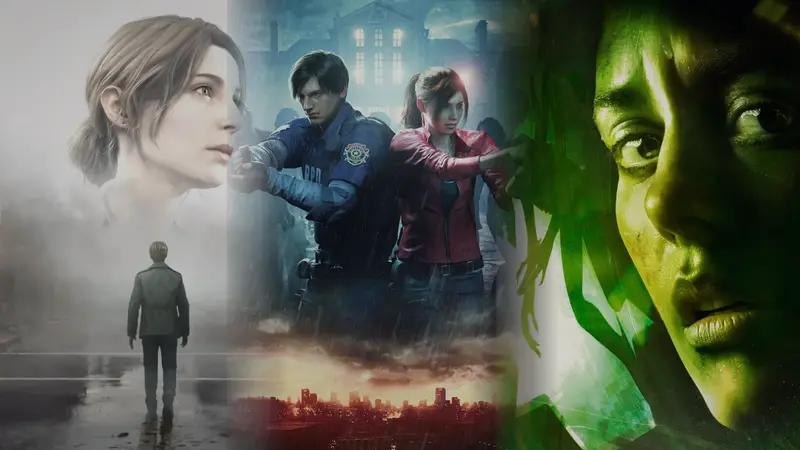
SOMA
September 21, 2015PuzzleESRB M
About SOMA
Story setup
At a glance
Screenshots
Click any screenshot to view it full size.
How long to beat
Player-reported completion times for SOMA.
- Rushed
- 5hoursMain story only
- Typical
- 11hoursStory plus some extras
- Completionist
- 16hoursEvery side objective too
Estimated from 13 player reports — a small sample, so treat these as approximate.
Multiplayer & game modes
SOMA offers various play modes for different gaming experiences.
Play Modes
Single Player
Age ratings
How rating boards around the world have classified SOMA. Open a board for its content descriptors.
ACBMA 15+
Strong Horror Themes
ESRBM
- Violence
- Strong Language
- Nudity
- Blood
GRAC19+
- Language
- Fear, Horror, Threatening
- Violence
- Sexuality
PEGI16
- Bad Language
- Violence
The content of this game is suitable for persons aged 16 years and over only. It contains: Realistic looking violence - Strong language
Often listed alongside SOMA
Titles that appear in the same guides on this site. Grouped by where they show up, not by recommendation.
Featured in our articles
This game appears in 4 articles on this site.
SOMA sits at the edge of what this list counts as survival horror, and I am including it because the underwater facility it puts you in is one of the most oppressive environments I have spent time in. The monsters are evasion problems, not combat encounters. The horror is existential rather than resource-based. What keeps it off the main list is that the survival pressure is lighter than everything above it, closer to a horror walking sim with teeth than a genre-pure survival horror game. That said, the story earns its length in a way few horror games manage. If atmosphere is what you are chasing, this delivers.
SOMA is the horror game I keep recommending to people who say they do not really like horror games. The scares are real and the underwater isolation is consistently oppressive, but what lingers after you finish it is not a jump scare or a monster design. It is a question. A specific, uncomfortable question about consciousness that the game plants early and answers late, and the answer is not comfortable. Frictional Games made something that functions as both a tense first-person horror experience and as a piece of genuine science fiction writing. It is not systems-heavy. You are mostly walking and hiding and thinking. For certain players, that is exactly right.
SOMA asks one question and spends twelve hours making you uncomfortable with the answer. Frictional Games built this after Amnesia and deliberately moved away from creature-driven horror toward something more existential. It is set in an underwater research facility and the horror is philosophical as much as environmental. What I value about it for this list is that it has a Safe Mode which removes enemy threat almost entirely, leaving the atmosphere and the story intact. That is not a compromise, it is a design choice that opens the game to players who want dread without the tension of being chased. On Steam Deck it runs cleanly and the first-person exploration suits portable play well. A quiet inclusion at ten, but a confident one.
Game data and imagery provided by IGDB.com

