
Stardew Valley in co-op is a different game to the solo version. You split the farm work, argue about whether to upgrade the watering can now or wait until after the fair, and quietly build something together over weeks. My wife and I played this in short evening sessions and it suited that rhythm perfectly. No pressure, no punishment for stopping mid-run. The two-player format works so well because the task list is big enough for two people to feel genuinely useful without ever feeling in each other's way. If you and your partner want something to return to after dinner without committing to a campaign, this is it.

Stardew Valley
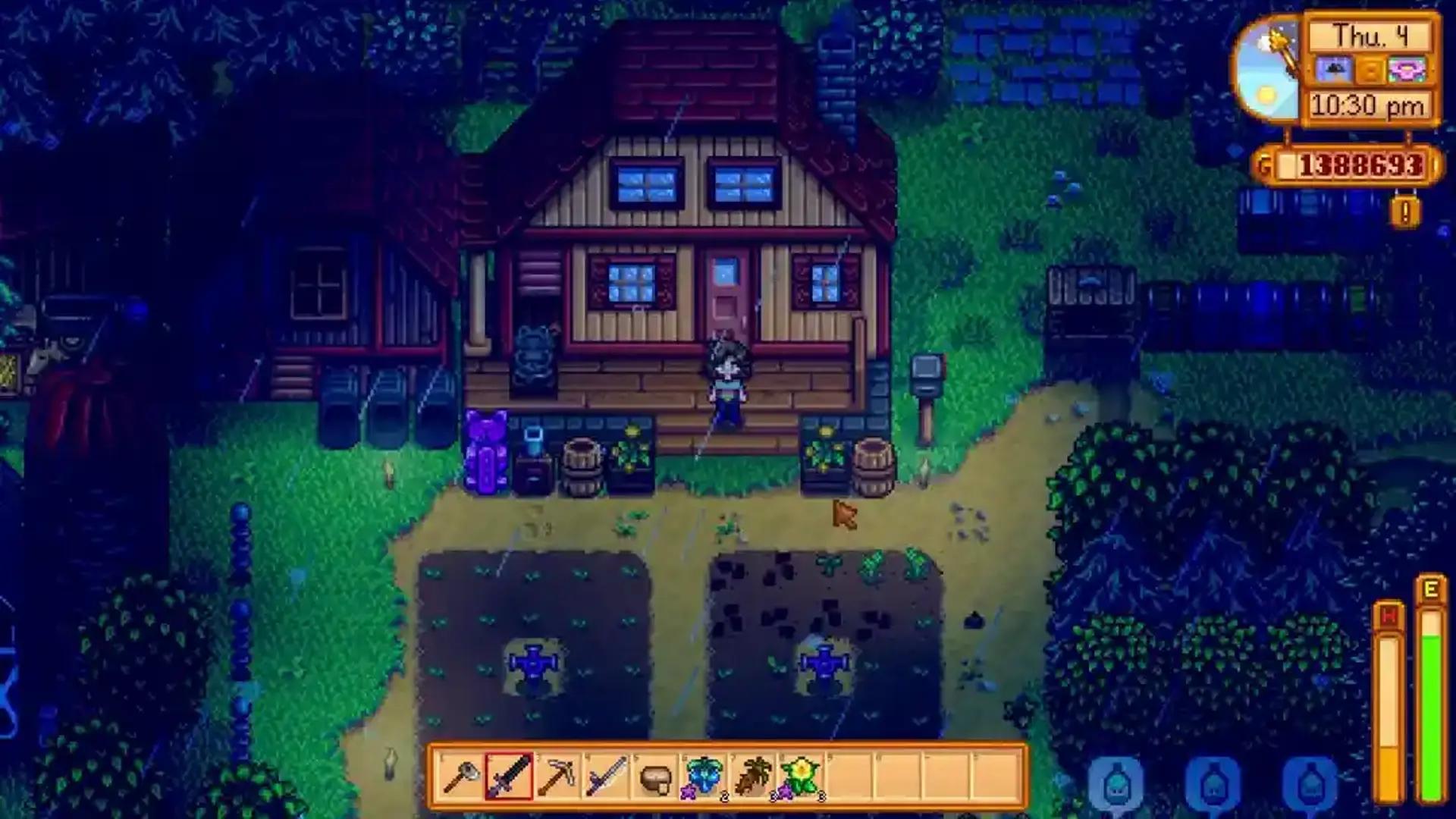
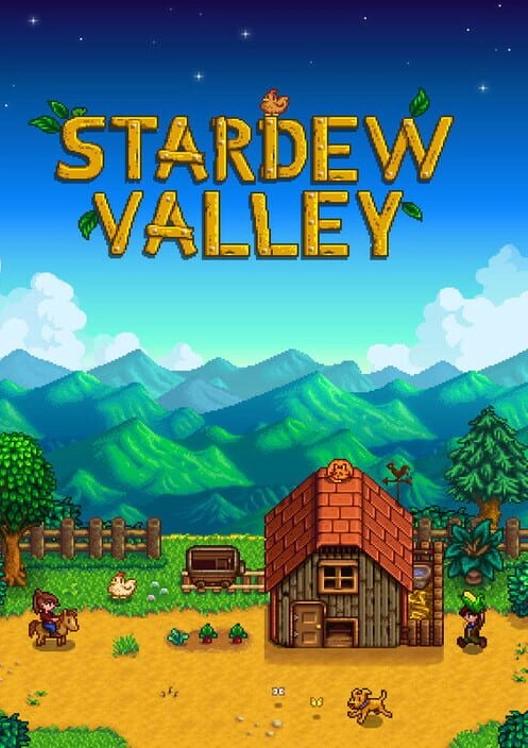
The hero (in the beginning you can choose gender, name and appearance) - an office worker who inherited an abandoned farm. The landscape of the farm can also be selected. For example, you can decide w
On This Page
Why We Recommend This Game
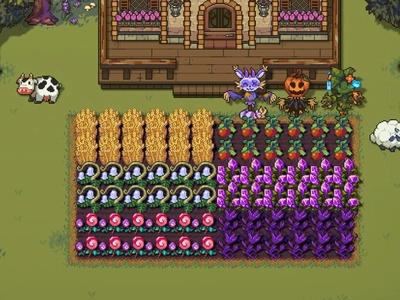
Stardew Valley delivers one of gaming's most rewarding loops: wake up, tend crops, explore mines, fish, chat with townsfolk, then sleep and repeat. Each in-game day lasts roughly 15 real-world minutes, so sessions naturally break into digestible chunks—one day before bed or several seasons in a long weekend. The genius is how every small action feeds long-term progress. Planting a field of parsnips teaches you seasonal rhythms; upgrading tools opens new areas; befriending villagers unlocks recipes, cutscenes, and even marriage. There's no forced objective, so you can ignore combat entirely and focus on decorating your farm, or dive deep into the mines for rare ore and tense monster encounters. The learning curve is gentle. Clear tutorials explain planting, watering, and selling, while the rest unfolds through experimentation and community center bundles that guide you toward new crops, animals, and skills. Mistakes—like forgetting to water or planting out of season—cost a little time and gold but never lock you out of progress. That forgiving pace makes it approachable for newcomers and meditative for veterans chasing perfection or self-imposed challenges. Co-op shines because tasks naturally divide: one player mines while another manages livestock; someone fishes while a partner tackles quests. Up to four people share a farm online or via split-screen, and progress persists whether you play together or solo. Communication and coordination deepen the experience, turning routine chores into collaborative projects. Multiplayer also smooths the difficulty curve—mines feel less risky with backup, and splitting income accelerates upgrades. Replayability is exceptional. Randomized farm layouts, different profit focuses (wine, honey, ancient fruit), relationship paths, and community center vs. Joja routes mean no two farms feel identical. Mods extend that variety further on PC. Performance is rock-solid across platforms: 60fps on Intel integrated graphics, smooth on Steam Deck, and stable on Switch in both handheld and docked modes. The tiny install footprint and offline-first design make it ideal for laptops, older PCs, or travel. This is a game that respects your time while rewarding investment. Short sessions feel complete; long marathons reveal new secrets. Whether you want a cozy solo retreat or a shared long-term project with a partner or group, Stardew Valley adapts to your rhythm and keeps giving.
Best For
- Players seeking hundreds of hours of relaxing, self-directed progression
- Couples or small groups wanting low-pressure, long-term co-op projects
- Anyone needing proven performance on low-end PCs, laptops, or Switch
Not For
- Players who need clear objectives or structured campaigns
- Those wanting fast-paced action or competitive multiplayer
- Gamers seeking cinematic storytelling or high-fidelity graphics
Multiplayer & Game Modes
4 local • 8 online
Stardew Valley does not support crossplay, includes split-screen multiplayer, supports up to 8 players online, features co-op campaign mode.
Features
Play Modes
Single Player • Multiplayer • Co-op • Online Multiplayer • Local Couch Co-op • LAN Multiplayer • Split-Screen • Shared Screen
Player Count
- Local
- 1-4
- Online
- 1-8
- LAN
- 1-8
- Team Sizes
- Co-op up to 8 players (PC) or 4 (consoles)
Additional Details
Multiplayer mode added in 2018 (1.3 update). Split-screen local co-op added in 2020 (1.5 update). 8-player support added for PC in 2024 (1.6 update); consoles remain at 4-player maximum. Split-screen supports up to 4 players on PC/PS4/Xbox, or 2 on Switch. LAN play supported via IP address or local network. PC platforms (Windows, Mac, Linux, Steam, GOG) have cross-play with each other, but no cross-play between PC and consoles or between different console families. Each player needs their own cabin on the farm (built by host). Cannot have split-screen and remote players simultaneously. Console versions require PlayStation Plus, Xbox Game Pass Core/Ultimate, or Nintendo Switch Online for online multiplayer (local split-screen is free). Host player controls the farm's economy and progression
Edition and Platform Information
Important details about which version to buy and where to play.
Platform Recommendations
Switch version supports local split-screen and online co-op, with smooth performance handheld or docked. PC offers the richest mod scene and runs on ultra-low-spec machines (Intel UHD, 2GB RAM). All platforms receive regular updates; progress syncs via cloud saves on compatible systems.
Accessibility Features
UI zoom slider and font scaling improve readability on small screens or laptops. Full keyboard and controller remapping on PC; basic vibration and color toggles on console. Relaxed pacing and optional combat suit players sensitive to fast action. No hard fail states or punishing time limits.
Screenshots
Click any screenshot to view in full size
Featured In Our Articles
We've included this game in 28 articles.
Stardew Valley is where this genre starts and, honestly, still where it peaks. I played it with my wife one evening when she asked for something gentle, and three hours disappeared before either of us noticed. That almost never happens. The structure is deceptively smart: each in-game day is short enough to feel like a quick session, but the loop of planting, talking to villagers, and slowly building something pulls you forward without ever feeling like homework. The only honest caveat is that the first few days throw a lot at you. Push through that and nothing else on this list comes close.
We spent a lot of hours on this one together, and that is the honest explanation for why it sits at the top. Stardew Valley gives couples a shared world to build at whatever pace suits them. One evening you are planning next season's crops, the next you are fishing while your partner mines, and somehow both of those feel equally productive. There is no pressure, no timer, no moment where a skill gap ruins the fun. It scales to short evenings and long weekend sessions without either feeling like the wrong choice. The only real friction is the first hour, before the routine clicks. Once it does, it stays.
One person made Stardew Valley. One. That context never leaves you when you are forty hours into a second playthrough unlocking the Skull Cavern. The Switch version is where I have spent most of my own time with it, partly because picking it up in handheld mode for twenty minutes before sleep suits the game's rhythm exactly. It is not the most visually spectacular thing on this list, and the first few hours can feel slow if you push through without warming to the routine. Once that routine clicks, the time disappears. Highest longevity score on this list. Earned.
I have dipped into Stardew Valley over the years and each time I return, it pulls me back in for longer than I planned. That is the thing about it: the loop never demands your full attention, but it keeps rewarding it anyway. One evening you are watering crops. The next you are three floors deep in the mine because you wanted one more copper ore before bed. Farming, fishing, decorating, building relationships with townspeople, there is always something low-stakes to work toward. The clock-and-energy system can sting newcomers in the first few hours, but once you stop fighting it and just accept that tomorrow is another day, it clicks completely. Nothing else on this list comes close for sheer hours of comfortable investment.
Stardew Valley is the one I almost ranked higher on pure quality, and the one I nudged down because the first few hours are genuinely busier than anything else on this list. The game throws a lot at you before it lets you settle into a rhythm. Once the rhythm arrives, though, it is hard to stop. I have played it across multiple platforms and the Switch version is my preferred one because a quick save before bed and picking it back up on the couch the next evening feels completely natural. Enormous content for the price. Real depth underneath the pastoral surface. Just give it a few in-game seasons before judging it.
I have played Stardew Valley in short bursts across multiple years, and it remains the one cozy game I never fully leave behind. You plant something, water it, go to sleep in the game, and the next morning there is a slightly bigger version of the thing you planted. That loop sounds trivial written down. In practice it is oddly hard to stop doing. The PS4 version runs without a hiccup on PS5, and while it does not use the DualSense in any meaningful way, it does not need to. No other game on this list has the same depth of things to do, relationships to build, and decisions to make without any of it ever feeling like work.
My wife played Animal Crossing for a year and a half and barely touched anything else. Stardew Valley scratches a similar itch but adds enough structure and progression that it pulled me in too. There is a mine to descend, relationships to build, crops to time against the calendar, and a late-game that opens up in ways the first season does not hint at. It runs on integrated graphics without a second thought, which matters when the laptop in question is a work machine being borrowed for an evening. Optional multiplayer exists, but the solo loop needs nothing added to it.
Stardew Valley is the one I recommend when someone in the group does not normally play games. My wife is not a gamer, but she played It Takes Two all the way through with me because it pulled her in. Stardew has that same quality: it explains itself gently, it never punishes you for going slowly, and there is always something satisfying to do. For a LAN party with a mixed group, that accessibility matters as much as any other criterion. Co-op hosting on PC is clean and reliable. The open-ended farm structure means players can split off and work on separate projects without anyone feeling left behind.
My wife does not play games. She played Stardew Valley. That alone tells you something. It is the comfort game that became an institution, built by one person over four years, and it still gets free updates. The loop of farming, fishing, talking to villagers, and slowly upgrading your land has an almost therapeutic pull that is hard to explain until you are an hour in and realize you have forgotten to check your phone. Its recommendation value for almost any type of player is as high as any indie game I know. The slight knock is that it lacks mechanical tension. If you need challenge to stay engaged, this is not the game.
Every list of Xbox co-op games that does not include Stardew Valley is incomplete, especially for couples. The loop, farming during the day, mining in the evening, figuring out which festivals matter and which you can skip, becomes surprisingly rich when two people are dividing the work and comparing notes afterward. I started a co-op farm expecting to play for a few hours and ended up with a spreadsheet tracking crop rotation. Not everyone will go that deep. You can also just water your strawberries and go to the fair. That flexibility is what earns its place here. The co-op is online only on Xbox rather than local split-screen, which is a genuine limitation worth knowing before you buy.
Stardew Valley local co-op on Switch is a slow burn that can turn into a forever game. Split-screen farming, shared goals, relaxed pacing. The reason it missed the top ten is the same reason it is perfect for a specific audience: it asks for patience. The first few hours are light on joint objectives, and the split-screen can feel cramped on a smaller display. For couples or households who want a co-op game they return to across weeks rather than sessions, few games on Switch offer more. If the action-heavy top ten is not what you are after, start here.
Stardew Valley at a LAN party sounds like a punchline until you try it. My wife, who does not play games, got completely absorbed in It Takes Two on the same night I was trying to explain why Factorio was worth learning, and I kept thinking about how Stardew has that same accessible pull. Between intense sessions, having something on a shared farm where everyone has a job and nobody is getting shot at is genuinely useful for keeping a group's energy sustainable over a long event. It handles up to eight players, local hosting works without fuss, and the teamwork quality is softer than most entries here, but in the right moment it is exactly what a LAN needs.
Stardew Valley is the game that taught me not to dismiss something just because it looks gentle. I played it solo first and then again in co-op with my wife, and it becomes a genuinely different thing when you are both managing the farm, splitting the mine runs, and trying to figure out who is going to handle the fishing because neither of you wants to. The open-world freedom score is lower than most games on this list because exploration is contained, but the sandbox systems are deep and the Switch version is one of the best-running entries here. If you are looking for a co-op game that does not require anyone to already be a gamer, this is the first place I would point you.
Stardew Valley in co-op is a different game to Stardew Valley solo, and I mean that in the best way. One player takes the mine, the other works the farm, and by the end of the day you reconvene and the combined output is genuinely satisfying in a way that feels earned. It is not tightly authored co-op in the way It Takes Two is. There is no script. The shared progression just accumulates over weeks of sessions, which suits people with limited evening windows more than it suits anyone wanting a structured campaign. The Switch version runs well and local split-screen works fine docked.
I was skeptical about Stardew in co-op for a long time. It felt like a solo game I happened to love. Then I watched It Takes Two pull my wife into gaming for the first time, and I started thinking differently about what makes a non-gamer stay engaged. Stardew checks every box: nothing on screen requires explanation, the progression is gentle, and there is always something satisfying happening. Online and local options both work without fuss, the battery drain is forgiving, and the screen is perfectly readable handheld. It is not the most mechanically demanding co-op on this list, but it is the one most people will actually finish together.
My wife played It Takes Two with me and Animal Crossing on Switch, which told me something: she engages with games that do not rush her. Stardew Valley is built around that exact rhythm. Each in-game day takes maybe ten minutes, you always have something small to do, and the whole thing is readable and welcoming at handheld size. I have played it both docked and handheld and the handheld version feels more natural, the way you might read a book rather than watch a film. It is also one of the few games on this list that works for almost any kind of player, which is why it sits this high.
Stardew Valley in co-op is a fundamentally different game than the solo version, and I mean that as a compliment. When you are sharing a farm with another person, the decisions have weight. Do you invest in the barn or expand the crops? Who handles the mines this week? My group tried this during an evening session and two hours disappeared faster than I expected from a farming sim. It plays long. There is no natural stopping point, which is either a problem or a feature depending on your schedule. The Switch version is clean and the online co-op works reliably. This is the best slow-burn co-op option on the platform.
There is no fail state in Stardew Valley. No lives, no game over, no moment where the less experienced player feels like they cost the team something. You wake up, you tend the farm, you go fishing, and you decide together what to do with the day. I play open-world games in the gaps between everything else, and Stardew fits that schedule better than almost anything; a twenty-minute session is meaningful here. The co-op design is less tightly interdependent than the games above it, but for couples who want an ongoing shared world rather than a campaign to finish, it offers something none of them do.
When I introduced my wife to Stardew Valley on a quiet Sunday, she played for four hours without noticing. That almost never happens. The game runs on practically nothing, which matters at LAN parties when someone pulls out a machine from 2015, but the reason it tops this list is not the tiny install size. It is the fact that you can drop in for twenty minutes or lose an entire evening and both feel satisfying. Farming, fishing, combat, relationships, and secrets layered underneath all of it. The value for the price is almost unreasonable. Nothing else on this list matches it for sheer breadth of audience.
Stardew Valley in co-op is a shared daily life — one of you farms, one mines, you meet back at the house and figure out what to build next. It's the calmest, most consistently enjoyable low-stakes duo game available on PS5, and almost anyone can play it regardless of gaming experience. The reason it sits in honorable mentions rather than the top ten is that the co-op structure is quite loose: you're often playing parallel rather than together, and there's no PS5-native upgrade (it runs via backward compatibility). For duos who want something to return to every few nights without any pressure, though, it's genuinely hard to beat.
Stardew Valley is co-op for people who don’t want pressure. You can farm, fish, explore mines, decorate, or just wander around town and chat with NPCs, and the game doesn’t punish you for playing at your own pace. I left it in honorable mentions because, as a couch game, split-screen can feel cramped, and the “what should we do today?” freedom sometimes stalls groups that want clear objectives. Still, if you want a long-term shared project, it’s hard to beat. Best for couples, families, and low-stress nightly play sessions.
Stardew Valley is the calmest thing on this list, and sometimes that is exactly what a group needs. My wife does not play many games, but she played this one with me on the couch without needing a tutorial or a controller lesson. The co-op splits naturally: someone handles the farm while someone else mines or fishes, and the days tick over without anyone feeling lost. The hardware demands are essentially nothing. An eight-year-old laptop handles it fine. The teamwork is gentler than the rest of these picks, which is the point, not a flaw.
Stardew Valley earns its spot for easy-going online teamwork where players share a farm and split chores naturally. Different friends can focus on crops, animals, fishing, or dungeons—all feeding into shared progress. Stable online play and low hardware demands make it reliable on Switch, while the cozy pacing suits casual groups and families seeking wholesome, low-pressure co-op that fits busy schedules.
Stardew Valley tops this list for flawless performance on integrated graphics, tiny install size, and endless replay value. Community benchmarks confirm 60 FPS on Intel UHD iGPUs, and PCGamingWiki verifies smooth performance. The solo-dev origins embody true indie spirit, while farming depth, co-op support, and flexible pacing deliver hundreds of hours without technical hassle on potato PCs or older laptops.
Stardew Valley tops this list for deep offline longevity and low-spec reliability. Tiny install, multi-year progression, and cozy seasonal loops run smoothly at 720p–1080p on Intel UHD or Iris Xe. Fully playable offline after activation with no launcher bloat, it offers clear tutorials, readable UI, and flexible goals—combining breadth, stability, and minimal footprint for budget PCs.
Stardew Valley weaves story through relationships, festivals, letters, and character quests that unfold over seasons. Co-op players divide social arcs and roles, creating a co-authored saga unique to each farm. While it lacks a cinematic plot, the town's personal stories, long-tail goals, and smooth Switch performance make it a rewarding narrative experience for small groups seeking replay value.
Cooperative farming naturally divides into complementary roles—one player mines while another fishes or tends crops—so everyone contributes without friction. Built by a tiny team with years of updates, it's authentically indie with deep progression. Stable Switch performance, quick suspend/resume, and flexible local or online play make it ideal for couples, friends, and families seeking relaxed, long-term co-op.
Frequently Asked Questions
Common questions about this game answered by our team.
How hard is it?
Relaxed overall. Farming and social activities have no fail states. Optional mines and late-game areas add challenge, but you can skip combat entirely and still enjoy hundreds of hours of content.
How long does it take to finish?
The main community center goal takes 30–50 hours, but there's no true ending. Most players sink 100+ hours into farm optimization, relationships, and personal goals. Replayability is near-limitless.
Is it good for beginners?
Yes. Clear tutorials, forgiving mistakes, and flexible goals make it welcoming. You can learn at your own pace, ignore complex systems, and still have a rewarding experience.
How does co-op work?
Up to four players share one farm online or via local split-screen. Tasks divide naturally—mining, fishing, crops—so everyone contributes. Progress persists whether you play together or solo.
What's a typical session like?
One in-game day is ~15 real minutes, so you can play a quick morning or dive into multi-season marathons. Natural stopping points after festivals or major tasks make it easy to pause anytime.