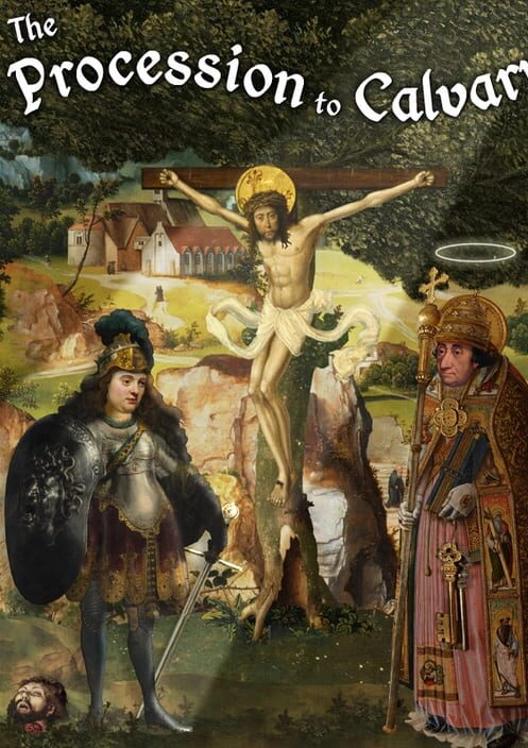

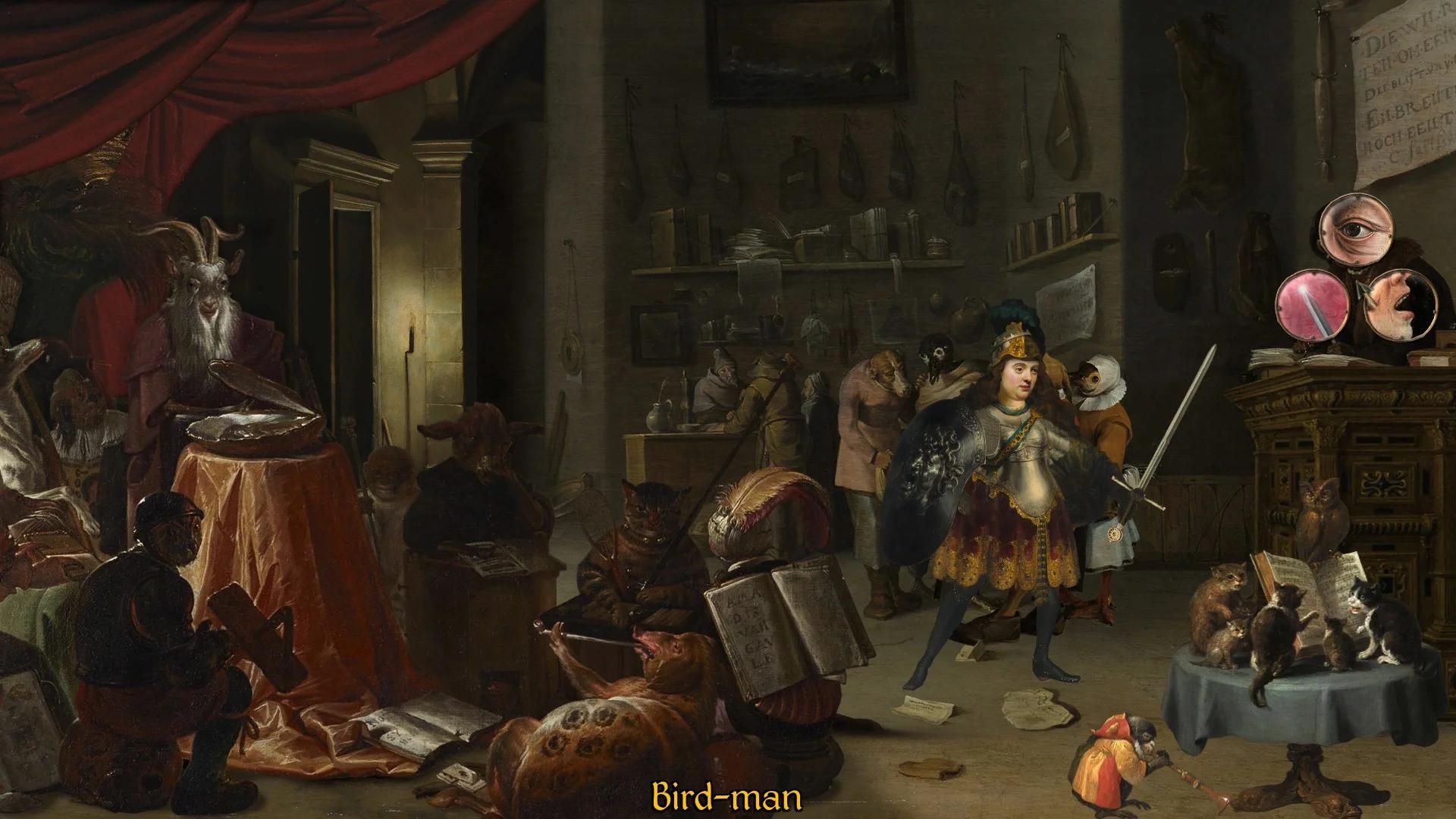
The Procession to Calvary is a point-and-click game where the backgrounds, characters, and environments are all assembled from actual Renaissance-era paintings. The art is serious. Nothing else is. The humor is deadpan, anachronistic, and closer to Monty Python than anything else I can think of. Characters discuss modern concepts while standing in 15th-century frames, and the game leans into the visual absurdity at every turn. It runs about 3 hours, which is the right length for this kind of thing. Any longer and the joke would wear thin. At 3 hours, it stays funny and weird without overstaying its welcome. The point-and-click puzzles are not the reason to play this. Some are satisfying, some are arbitrary, and you'll likely hit a wall that sends you to a walkthrough at some point. The reason to play it is the writing and the commitment to the bit. If that sounds like your kind of entertainment, I think you'll have a good time.
The Verdict
Best if you want a short, absurdist point-and-click adventure dripping with Renaissance art, Monty Python-style humor, and clever puzzles that never take themselves too seriously.

Software architect and father of two based in the Netherlands. Been gaming since MS-DOS Mario. Writes honest recommendations for people with limited evenings and too many games left to play.
What It's Like to Play
The Procession to Calvary is a lovingly crafted point-and-click adventure that feels like someone stitched together a Monty Python sketch inside an art history textbook — and somehow made it work brilliantly. The entire game world is constructed from genuine Renaissance paintings by Rembrandt, Botticelli, Michelangelo, and others, animated and repurposed into a single cohesive, absurd landscape. It's visually unlike anything else in the genre. Gameplay follows the classic point-and-click formula: explore screens, collect items, combine them, and apply them to puzzles. The verb coin interaction system is clean and familiar, and the inventory management is simple drag-and-drop — there's no steep mechanical learning curve here. If you've ever played a LucasArts or Sierra adventure, you'll feel at home within minutes. Puzzles strike a satisfying balance. They're logic-based with a consistent internal logic, so solutions feel earned rather than arbitrary. Crucially, the game offers an optional escape valve: you can simply murder anyone blocking your progress with your equipped sword, bypassing puzzles you're stuck on. This is a surprisingly elegant difficulty toggle that keeps frustration low while also having in-game consequences that add replayability for curious players. The comedy is the real draw. Humor is anarchic and self-aware — jokes land through timing, visual gags, and pure absurdist commitment. The classical soundtrack (Bach, Vivaldi, Handel) pairs with the Renaissance visuals in a way that somehow amplifies the comedy rather than clashing with it. Session length is short and sweet. Most players complete it in two to three hours, making it an ideal single-sitting or two-session experience. It doesn't outstay its welcome, and the optional murder path offers a meaningfully different playthrough for completionists. The game also stands fully alone — no prior knowledge of its predecessor, Four Last Things, is needed. Pacing is brisk. Screens are dense with interactive details, but the game never buries you in busywork. It moves with confidence, trusting you to explore without hand-holding, while never straying into cruel adventure-game obscurity.
Best For
- Point-and-click adventure fans who want something genuinely funny and visually distinctive
- Players looking for a high-quality, low-commitment indie experience completable in one sitting
- Art and classical music enthusiasts who enjoy seeing familiar works remixed in unexpected ways
Not For
- Players who prefer long, epic adventures with dozens of hours of content
- Those who dislike absurdist or irreverent humor — the comedy is relentless and very silly
- Gamers expecting action, reflex-based challenges, or combat mechanics
About The Procession to Calvary
At a glance
- Released
- April 9, 2020
- Platforms
- Linux, Xbox One, macOS, PC, Nintendo Switch, iOS, PlayStation 4, Android
- Genres
- Adventure, Puzzle, Indie
- Play modes
- Single Player
- Age rating
- ESRB M
- Player rating
- 3.6
Screenshots
Click any screenshot to view it full size.
Multiplayer & game modes
The Procession to Calvary does not support crossplay.
Features
Play Modes
Single Player
Additional Details
Current store and technical sources list The Procession to Calvary as a single-player point-and-click adventure with no online, local, LAN, co-op, PvP, split-screen, or hotseat features. No platform-specific multiplayer requirements or subscriptions apply because the game does not support multiplayer.
Age ratings
How rating boards around the world have classified The Procession to Calvary. Open a board for its content descriptors.
CLASS_IND16
- Violência (Violence)
- Conteúdo Sexual (Sexual Content)
- Linguagem Imprópria (Inappropriate Language)
ESRBM
- Strong Language
- Violence
- Partial Nudity
- Use of Drugs
- Sexual Themes
- Blood
- Language
GRAC15+
- Sexuality
- Alcohol, Tobacco, Drug
- Violence
PEGI16
- Violence
- Bad Language
There are depictions of violence and gory images, although the strength of these is reduced by the comic visual style, which features characters cropped from Renaissance painting in the manner of a Monty Python animation. The player's character is able to decapitate victims with a sword. While there are blood effects and heads are seen to fly off, the violence is unrealistic and exaggerated in style, without any convincing physical responses. For example, while the head flies away some distance, the body remains upright. In another scene, a character is cut in half in a similarly unrealistic style. There is also a scene in which a character is roasted over a fire and a scene in which a man is pulled between four horses, his limbs unrealistically stretching like rubber bands. There is additionally use of strong language ('motherfucker').
Edition and platform notes
Which version to buy, and what differs between platforms.
Which Edition to Buy
The game is a standalone follow-up to Four Last Things but requires no knowledge of that title. Both can be enjoyed independently.
Platform Recommendations
Available on PC via Steam. Designed for mouse-driven point-and-click play; best experienced with a mouse rather than a controller.
Accessibility Features
The optional murder mechanic effectively functions as a built-in puzzle skip system, making the game more accessible to players who get stuck. Text-heavy dialogue may be a consideration for those with reading difficulties. No known built-in subtitle or font size options.
Games similar to The Procession to Calvary
Titles we've handpicked for readers who liked The Procession to Calvary, grouped by what they share with it — a similar vibe, more challenge, or the same multiplayer setup.
Lighter & More Playful
4Cheerful, upbeat games that offer a lighter tone than The Procession to Calvary while maintaining similar gameplay mechanics.
A breezy paranormal comedy adventure with snappy cases, simple inventory puzzles, and a playful tone that scratches the joke-heavy adventure itch without the same abrasive edge.
Keeps the cartoonish point-and-click energy and irreverent humor, but trades the art-history satire for broader slapstick and a more approachable comic-adventure rhythm.
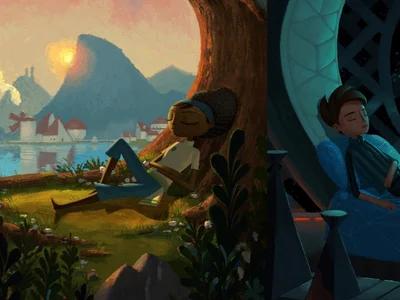
A charming, accessible adventure that emphasizes whimsical storytelling and elegant puzzle flow, ideal if you want the genre appeal of Procession with a softer, warmer tone.
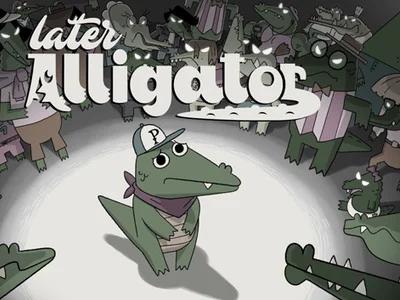
Leans into goofy writing and dense joke delivery, with friendly mini-games and low-stress investigation beats that make it a lighter, more welcoming comedy-adventure alternative.
Puzzle & Brain Teasers
4Logic and puzzle games that challenge your problem-solving skills in ways similar to The Procession to Calvary.
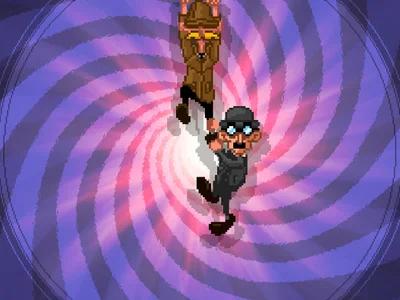
Meta comedy and inventive puzzle design go hand in hand here, with constant fourth-wall breaks and lateral problem solving that should appeal to fans of absurd adventure logic.
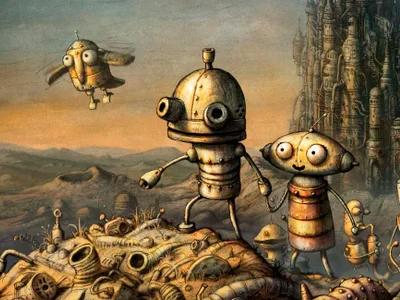
Shifts the focus toward environmental logic and visual puzzle solving, rewarding careful observation and experimentation while preserving the quiet satisfaction of adventure-game progression.
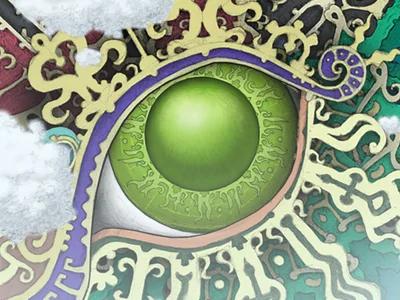
A compact but brilliant brainteaser where panel manipulation drives progression; it captures the delight of lateral thinking while stripping away most adventure-game friction.

More tactile and mechanical than comedic, but excellent if the puzzle side is what hooked you: dense contraptions, layered clues, and satisfying aha moments in short bursts.
Story-Focused Alternative
2Narrative-driven games that prioritize storytelling and character development over the gameplay focus of The Procession to Calvary.
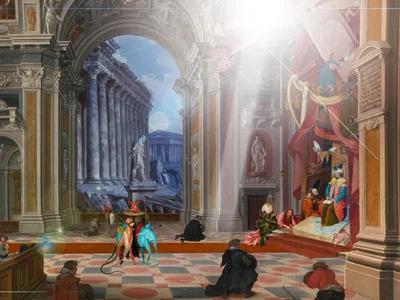
A close cousin in Renaissance-art collage comedy, built around witty dialogue and absurd point-and-click logic, with narrative jokes and character banter doing most of the heavy lifting.
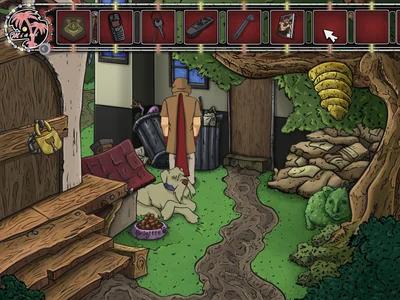
Another narrative-led adventure with hand-painted scenes, eccentric characters, and puzzle gating that serves the investigation, making it a strong fit if story and humor matter most.
Similar Vibe, Bigger Scope
2Expansive alternatives to The Procession to Calvary featuring larger worlds, deeper progression systems, and extended campaigns for players seeking more content.

For players who loved deduction wrapped in stylized presentation, this offers a larger chain of mysteries and more demanding inference across an interconnected narrative timeline.
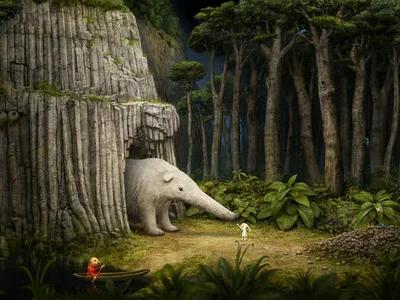
Expands the surreal adventure feel into a broader, more exploratory journey, pairing strange worlds and audiovisual charm with richer puzzle spaces and a more substantial overall trek.
Featured in our articles
This game appears in 1 article on this site.
Frequently asked questions
Common questions about this game, answered by our team.
How long does it take to beat?
Most players finish in 2–3 hours. It's designed as a tight, single-sitting experience. A second run using the optional murder path to skip puzzles is significantly shorter.
How hard are the puzzles?
Moderately easy to medium. Puzzles follow consistent logic and rarely feel unfair. If you're truly stuck, the game lets you 'murder' obstacles to skip puzzles — a built-in safety net that keeps frustration low.
Do I need to play Four Last Things first?
No. The Procession to Calvary is fully standalone. You'll get everything you need from the game itself without any prior knowledge.
Is it good for point-and-click beginners?
Yes. The interface is simple and familiar, puzzles are fair, and the murder skip option means you're never truly stuck. It's a welcoming entry point to the genre.
Is it worth replaying?
There's modest replay value: the optional murder path changes how you progress and has in-game consequences, offering a noticeably different experience on a second run.
Game data and imagery provided by IGDB.com