Portal 2's co-op campaign is still one of the smartest things two people can do together on a console. There's no shooting to hide behind, just two portal guns, physics, and a puzzle that genuinely doesn't work unless you're both talking. I've run LAN sessions with friends who wanted twitch shooters and watched them get absorbed staring at one test chamber for twenty minutes. It runs through Xbox backward compatibility rather than a native rerelease. Small hurdle, but a reliable one. There's no build variety, no seasons, nothing to grind here. That's why it sits at rank nine instead of higher, replay value is basically zero. For one complete puzzle experience built entirely around two people solving something neither could alone, nothing on Xbox tops it.
Portal 2
April 18, 2011PlatformerESRB E10+Metacritic 95
The Verdict
Best if you want ingenious first-person puzzles that reward lateral thinking and spatial reasoning, wrapped in some of gaming's sharpest comedy writing—playable solo or with a friend who enjoys collaborative brain-teasers.

Software architect and father of two based in the Netherlands. Been gaming since MS-DOS Mario. Writes honest recommendations for people with limited evenings and too many games left to play.
What It's Like to Play
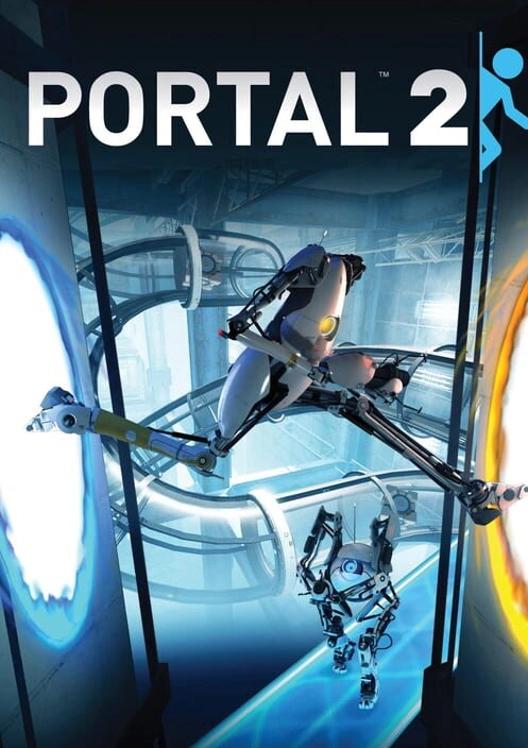
Portal 2 builds its entire appeal around a deceptively simple toolkit: a gun that shoots two linked portals onto white surfaces, letting you teleport yourself, objects, and even momentum across space. The genius lies in how each test chamber layers new wrinkles—laser redirection cubes, repulsion gels that turn floors into trampolines, aerial faith plates that fling you across chasms—into increasingly complex spatial riddles. You'll spend minutes staring at a room, mentally tracing trajectories and portal placements, then experience the rush of watching your solution unfold in seconds of fluid motion. The learning curve is masterful. Early chambers teach concepts in isolation: portals preserve momentum, so falling through a floor portal launches you out a wall portal. By mid-game you're chaining gel types, redirecting lasers through multiple portals, and timing split-second portal swaps mid-flight. It never demands twitch reflexes—this isn't a shooter despite the first-person perspective—but it does ask you to think in three dimensions and embrace trial-and-error experimentation. Generous checkpoints mean failed attempts cost seconds, not progress. Sessions naturally break into 20–30 minute chunks as you clear individual chambers or small test tracks. The single-player campaign runs 8–10 hours and teaches every mechanic you'll need. Co-op adds another 6–8 hours of entirely separate puzzles designed for two portal guns working in tandem, demanding constant communication and synchronized timing. Once you've solved a chamber, replaying it holds limited appeal beyond speedrunning or showing friends, but the in-game level editor and Steam Workshop extend the life considerably for puzzle enthusiasts. What elevates Portal 2 beyond pure mechanics is its commitment to environmental comedy. The ruined test facility itself tells a story through crumbling architecture and automated recordings, while the AI voices punctuate your problem-solving with perfectly timed absurdist commentary. You're never watching cutscenes or reading logs—the humor arrives through gameplay, keeping you in the flow while adding personality to what could've been sterile puzzle boxes. It's lean, focused, and respects your time, delivering depth through elegant systems rather than content bloat.
Best For
- Puzzle enthusiasts who enjoy spatial reasoning and physics-based challenges
- Players seeking AAA polish and memorable writing in a focused, non-combat experience
- Co-op partners looking for collaborative problem-solving that requires genuine teamwork
Not For
- Action-focused players expecting shooter mechanics or combat intensity
- Those seeking high replay value from the core campaign once puzzles are solved
- Players who prefer guidance over experimentation—some chambers require creative trial-and-error
About Portal 2
Story setup
At a glance
- Released
- April 18, 2011
- Platforms
- PC, Nintendo Switch, Linux, macOS
- Genres
- Platformer, Puzzle, Adventure, Action
- Play modes
- Single Player, Multiplayer, Co-op, Online Multiplayer, Local Couch Co-op, LAN Multiplayer, Split-Screen
- Age rating
- ESRB E10+
- Time to beat
- 10 hours
- Multiplayer
- By platform
- Metacritic
- 95
- Player rating
- 4.6
Screenshots
Click any screenshot to view it full size.
How long to beat
Player-reported completion times for Portal 2.
- Rushed
- 4hoursMain story only
- Typical
- 10hoursStory plus some extras
- Completionist
- 27hoursEvery side objective too
Based on 35 player reports.
Multiplayer by platform
How Portal 2 supports playing with other people, broken down per platform.
| Platform | Local | Online | LAN | Split-screen | Co-op campaign | Drop-in/out |
|---|---|---|---|---|---|---|
| PC | Yes, up to 2 players | Yes, up to 2 players | Yes | Yes | No | No |
| Linux | Yes, up to 2 players | Yes, up to 2 players | Yes | Yes | No | No |
| macOS | Yes, up to 2 players | Yes, up to 2 players | Yes | Yes | No | No |
- Supported (a number is the player cap)
- Not supported
- Not documented for this platform
Age ratings
How rating boards around the world have classified Portal 2. Open a board for its content descriptors.
ACBPG
Mild themes, violence and coarse language
ESRBE10+
- Mild Language
- Fantasy Violence
GRAC12+
- Violence
PEGI12
- Violence
- Bad Language
No Rating Summary
Edition and platform notes
Which version to buy, and what differs between platforms.
Which Edition to Buy
The base game includes both single-player and co-op campaigns. Steam Workshop support on PC offers thousands of community-created test chambers. Console versions lack Workshop integration but include all official content.
Platform Recommendations
Runs smoothly on low-end PCs (720p–1080p on Intel integrated graphics) thanks to Source engine optimization. Switch version maintains stable performance with gyro aiming support. All platforms support full offline play for single-player; co-op requires online or local network connection.
Accessibility Features
Includes subtitles, closed captions, and adjustable audio mix. Generous checkpoints minimize repetition after failures. Controller and gyro aiming support reduce precision demands. Clear visual contrast aids navigation, and a ping system facilitates co-op communication without voice chat.
Games similar to Portal 2
Titles we've handpicked for readers who liked Portal 2, grouped by what they share with it — a similar vibe, more challenge, or the same multiplayer setup.
Puzzle & Brain Teasers
5Logic and puzzle games that challenge your problem-solving skills in ways similar to Portal 2.
The purest form of portal-based spatial puzzles: learn rules fast, then solve increasingly clever chamber setups with physics tricks and tight first-person timing.
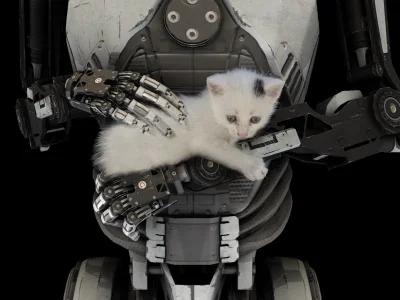
First-person logic rooms built around lasers, jammers, and connectors; scratches the same “aha” itch with layered puzzle chains and optional harder stars.

A masterclass in teaching through discovery—hundreds of line puzzles that evolve into deep rule-combos, delivering constant perspective shifts and big reveals.
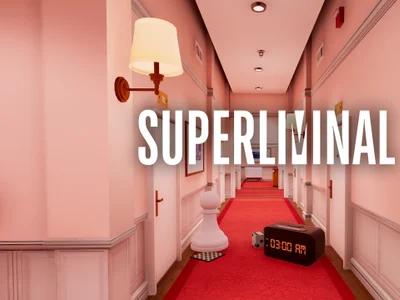
Perspective-based first-person puzzles where size and distance are malleable; it channels Portal’s mind-bending space tricks with brisk, surprise-heavy levels.

Instead of portals, you rewrite the rules themselves—word blocks change win conditions and physics. Dense, brilliant logic that rewards experimentation.
Great for Co-op
4Cooperative multiplayer games that emphasize teamwork and shared objectives, building on the social aspects of Portal 2.

Asymmetric co-op tension: one player defuses, the other reads the manual. Great for voice chat and coordination, like Portal’s co-op but pure teamwork.

Co-op-only adventure packed with puzzle mechanics that change every chapter. Like Portal co-op, it demands coordination, but with broader variety and setpieces.
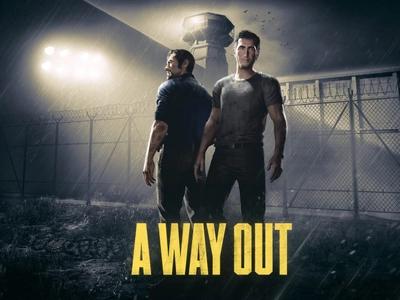
Split-screen designed co-op with constant partner actions, timing, and light puzzles. More cinematic than Portal, but similarly built around shared problem-solving.
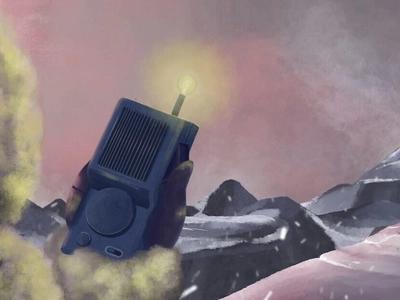
Two-player puzzle rooms built around communication and mismatched information. Constant callouts and synchronization make it a strong story co-op companion.
Story-Focused Alternative
2Narrative-driven games that prioritize storytelling and character development over the gameplay focus of Portal 2.

A comedic, self-aware narrator-driven experience with branching paths and clever reactivity. It shares Portal’s sardonic tone and “what if I disobey?” play.
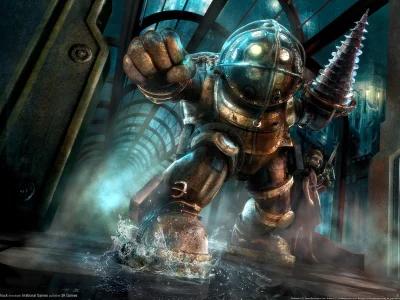
First-person exploration with a sharp narrative voice and environmental storytelling. If Portal’s writing hooked you, Rapture’s twists and atmosphere deliver.
Low Spec Friendly
1Performance-optimized games similar to Portal 2 that run smoothly on low-end PCs, integrated graphics, and older hardware.
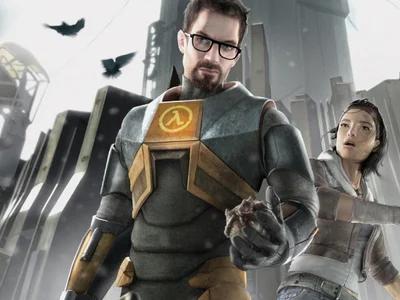
A classic Valve first-person experience with smooth physics, tight pacing, and modest system needs. Great offline play and still feels sharp on low-end PCs.
Featured in our articles
This game appears in 16 articles on this site.
Portal 2's co-op campaign is old enough to legally drink, and it still holds up as the smartest split-screen puzzle design on this list. My LAN group occasionally breaks from Left 4 Dead 2 to run a few Portal 2 chapters, because nothing resets a room like two people yelling coordinates over a pit of lasers. One catch: it only runs on Xbox through backward compatibility now, not a native Series X|S release. Just two people, one mode, no versus and no four-player scaling. That narrowness is exactly why it works. Every puzzle is built around two-screen thinking, and the readability of the split is close to perfect because of it.

Portal 2's co-op campaign is a separate story from the single-player game, built entirely around two people who can see something the other can't and have to describe it clearly enough to act on. I've run this with a friend who hates hand-holding, and it's still the sharpest test I know of whether two people actually communicate under pressure. There's no map marker telling you what to do, just a partner staring at a wall wondering why you haven't fired your portal yet. It's backward-compatible rather than a native Series X|S release, and the pace drags if neither of you has touched a Portal game before. Patient duos get one of the smartest co-op campaigns ever made. Everyone else should start lighter.
Portal 2's co-op campaign is the one puzzle game on this list I keep reinstalling years after finishing it. My group has played it more times than I can count, and it never stops being satisfying, watching two people work out that one portal needs to go on the ceiling and the other on a moving platform, and then watching it actually work. The communication is the whole point. You are narrating your half of the solution out loud while your partner narrates theirs, and the moment it clicks is one of the best feelings puzzle gaming offers. It only supports two players, which caps how many people at a LAN can jump in at once. Pair people up in shifts and this earns the top spot easily.
Portal 2's co-op campaign is still one of the smartest two-player puzzle designs ever built, full stop. Both players get genuinely different tools, and solving a chamber means actually explaining your half of the solution out loud, not just pointing at the screen. I tried this with my wife years ago and the first-person camera and aiming were the actual obstacle, not the puzzles themselves. If your partner is comfortable with a controller already, this belongs near the top of your list. If they're not, the learning curve on basic movement gets in the way before the puzzles even get interesting. It's older now, and it shows a little, but the co-op design hasn't been matched since.
Portal 2's co-op campaign is a separate story from the single-player game, built entirely around two players who have to think out loud to solve anything. I still remember spending ten minutes arguing with a friend about which portal went where, only to realize we'd both been right and just weren't listening to each other. That's basically the whole appeal: it's a communication test disguised as a puzzle game. It's aged well because the puzzle logic hasn't dated at all, even if the visuals have. The real limitation is length. A committed pair can finish the co-op campaign in six or seven hours, and there's little reason to run it twice once you know the solutions.

Portal 2 came out fifteen years ago and its co-op campaign still has no real rival. Two players, two portal guns, puzzles that are physically impossible to solve alone. The design forces you to communicate in a way that feels earned rather than instructed. I played through it with a friend who is more of a casual gamer, and watching the moment the logic clicked for him was worth the whole session. The Xbox availability is not as clean as a brand-new release, but it remains backward compatible and absolutely worth tracking down. Age is the only mark against it. The design itself has not aged at all.
Portal 2's co-op campaign was designed around two people who cannot see each other's full screen, and that is exactly what makes it work in split-screen. You are both solving the same puzzle from different angles, literally. The moment your partner places a portal you did not expect and suddenly the solution clicks, it is one of the most satisfying things the format has produced. Still. Available on Steam and the Switch via the Companion Collection, so access is not an issue. The mode variety is narrow compared to the shooters and racers above it, but what is here is close to perfect.
Portal 2's solo campaign is one of the most confident puzzle designs in PC gaming. The writing holds up, the mechanics build logically from simple to genuinely clever, and the Source engine runs on hardware that should no longer be running anything. I played through it years ago and the GlaDOS dialogue still comes to mind unprompted. It missed the main list on replay value alone. Once you know the solutions, a second run does not offer much new. First time through, though, it is a benchmark recommendation for anyone with a low-end machine and a few evenings to spare.

Portal 2's co-op campaign is one of the few times in gaming where communication is genuinely the entire puzzle. Not communication as a bonus, the actual mechanic. You cannot solve the chambers without talking through what each of you is doing, which makes it oddly perfect for two people sitting two metres apart at a LAN. I played this with a friend years ago and we still occasionally reference a specific puzzle where we spent twenty minutes staring at the same wall before one of us noticed the obvious thing. It only runs two players at a time, so it works best at a LAN where you rotate pairs while others are on something else. One of the most polished co-op experiences on PC, full stop.

Portal 2 is fifteen years old and I cannot think of a better two-player puzzle game. The co-op campaign is completely separate from the single-player story, designed from scratch around two people who have to talk to each other or nothing works. I have played through it twice and the second run still had moments where I genuinely did not know what to do until my partner saw it from their angle. On Steam Deck specifically, it runs without any friction whatsoever. No launcher fights, no compatibility quirks, just instant play. The replay value is limited once you know the solutions, but getting there is worth every minute.

Portal 2 is old. It also runs at a locked frame rate on hardware from 2012, so the Steam Deck treats it like a light breeze. What makes it worth recommending now is how well the puzzle structure maps to portable sessions. Each chamber is self-contained, there is a clear sense of progress, and the writing holds up better than most games made a decade later. I am not going to pretend this was a discovery for me, I played it years ago, but replaying it on handheld reminded me that good design does not expire. The co-op campaign is also genuinely one of the best two-player puzzle experiences available on any platform.

Portal 2 came out in 2011 and the puzzle design still makes me feel stupid in the best possible way. The Source engine was built to scale, and fifteen years later that remains true. I ran it on a laptop with an Intel UHD 620 during a LAN session as a warmup game and it sat at a smooth 60fps on medium settings without any adjustments. The single-player campaign is around eight hours, sharp from start to finish, with writing that is still funny. There is also a separate co-op campaign if you want it, though honestly the solo experience alone justifies the purchase. One of the most consistently recommended games for low-spec hardware, and for good reason.
Portal 2's co-op campaign is purpose-built around two people solving problems together, and it is still one of the most tightly designed experiences in that narrow category. Both players need portals. Both players need to think. There is no carrying a partner through this one. I played the campaign with a friend over a single long evening, and watching the moment a solution clicks for both of you simultaneously is something most puzzle games never manage. The age works in its favour here: it runs on practically anything. The honest limitation is that once you know the solutions, the magic is spent.
Portal 2 proves how certain older AAA titles have matured into low-end staples. Source engine optimization means smooth performance on Intel UHD/Iris Xe at 720p–1080p low settings, while the entire campaign works offline. It delivers prestige puzzle design and Valve's signature writing without modern bloat, offering genre diversity and polish that respects integrated graphics.

Portal 2's dedicated co-op campaign sets the gold standard for cooperative puzzle solving on Switch. Every test chamber is authored specifically for two players, demanding real communication and synchronized inputs. GLaDOS's sharp writing threads narrative purpose through every puzzle, making this feel like a shared story of ingenuity rather than just mechanical challenges.
Frequently asked questions
Common questions about this game, answered by our team.
How hard are the puzzles?
Moderate difficulty with intuitive progression. Early chambers teach mechanics gently; later tests require creative thinking and spatial visualization but minimal twitch skill. Most players solve chambers within 5–15 minutes each.
How long does it take to finish?
Single-player campaign runs 8–10 hours. Co-op adds another 6–8 hours of unique puzzles. Individual chambers take 20–30 minutes, making it easy to play in short sessions.
Is it good for puzzle game beginners?
Yes—the game teaches every concept step-by-step, and you can't fail permanently. Checkpoints let you retry freely. If you can grasp 3D space and enjoy experimentation, you're ready.
Can I play co-op locally?
No local split-screen. Co-op requires two copies and online or LAN connection. Each player needs their own screen and controls.
Is there replay value after solving puzzles?
Limited in the core campaigns—puzzles don't change. Replay comes from speedrunning, showing friends, or exploring Steam Workshop's community-made chambers (PC only).
Game data and imagery provided by IGDB.com