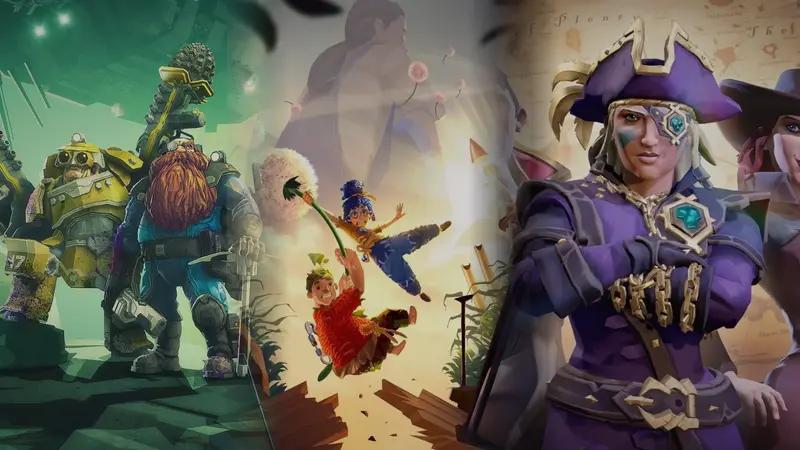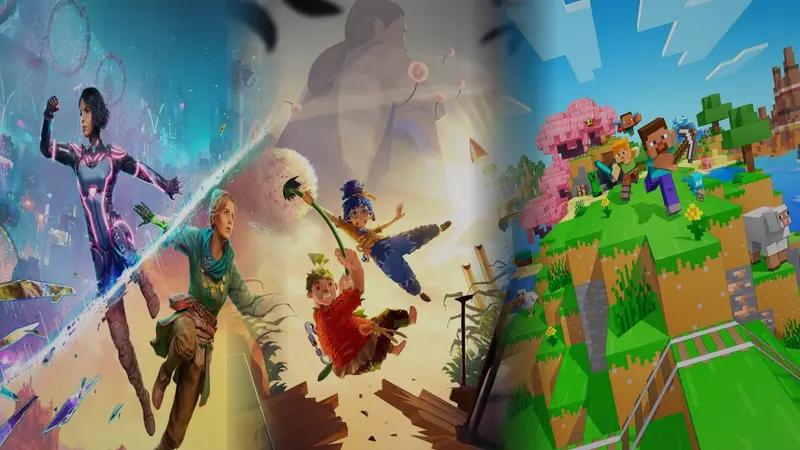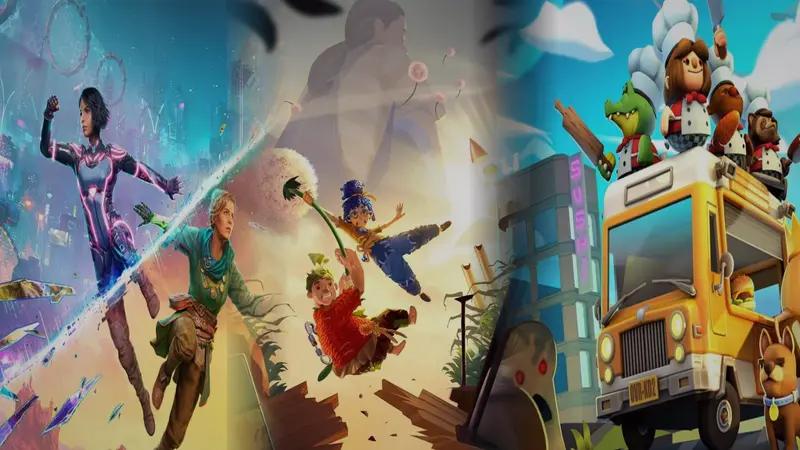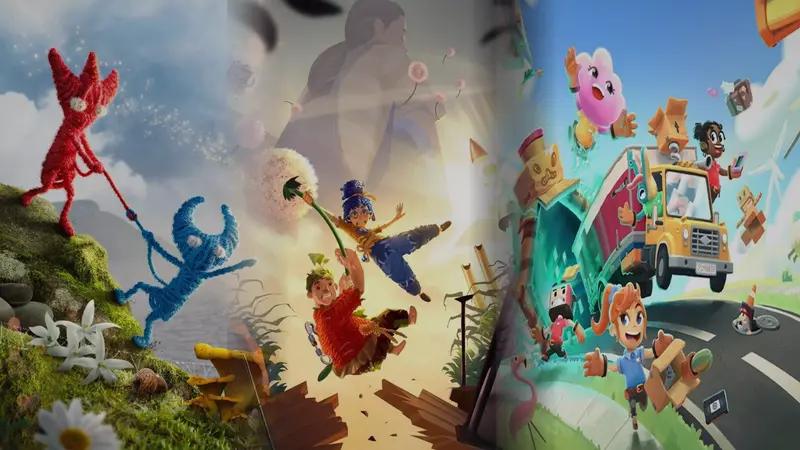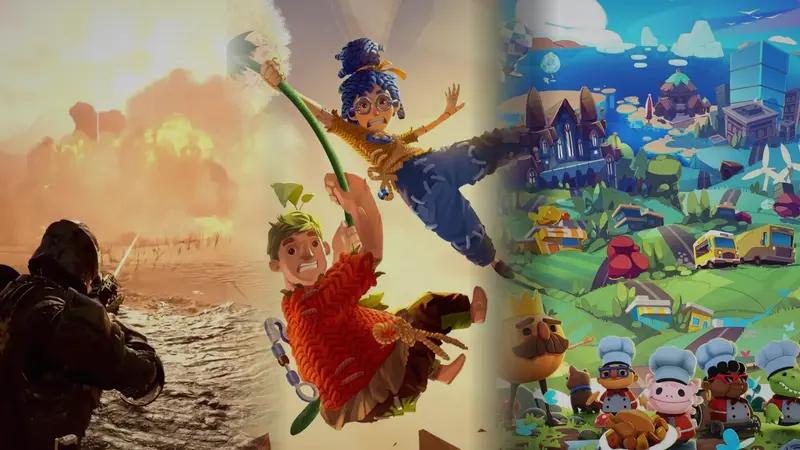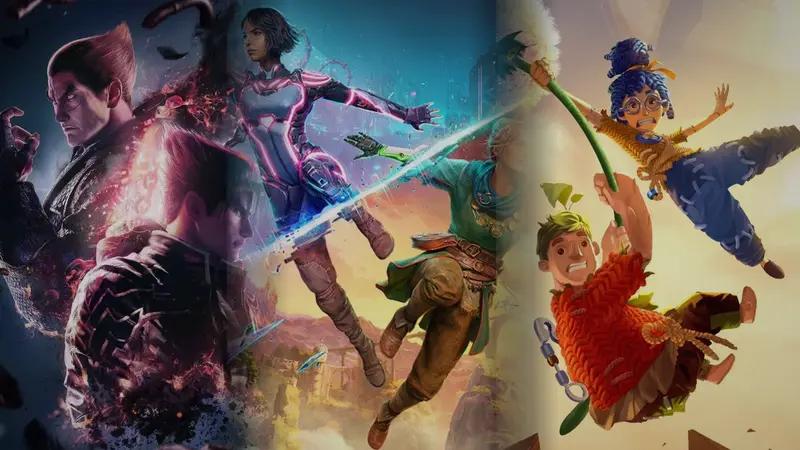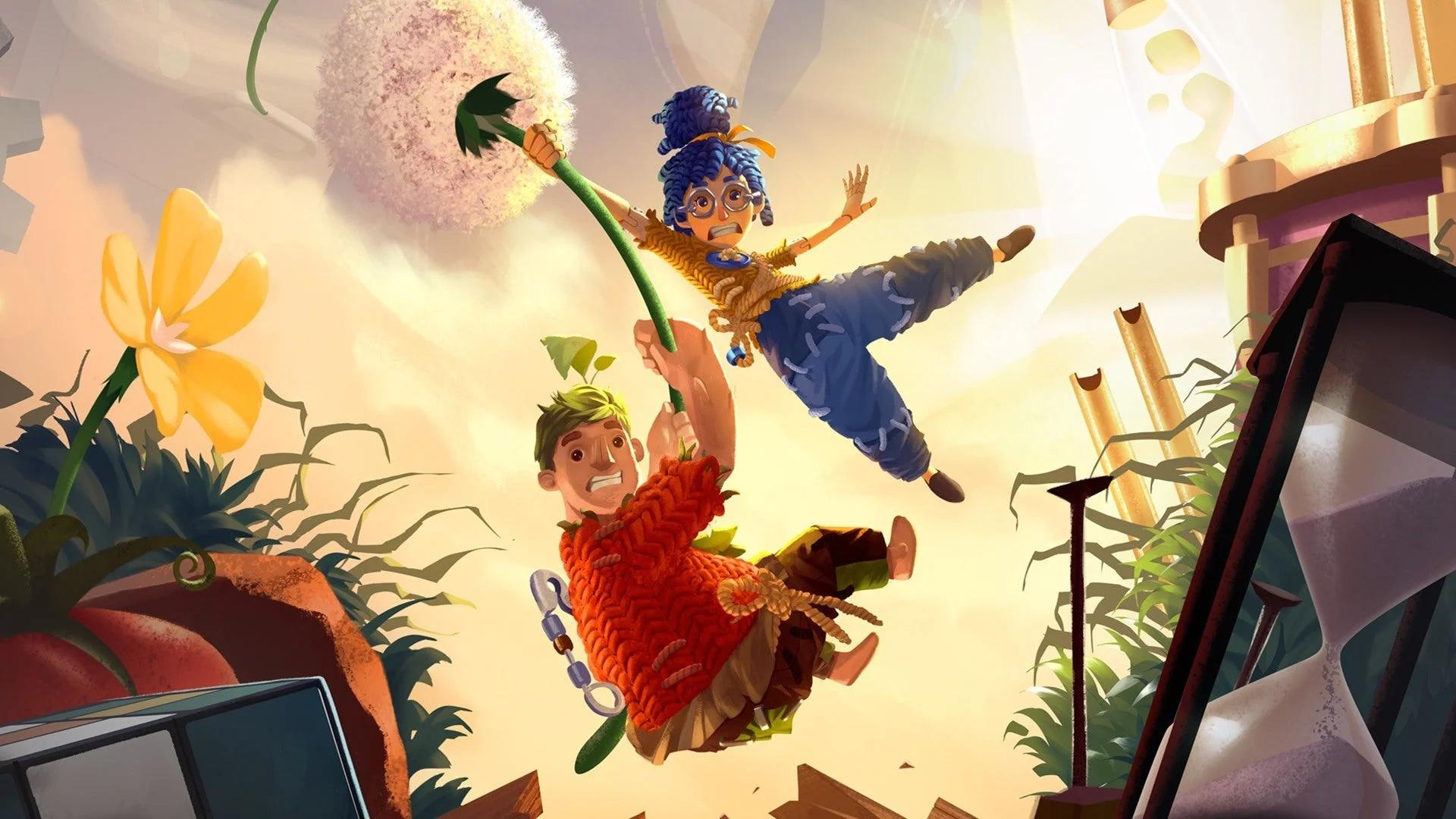
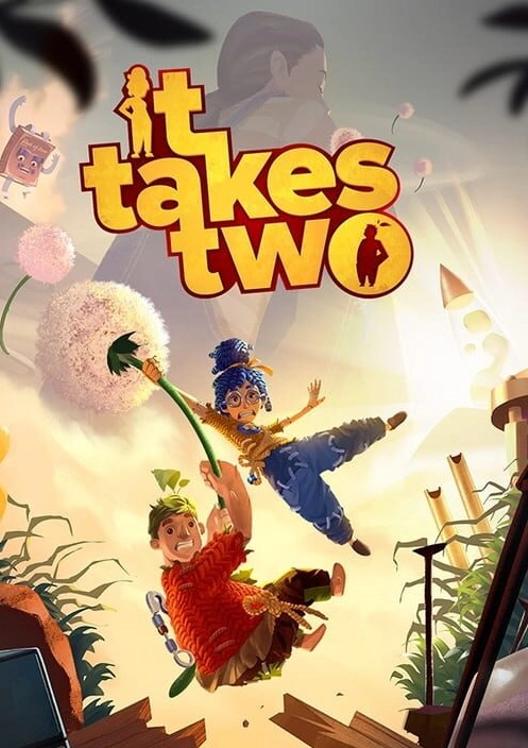


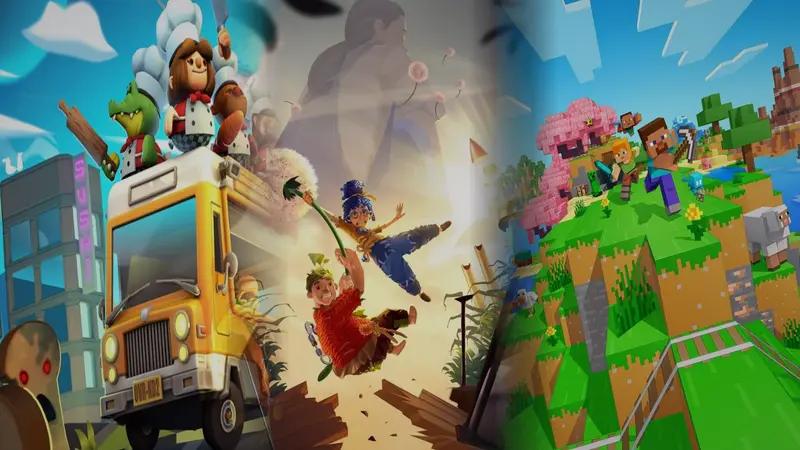
I played this with my wife and she finished it. That almost never happens. She is not a gamer, but It Takes Two pulled her through every chapter because the story kept her invested and the mechanics never repeated themselves long enough to feel stale. One chapter you are throwing hammers at each other across platforms, the next you are using nail guns and magnets. The two-player co-op quality score here is near-perfect and it deserves it. There is no solo mode because the game does not need one. It was built exactly for two people sharing equal responsibility, and that intentionality shows in every level.

It Takes Two
Best if you want a mandatory co-op adventure that constantly reinvents its mechanics, demanding real teamwork through puzzles, platforming, and action sequences that treat both players as equals.
On This Page
Why We Recommend This Game
It Takes Two stands apart because it refuses to let either player coast. Every chapter throws out the rulebook and hands you new toys—one moment you're manipulating time dials while your partner navigates hazards, the next you're piloting mismatched vehicles or combining gadgets to solve environmental puzzles. This relentless variety keeps both players mentally engaged and mechanically essential throughout the 12–14 hour campaign. The learning curve resets every hour or so as you move between genres and mechanics, which means you're constantly in that satisfying discovery phase together. One level feels like a rail shooter, another like a fighting game, then you're back to precision platforming with asymmetric abilities. It's less about mastering one system and more about adapting as a team, which keeps the pacing lively and prevents the fatigue that hits many longer co-op games. Split-screen is mandatory and intelligently designed—puzzles often require looking at your partner's screen or calling out what you see, making communication organic rather than scripted. Checkpoints are generous enough that failed jumps or mistimed actions rarely cost more than thirty seconds, so the difficulty comes from coordinating ideas rather than grinding execution. Most players will find the challenge moderate, with occasional spikes during boss encounters or timed sequences that demand tighter synchronization. Session structure is flexible: chapters break into 20–30 minute segments with clear stopping points, but the variety often pulls you into "just one more" territory. There's minimal replay value once you've seen the mechanics and moments, so this is a one-and-done journey rather than an endlessly replayable sandbox. That focused design is a strength—every idea gets its spotlight then exits before overstaying. The tone stays playful and energetic, even when touching on relationship themes, so it works whether you're playing with a romantic partner, sibling, or close friend. Just know that you need a dedicated co-op partner from start to finish; there's no solo mode or drop-in randos. If you can commit to that pairing, It Takes Two delivers one of the most inventive and consistently engaging cooperative experiences available.
Best For
- Dedicated duos seeking premium co-op with constant mechanical variety
- Couples who enjoy story-driven adventures with relationship themes
- Players who prioritize teamwork and communication over competitive play
Not For
- Solo players or those without a reliable co-op partner
- Anyone seeking high replay value or endgame content
- Players uncomfortable with relationship conflict as thematic backdrop
Multiplayer & Game Modes
2 local • 2 online
It Takes Two does not support crossplay, includes split-screen multiplayer, supports up to 2 players online, features co-op campaign mode.
Features
Play Modes
Co-op • Online Multiplayer • Local Couch Co-op • Split-Screen
Player Count
- Local
- 1-2
- Online
- 1-2
- Team Sizes
- 2-player co-op only
Additional Details
Game is exclusively 2-player co-op; no solo or competitive modes. Supports local split-screen co-op and online co-op for exactly 2 players. No LAN mode and no cross-play between platforms. One player can invite a friend online for free via the Friend’s Pass on the same platform family (e.g., both on Steam/Origin, or both on PlayStation, etc.). Console online play generally requires an active subscription (e.g., PS Plus, Xbox Game Pass Core/Gold).
Edition and Platform Information
Important details about which version to buy and where to play.
Platform Recommendations
Switch version scales back visual fidelity and can feel heavier during busy scenes, but core performance remains solid. Split-screen works well on typical TV setups; handheld mode is less ideal for dual-player sessions due to screen size.
Accessibility Features
Readable subtitles, generous checkpoints, and clear visual prompts help less experienced players. No granular difficulty settings, but forgiving timing windows and quick retries reduce frustration. Limited control remapping; best suited for players comfortable with 3D movement and camera control.
Screenshots
Click any screenshot to view in full size
Featured In Our Articles
We've included this game in 15 articles.
I played this with my wife over a handful of evenings and it's one of the only games she has ever wanted to continue the next day. That almost never happens. The reason It Takes Two sits at number one isn't just that it's built exclusively for two players, though it is. It's that every chapter feels like a completely different game. One hour you're in a snow globe, the next you're doing a split-screen space shooter. Nothing overstays its welcome. Controls are clear from the first minute. And it works equally well on the couch or online, which covers every two-player scenario most people actually find themselves in.
The co-op quality score here is the highest on this list. I played It Takes Two with my wife over several evenings and it is the only game besides Animal Crossing that held her attention from start to finish. The reason is that every chapter introduces completely different mechanics, so you never have time to get bored of any single idea before the game has already moved on to the next one. It sits at ten rather than higher purely because of Steam Deck friction. The EA App launcher adds setup steps that do not exist for native Steam titles, and the handheld performance is good rather than excellent. None of that changes what it is: still the benchmark for two-player co-op campaigns.
I have recommended this game to more people than anything else I have played in the last five years. My wife does not play games. She finished It Takes Two. That tells you everything about what Hazelight got right with the onboarding and the storytelling. One chapter you are shrunk down fighting tools in a toolbox, the next you are piloting two halves of a broken watering can. The mechanic shifts keep both players engaged rather than letting one person carry while the other watches. It sits at two instead of one only because Split Fiction is newer and nudges the formula forward in a few areas. As a couch recommendation, though, this is still close to perfect.
I played this with my wife over a few evenings and she finished the whole thing with me, which almost never happens. The reason is that the game never sits still long enough to become routine. One chapter you are working together with a shrink ray, the next you are on a book-shaped flying machine with split controls. She stopped asking when the game would get easier and started asking when we could play the next chapter. The Switch version holds up well. It is the best pure two-player co-op campaign on the platform and it is not particularly close. The limitation is that it only works with exactly two players. No more, no less.
Still here, still deserving it. My wife and I finished this together over a handful of evenings and it remains the clearest example I know of a game that actually needed two people. The controls are approachable within minutes, the checkpoints are generous, and each chapter introduces mechanics that get ditched before they overstay their welcome. I know Split Fiction is newer and scored close, but It Takes Two stays at two because it's already proven itself across millions of couples who might otherwise never have finished a game together. Some recommendations you make with confidence because you lived them.
My wife does not play games. She played all of It Takes Two. That sentence tells you more about this game than any score could. The mechanics change so frequently that even non-gamers stay curious about what is coming next, and the story gives the whole thing enough emotional pull that you actually want to reach the end. Friend Pass means one copy covers both players, same as Split Fiction. It sits at two instead of one purely because Split Fiction is newer and iterates on the same formula. If you have already played It Takes Two and want more, that is exactly where to go next. If you have not played either, start here.
There is no co-op campaign on PS5 that earns the top spot more clearly than this one. It Takes Two is built around two players at every level. The mechanics literally change chapter by chapter to reflect where the story is going, so the gameplay and the narrative are always saying the same thing at the same time. Played this with a partner over three evenings and we kept pushing for one more chapter. The pacing is tight, the variety is relentless, and it runs cleanly on PS5. The one real caveat: the story leans hard into relationship dynamics, which resonates for some duos and falls flat for others.
There's no other game on PS5 that treats two-player co-op as seriously as this one. Every single mechanic — the magnet boots, the shrink ray, the book-throwing sequences — exists because there are exactly two of you. Neither player can progress without the other, and the roles swap constantly so nobody gets stuck doing the boring half. It supports both local split-screen and online play, with a Friend's Pass so only one of you needs to buy it. The main thing to know: there's no solo mode, no three-player option. It's built for two, full stop. Genuinely one of the best co-op games ever made, on any platform.
If you own one couch co-op game on PS5, I’d make it this one. It Takes Two is built around the idea that both of you matter, all the time, and the game constantly proves it with puzzles and set pieces where each player has a different tool. One minute you’re coordinating platform jumps, the next you’re doing a weird little co-op mini-game that somehow still teaches you teamwork. The only real catch is commitment: it’s a 12–14 hour story, not a quick party pick. Best for couples and consistent duos.
It Takes Two claims the top spot because split-screen isn't just an option—it's the foundation of every puzzle, chase, and boss fight. Each player gets distinct abilities and their own camera view, forcing real coordination instead of one person leading. The Switch port maintains stable dual-view performance because the game was designed around two active screens from day one, making it the benchmark for cooperative split-screen design.
It Takes Two takes first place as a couples game because it's literally about two people relearning how to work together through a divorce storyline. Every level demands partner reliance—timing jumps, combining gadgets, talking through puzzles—making it feel like relationship practice wrapped in playful adventure. The upbeat pacing and constant variety keep things fun rather than heavy, ideal for couples comfortable with emotional themes who want both laughs and bonding.
It Takes Two ranks here because every chapter introduces fresh mechanics that demand genuine online coordination—manipulating time, swapping gravity, or piloting quirky vehicles together. The stable Switch online performance highlights how the game treats both players as equals throughout a GOTY-winning adventure. While replay is limited after the story concludes, dedicated duos get one of the most inventive co-op journeys available.
It Takes Two ranks high because every level completely reimagines how two players cooperate, from puzzle tools to action sequences demanding tight coordination. The co-op-only design makes each success feel genuinely shared rather than one player carrying the other. While the Switch version scales back visual detail and can feel heavier during busy moments, core performance remains solid, delivering one of the most mechanically inventive couch co-op experiences available for committed pairs.
It Takes Two secures its ranking by making story progress literally depend on shared problem-solving—every level retools mechanics around collaboration that mirrors the narrative's partnership themes. The focused campaign rarely repeats ideas, stays accessible to non-regulars, and makes co-op communication essential without stress. It's shorter and less replayable than longer picks, but as a directed, story-first two-player experience with constant meaningful interaction, it's exceptional.
Frequently Asked Questions
Common questions about this game answered by our team.
How hard is It Takes Two?
Moderate overall. Challenge comes from coordination and learning new mechanics together rather than demanding reflexes. Generous checkpoints and quick retries keep frustration low, though some late-game sequences require better timing.
How long does it take to beat?
12–14 hours for the full campaign. Natural breaks occur every 20–30 minutes, but varied pacing often encourages longer sessions. No meaningful content after the story ends, so it's a one-playthrough experience.
Can I play solo?
No. It Takes Two requires two players at all times—local split-screen or online. There's no AI companion or single-player mode. You need a dedicated co-op partner from start to finish.
Good for beginners?
Yes, if at least one player is comfortable with 3D games. Simple controls and forgiving checkpoints help newcomers, though constant mechanic changes mean both players stay in learning mode together. Communication matters more than skill.
Does it have replayability?
Minimal. Once you've experienced the mechanics and set pieces, there's little reason to replay beyond showing a new partner. The value is in the first playthrough's constant surprises and cooperative discovery.