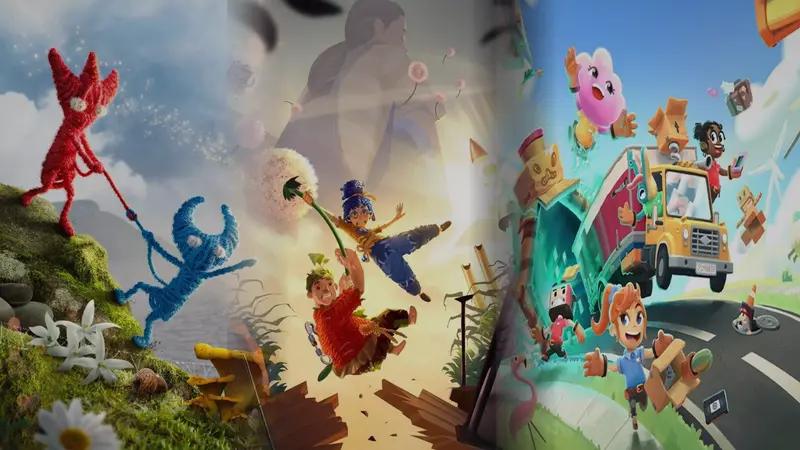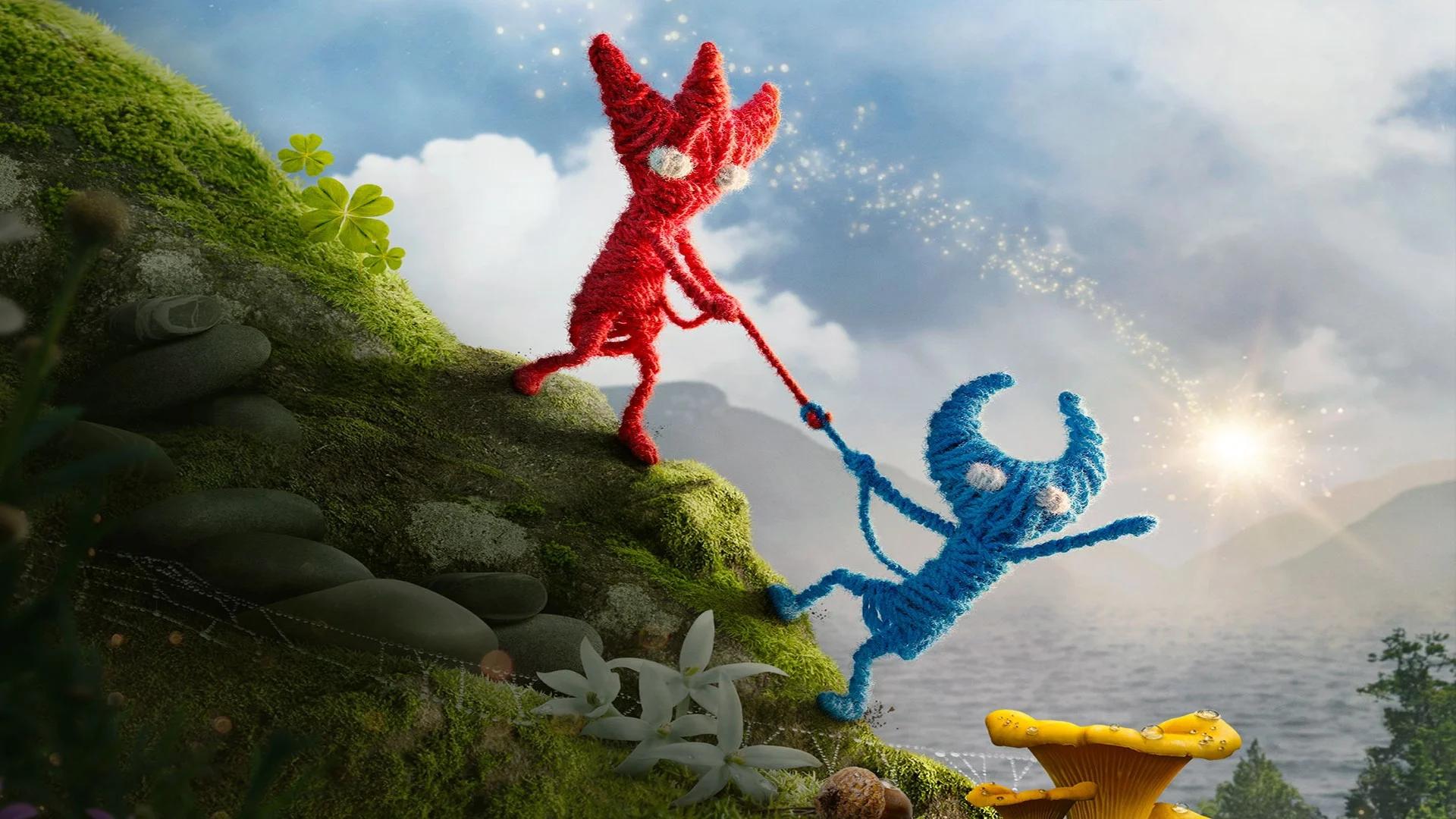



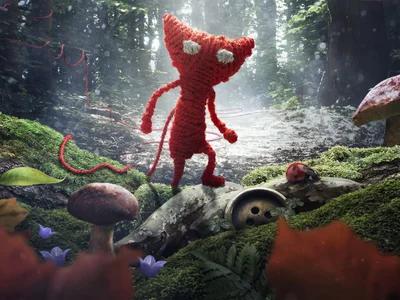

Unravel Two earns a high ranking because almost every obstacle demands cooperation—swinging each other across gaps, anchoring ropes for climbing. The vertical split-screen feels natural for its slow, careful movement and makes it easy to track both players. Performance stays steady in co-op, keeping tricky sections readable. Best for pairs who usually play docked, since handheld mode locks you to solo play.

Unravel Two
Best if you want a cooperative puzzle-platformer where teamwork isn't optional—it's physically woven into every challenge, creating a calm, tactile experience that feels like learning to trust and support another player.
On This Page
Why We Recommend This Game
Unravel Two builds its entire gameplay loop around interdependence. You control two yarn creatures literally tied together by a thread, and that tether is your most important tool. One player anchors while the other swings across a gap. You boost each other to higher ledges, catch one another mid-fall, and split apart to operate switches simultaneously before reuniting. The physics feel tangible and deliberate—yarn stretches, weight matters, momentum carries—so every successful maneuver feels earned rather than scripted. The learning curve is gentle but steady. Early levels teach you the basics: swing, climb, tie off to anchor points. By mid-game, you're chaining moves—one Yarny holds a platform steady while the other lasso-swings to activate a distant lever, then quickly reels back before the window closes. It's never punishingly hard, but it asks for observation, timing, and clear communication. Generous checkpoints mean a missed jump costs seconds, not minutes, keeping frustration low even when you're learning a tricky sequence. Session structure fits perfectly into 20–40 minute chunks. Each level is a self-contained environment—forests, industrial ruins, coastal cliffs—with a mix of traversal puzzles and optional collectibles tucked into branches off the main path. You can comfortably play a level or two in an evening, and the pacing stays calm throughout. There's no combat, no timers ticking down, just steady forward momentum punctuated by moments where you pause, study the layout, and figure out how to use your shared thread to proceed. Solo play is surprisingly viable: you swap between both Yarnys instantly, and the game pauses time when you switch, letting you orchestrate complex moves alone. It's more cerebral this way, less about real-time coordination and more about puzzle choreography. Co-op, though, is where the design shines—those moments when your partner catches you mid-leap or realizes the trick you missed feel genuinely collaborative. Replayability is modest. Once you've solved a puzzle, it stays solved, and the campaign is fairly linear. Post-game challenge levels ramp up difficulty for players craving tougher platforming, but the main draw remains that first cooperative journey, not mastery or loops.
Best For
- Duos seeking puzzle-platforming that demands constant coordination
- Players who value symbolic, wordless environmental storytelling
- Families or mixed-skill pairs wanting forgiving difficulty with meaningful cooperation
Not For
- Those expecting lengthy campaigns or high replay value after completion
- Players wanting fast-paced action or reflex-driven platforming
- Anyone seeking complex narrative or dialogue-heavy storytelling
Multiplayer & Game Modes
2 local
Unravel Two does not support crossplay, supports up to 2 players locally, features co-op campaign mode.
Features
Play Modes
Single Player • Multiplayer • Co-op • Local Couch Co-op • Shared Screen
Player Count
- Local
- 1-2
Additional Details
Game supports only local co-op for 2 players on a shared screen. No online or LAN multiplayer, no split-screen, and no cross-play features on any platform. Entire story campaign can be played solo (controlling both Yarnys) or in 2-player local co-op. Players cannot drop in or out mid-session; co-op pairing is set from the start of play. Note: there is no built-in online co-op support, but there are workarounds like Steam Remote Play Together, or PS Share Play.
Edition and Platform Information
Important details about which version to buy and where to play.
Platform Recommendations
On Nintendo Switch, co-op requires docked or tabletop mode—handheld locks you into solo play only. Performance in co-op is stable, and the split-screen layout adapts naturally to slower, careful movement.
Accessibility Features
Assist Mode offers adjustable game speed and extended yarn reach, helping mixed-skill pairs stay together. Subtitles and clear visual contrast aid readability. Limited button remapping and fine-motor demands in some platforming sections may challenge players with dexterity concerns.
Screenshots
Click any screenshot to view in full size
Featured In Our Articles
We've included this game in 3 articles.
Unravel Two is a soft-spoken puzzle-platformer where two tiny yarn creatures physically tied together navigate natural environments. For couples, that tether becomes a beautiful metaphor: you catch each other from falls, swing off one another, and solve physics puzzles that only work with trust and coordination. The calm tone, nature backdrops, and lack of combat make it a soothing choice for date night.
Unravel Two tells a quiet story through environments and animation rather than cutscenes, and its two-yarn mechanics reinforce partnership—tethering, catching, and boosting each other through hazards. On Switch, it's a comfortable couch experience with generous assists, making it welcoming for families. The narrative is tender but intentionally minimal, with replay hinging on collectibles or post-game trials.
Frequently Asked Questions
Common questions about this game answered by our team.
How hard is it?
Light to moderate. Most puzzles reward observation and coordination over fast reflexes. Generous checkpoints soften tougher platforming, and Assist Mode can slow the pace or extend your yarn reach if needed.
How long to beat?
About 5–7 hours for the main campaign, with optional collectibles and post-game challenge levels adding a few more hours. Each level fits comfortably into 20–40 minute sessions.
Can I play solo effectively?
Yes. You swap between both Yarnys instantly, and time pauses during switches, letting you choreograph complex moves alone. It's more puzzle-focused than co-op's real-time coordination.
Good for beginners?
Very. Simple controls, gradual difficulty curve, and clear visual cues make it approachable. Assist Mode helps newer players keep pace, and the cooperative design naturally supports learning together.
Is there much replay value?
Modest. The campaign is linear, and puzzles don't change. Post-game challenge levels offer tougher platforming, but the main appeal is that first cooperative playthrough rather than multiple runs.