




Trine 4 offers stable online co-op where up to four players combine wizard, warrior, and thief abilities to solve physics puzzles. One conjures platforms while another anchors enemies—thoughtful coordination at its best. Beautiful presentation and brainy challenges make it perfect for small groups seeking puzzle-solving over grind, though limited replay after completing puzzles once keeps it from the top tier.

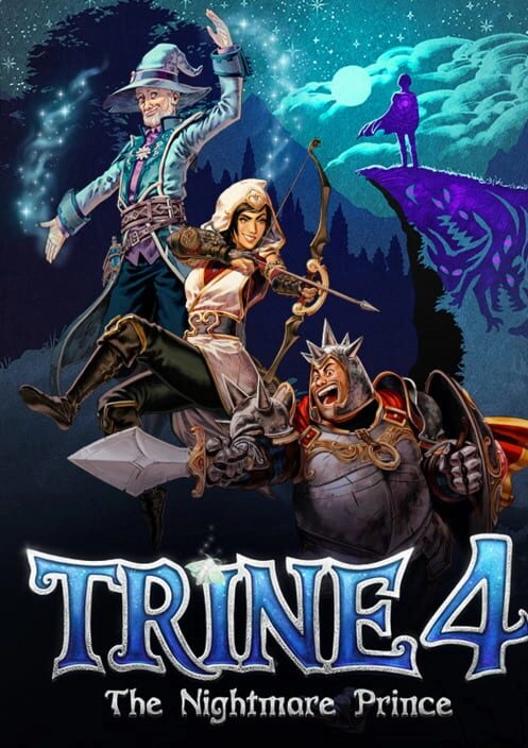
Trine 4: The Nightmare Prince
Best if you want cooperative puzzle-solving that rewards creative thinking and coordination, wrapped in gorgeous 2.5D fantasy visuals perfect for couch or online play with 2-4 friends.
On This Page
Why We Recommend This Game
Trine 4 delivers physics-based puzzle-platforming where three distinct character classes—wizard, knight, and thief—must combine their abilities to overcome environmental challenges. The wizard conjures boxes and platforms, the knight shields and anchors, and the thief grapples and shoots precision arrows. Playing solo means swapping between all three on the fly, while co-op assigns roles and demands genuine coordination. The learning curve is gentle, introducing mechanics gradually across the first few levels before layering complexity. Early puzzles might ask you to simply conjure a box and climb, but later challenges involve manipulating magnetic fields, redirecting light beams, freezing water, and chaining abilities in sequence. The game smartly scales puzzle complexity to player count—two-player sessions feel tighter and more intimate, while four-player groups face additional obstacles and alternate solutions. Sessions flow smoothly in 30-60 minute chunks, with checkpoints frequent enough to accommodate drop-in play. The 10-12 hour campaign maintains strong pacing, never lingering too long on a single mechanic before introducing fresh twists. Combat exists but stays light—more about positioning and ability timing than reflexes, serving as punctuation between puzzle sequences rather than the main attraction. The skill tree adds satisfying progression without overwhelming choice. Unlocking new abilities—conjuring multiple objects, creating tethers, launching heavier projectiles—opens alternate puzzle approaches and rewards creative experimentation. Returning players can tackle challenges differently, though the core solutions remain recognizable, limiting replay appeal once you've seen all the mechanics. Visually, it's stunning: hand-painted environments with depth and detail that make every screen feel like concept art come to life. The fairy-tale aesthetic stays consistent and the orchestral soundtrack matches the whimsical tone perfectly. Online multiplayer is stable and local co-op shines on a single screen without feeling cramped. Difficulty stays accessible throughout—frustration comes from "aha" moments rather than execution barriers, making it ideal for mixed-skill groups. Boss encounters add combat intensity but remain pattern-based and forgiving. The experience prioritizes cooperation and clever thinking over challenge or replayability, making it a one-and-done playthrough for most groups, albeit a memorable one.
Best For
- Couples or small friend groups seeking thoughtful co-op that emphasizes collaboration over competition
- Puzzle fans who enjoy physics-based environmental challenges with multiple solution paths
- Players wanting stunning visual presentation and fairy-tale atmosphere with low-stress gameplay
Not For
- Action-focused players expecting deep combat systems or reflex challenges
- Completionists seeking extensive post-game content or meaningful replay incentives
- Solo players who prefer not to swap between multiple character abilities frequently
Multiplayer & Game Modes
4 local • 4 online
Trine 4: The Nightmare Prince does not support crossplay, supports up to 4 players online, features co-op campaign mode.
Features
Play Modes
Single Player • Multiplayer • Co-op • Online Multiplayer • Local Couch Co-op • Shared Screen
Player Count
- Local
- 1-4
- Online
- 1-4
- Team Sizes
- Co-op up to 4
Additional Details
Supports 1–4 player co-op in the story/campaign both online and locally (shared-screen). No split-screen mode. No LAN mode listed for PC. No official cross-platform multiplayer support indicated. On consoles, online play typically requires the platform’s online subscription (e.g., PS Plus / Nintendo Switch Online / Xbox network subscription depending on platform policies).
Edition and Platform Information
Important details about which version to buy and where to play.
Platform Recommendations
Switch version shows occasional minor frame drops in densely detailed scenes, but remains perfectly playable. Local co-op works smoothly on a single screen. Other platforms offer more consistent performance if visual stability is a priority.
Accessibility Features
Forgiving checkpoint system and minimal timing-based challenges make it approachable for players with limited reflexes. Colorblind players may struggle with some light-based puzzles. No difficulty settings, but generous respawns and puzzle hints available.
Screenshots
Click any screenshot to view in full size
Featured In Our Articles
We've included this game in 2 articles.
Trine 4 delivers elegant 4-player puzzle co-op with interlocking character abilities and fairy-tale charm. While its physics-based collaboration shines and alternative puzzle solutions add replay value, the story serves more as pleasant backdrop than driving narrative force. Mild Switch performance dips and lighter character development place it just outside the top tier for story-focused co-op.
Frequently Asked Questions
Common questions about this game answered by our team.
How hard is it?
Accessible throughout with challenge coming from puzzle logic rather than execution. Later levels require creative thinking but rarely frustrate. Boss fights add intensity but remain pattern-based and forgiving with frequent checkpoints.
How long to beat?
10-12 hours for the main campaign at a comfortable pace. Completionists hunting collectibles might add 2-3 hours. Natural session length is 30-60 minutes between checkpoints.
Is it good solo or better co-op?
Both work well. Solo means swapping characters frequently for puzzle variety. Co-op (2-4 players) creates more organic teamwork and communication moments, making puzzles feel collaborative rather than mechanical.
Does it have replay value?
Limited. Puzzles lose their surprise once solved, and while skill trees allow alternate approaches, core solutions remain similar. A satisfying one-time playthrough, but rarely pulls players back for multiple runs.
Can I drop in/out during co-op?
Yes, both online and local co-op support seamless drop-in/drop-out. Puzzles dynamically adjust complexity to player count, making it flexible for casual sessions with rotating participants.

