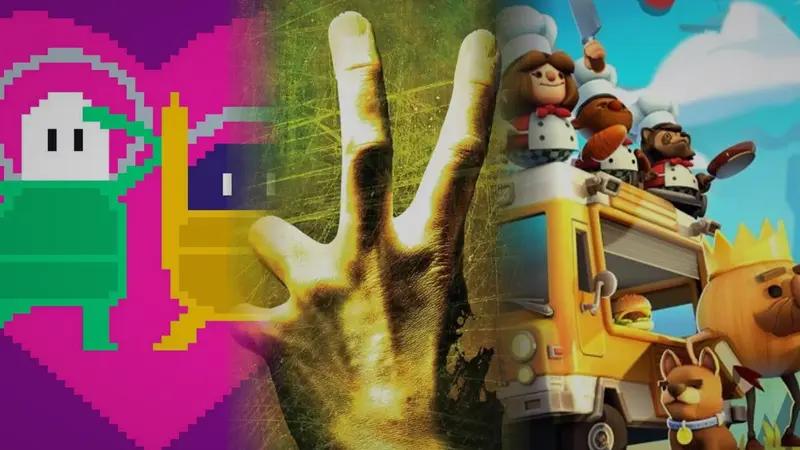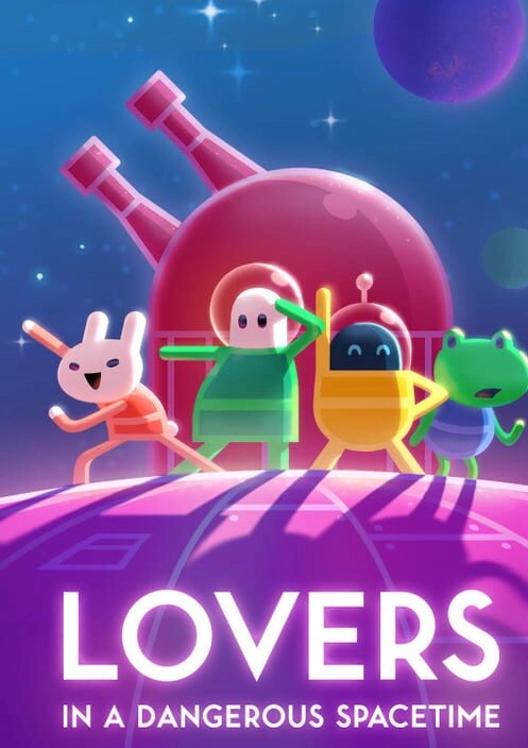




Lovers in a Dangerous Spacetime is a frantic, colorful team game where everyone shares one ship and constantly swaps jobs. It ranks so high because cooperation isn’t optional: shields, steering, and weapons all demand real coordination, and moments of clutch teamwork happen naturally. It’s also a dream for low-end laptops, with a lightweight presentation that stays smooth and readable even when the screen gets busy. The main trade-off is that it’s local-only, so everyone needs to be in the same room. Best for groups who want true couch co-op coordination without setup hassle.

Lovers in a Dangerous Spacetime
Best if you want a co-op game that demands constant communication and role-swapping as you frantically run between stations on a shared spaceship, turning coordination itself into the core challenge.
On This Page
Why We Recommend This Game
Lovers in a Dangerous Spacetime builds its entire identity around interdependence. You're not just playing alongside someone—you're manning different stations inside one fragile vessel, sprinting between shields, turrets, engines, and map screens as threats swarm from all angles. One person can't do it all, so you're constantly shouting priorities, swapping roles mid-battle, and learning to read each other's intentions. That communication loop is the game's genius: victories feel earned because you synchronized under pressure, not because you mastered a combo system. The learning curve is gentle at first. Early missions teach you the basics—steer here, fire there, raise shields—but soon you're juggling asteroid fields, enemy waves, and rescue objectives simultaneously. The ship upgrades you collect mid-run add tactical wrinkles: do you socket a beam weapon or a missile launcher? Speed boost or shield enhancement? These choices create light strategic variety without bogging down the pace. Missions run 10–20 minutes, making it easy to squeeze in a level or two, and the quick restart loop keeps momentum high even after a loss. The game scales surprisingly well from two to four players. With a duo, roles are clearly divided and you develop tight rhythms. Add a third or fourth and it becomes delightful chaos—more hands to cover stations, but also more voices competing for attention. Solo play exists with an AI companion you command, but it's a diminished experience; the game truly sings when human coordination is required. Replayability comes from difficulty tiers and ship variants rather than branching content. The campaign length is modest—you'll see the final boss in 4–6 hours—but harder modes demand tighter execution and smarter upgrades, rewarding teams who've honed their communication. The neon art style and heart-filled theming keep the tone playful rather than grim, which helps when coordination breakdowns lead to explosive failures. It's not a game about perfect reflexes; it's about messy, improvised teamwork, and that's where the joy lives.
Best For
- Couples or duos who thrive on coordination challenges and constant communication
- Local co-op groups (2-4 players) seeking a unique teamwork-driven experience
- Players who enjoy space shooters with a cooperative twist rather than competitive mechanics
Not For
- Solo players—AI companion can't replicate the teamwork magic
- Groups preferring slower, puzzle-heavy co-op without time pressure
- Players seeking long campaigns or deep progression systems beyond difficulty tiers
Multiplayer & Game Modes
4 local
Lovers in a Dangerous Spacetime does not support crossplay, supports up to 4 players locally, features co-op campaign mode.
Features
Play Modes
Single Player • Multiplayer • Co-op • Local Couch Co-op • Shared Screen
Player Count
- Local
- 1-4
Additional Details
Supports 1-4 players in local couch co-op on a single system with shared-screen gameplay. No built-in online or LAN multiplayer on any platform; online play is only possible via third-party remote-play/streaming features (e.g., Steam Remote Play Together, console share-play). Full campaign is playable in co-op. No split-screen or hotseat, and no cross-play since there is no native online mode. Console online subscriptions (PS Plus, Xbox Live Gold/Game Pass Ultimate, Nintendo Switch Online) are not required for local co-op.
Edition and Platform Information
Important details about which version to buy and where to play.
Platform Recommendations
Switch version performs solidly in handheld and docked modes with clear, readable UI on smaller screens. Local co-op is the only multiplayer option—no online play—so you'll need controllers for everyone.
Accessibility Features
Bright color palette and clear station icons make UI readable. Multiple difficulty settings let you reduce pressure. Twin-stick controls are straightforward, but the need to manage multiple stations simultaneously can overwhelm players who prefer slower-paced games.
Screenshots
Click any screenshot to view in full size
Featured In Our Articles
We've included this game in 6 articles.
With its literal theme of spreading love through the galaxy, Lovers in a Dangerous Spacetime feels purpose-built for couples. The constant station-swapping and role-trading creates natural communication practice, turning spaceship management into shared victories that strengthen coordination habits. Its heart-filled art and playful sci-fi tone keep the action light and relationship-focused, though the hectic pace works best for pairs who enjoy active teamwork.
This frantic spaceship game forces players to sprint between stations, managing shields, weapons, and engines while shouting priorities as threats pile up. Its core strength is making teamwork feel tangible through constant role-swapping and live decisions. The coordination demands may overwhelm very casual groups, but for duos who thrive on intense, communication-heavy co-op, it delivers unforgettable shared moments in a neon-soaked universe.
Lovers in a Dangerous Spacetime exemplifies indie co-op design by forcing constant station-swapping and live prioritization—no one player can handle steering, weapons, shields, and engines alone. That interdependence creates a satisfying coordination loop that rewards communication and teaches teamwork organically, making it a standout for Switch's pick-up-and-play ethos despite local-only play and a shorter campaign.
Few games make four-player cooperation as tangible as Lovers in a Dangerous Spacetime, where every station swap and shouted callout directly impacts survival. The ship becomes a living co-op puzzle that forces constant role rotation, ensuring all four players contribute meaningfully. Its rock-steady Switch performance and mission-based structure make sessions manageable, though success hinges on vocal groups willing to coordinate under pressure.
Lovers in a Dangerous Spacetime scales beautifully from two to four players, letting everyone contribute by manning different stations inside one fragile battleship. The frantic station-swapping gameplay ensures every player matters, whether you're a couple coordinating turret fire or a full crew juggling shields, engines, and weapons simultaneously. Its neon aesthetic and heart-filled universe make cooperation feel joyful rather than stressful.
Frequently Asked Questions
Common questions about this game answered by our team.
How hard is it?
Moderate with adjustable difficulty. Success depends more on communication and role-swapping than reflexes. Lower settings make it playful; higher tiers demand tight coordination and smart upgrades.
How long to beat?
4–6 hours for the main campaign on normal difficulty. Missions are 10–20 minutes each, perfect for short sessions. Replay value comes from harder modes and ship variants.
Is it good for beginners?
Yes, if they're playing co-op and willing to communicate. Early levels teach mechanics gently, and lower difficulties reduce pressure. Solo play or silent partners will struggle more.
Can I play online?
No, it's local co-op only (couch/shared screen). You'll need multiple controllers for the full experience, and everyone plays on one screen together.
Does it work well with two players?
Absolutely—many consider two-player the sweet spot. Roles are clearly divided, communication is simpler, and you build tight rhythms. Three or four players add fun chaos but also coordination complexity.