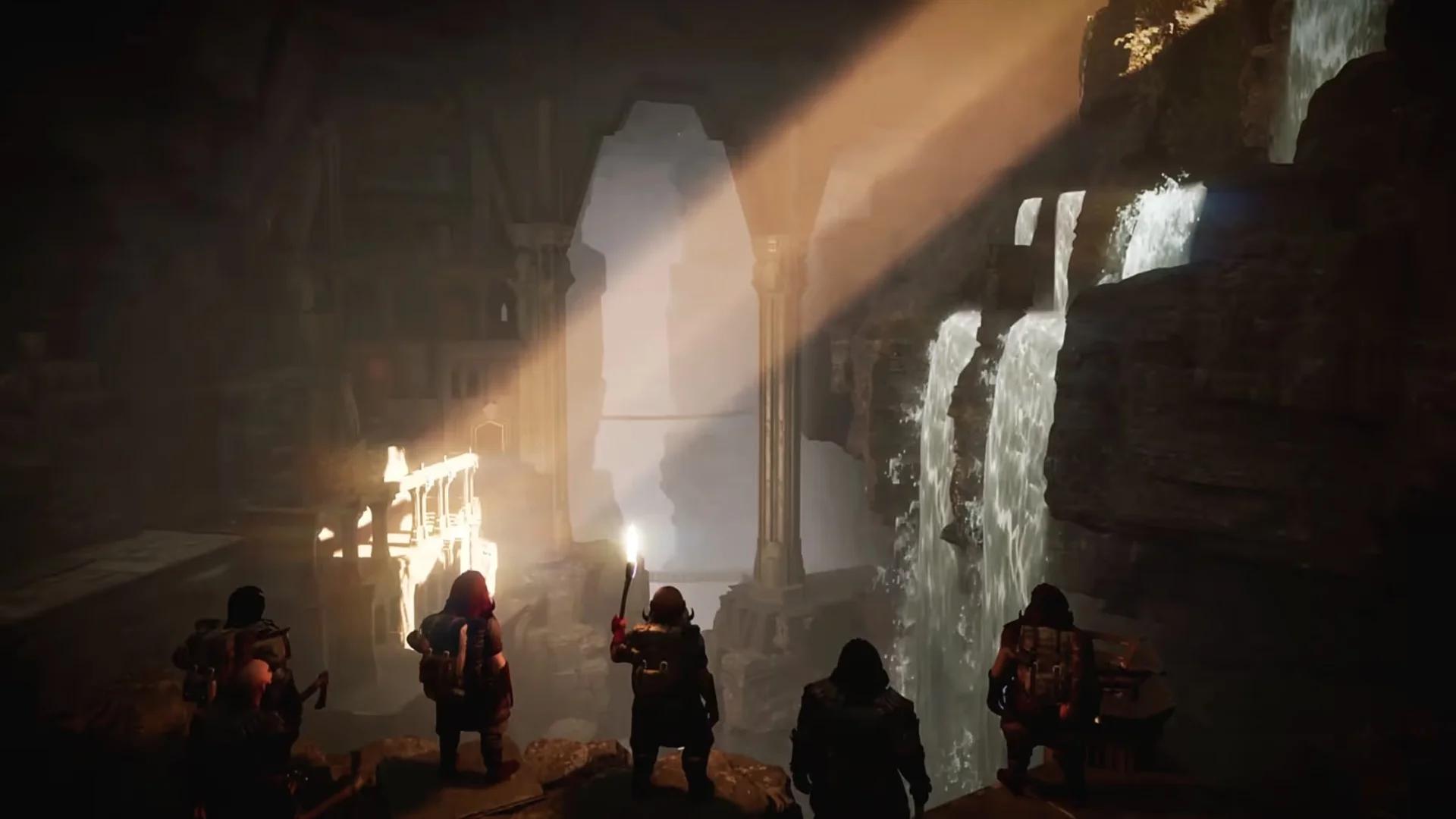


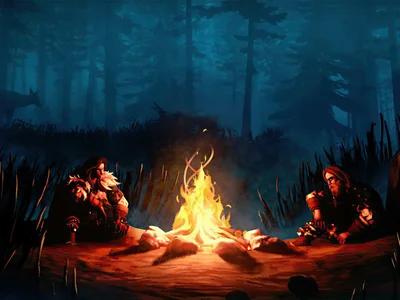
I have a soft spot for anything set in Middle-earth. Always have. It's the fantasy world I keep coming back to across games, films, and books, and the idea of playing a Dwarf reclaiming Moria genuinely got my attention in a way that most survival crafters don't. You are a Dwarf. Moria has been reclaimed in name. Now you need to dig through it, rebuild it, and survive whatever is still lurking in the dark. Return to Moria is a survival crafting game in the vein of Valheim, set in the Fourth Age of Middle-earth with lore that takes the source material seriously. Up to 8-player co-op online. The procedurally generated depths mean no two playthroughs share the same layout, which matters more than it sounds. Mining into a new cavern and not knowing what you'll find keeps the pacing alive in a genre that can go flat once you've seen everything. The building and crafting systems aren't as deep as some competitors, but there's enough here to keep a group busy for 20 to 30 hours. Solo is playable and honestly more atmospheric than I expected. Quieter, slower, but the feeling of being alone underground in Moria, hearing something move before you can see it, does a lot of the heavy lifting. If you have two or three friends who like survival games, though, that's clearly the better use case. This one lands near the top of the bundle for me.

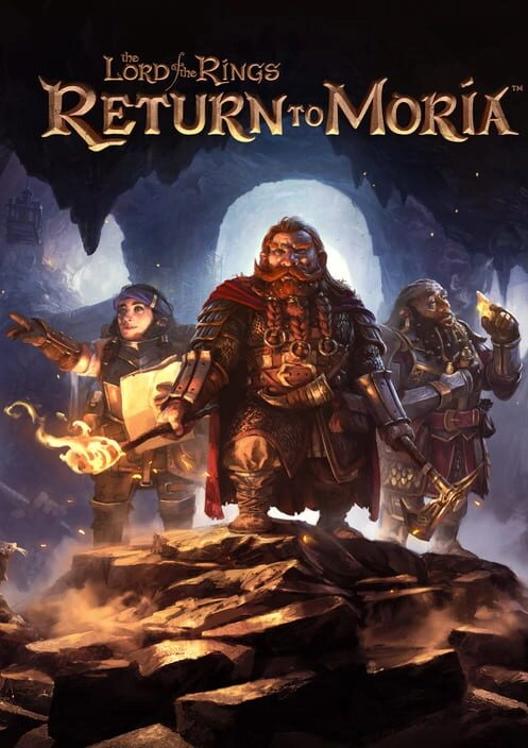
The Lord of the Rings: Return to Moria
Best if you want a co-op survival-crafting experience wrapped in Tolkien's dwarf mythology, digging through atmospheric underground ruins with friends.
On This Page
Why We Recommend This Game
Return to Moria drops you into a procedurally generated underworld and tasks you with surviving, mining, crafting, and building your way through sprawling cave systems. The core loop revolves around resource gathering, base construction, and pushing deeper into dangerous darkness — a familiar survival formula given a distinct fantasy skin that fans of the setting will appreciate. The game shines brightest in co-op. Playing with one to four friends smooths over the rougher edges, turning resource runs and base-building sessions into genuinely social experiences. Tasks feel more manageable when divided, and the tension of exploring unlit corridors is more enjoyable with company. Solo play is possible but noticeably lonelier and more grind-heavy, since the game's pacing is clearly tuned around group play. The learning curve is moderate. Crafting trees and resource hierarchies take a few sessions to internalize, and early hunger and stamina management can feel punishing before you've established a stable base. Expect your first hour or two to involve a fair amount of trial and error. Once systems click, though, there's a satisfying rhythm to expanding your foothold, upgrading gear, and venturing further into more challenging zones. Session structure skews toward medium-to-long play. Setting up camp, completing a mining run, and returning safely can easily consume 90 minutes to two hours. There's no natural stopping point every 20 minutes — the game rewards sustained sessions rather than quick drop-ins, which is worth knowing before you commit. Replayability is moderate. Procedural generation means map layouts vary between runs, but the crafting progression and overall arc follow a fixed path. Players chasing a tight, endlessly varied roguelike loop may feel the structure is too linear over multiple playthroughs. However, starting a new game with a different group of friends can feel fresh enough for a second run. The Metacritic score (59) reflects a mixed critical reception, largely tied to technical roughness at launch and some design inconsistencies. Post-launch patches have addressed several stability issues, so the current experience is meaningfully better than day-one reviews captured. Manage expectations: this is a passion-project niche title, not a polished AAA survival game. If you go in knowing that, the charm and atmosphere carry real weight.
Best For
- Co-op survival-crafting fans who want a thematic fantasy setting beyond the usual post-apocalyptic or sci-fi backdrops
- Tolkien enthusiasts curious to spend extended time in a beloved location through an interactive lens
- Friend groups looking for a shared base-building project with light combat and exploration
Not For
- Solo players expecting a polished single-player survival experience — the game is noticeably designed around co-op
- Players sensitive to technical rough edges or uneven pacing who prefer tightly balanced survival titles
- Anyone looking for quick-session drop-in gameplay; sessions run long and progress is incremental
Multiplayer & Game Modes
8 online
The Lord of the Rings: Return to Moria does not support crossplay, supports up to 8 players online, features co-op campaign mode.
Features
Play Modes
Single Player • Multiplayer • Co-op • Online Multiplayer
Player Count
- 0
- Online
- 1-8
- Team Sizes
- Up to 8 co-op
Additional Details
Supports solo play and online co-op for up to 8 players in the same shared world/campaign. No local couch co-op, split-screen, or LAN support listed. Steam store lists online co-op and online PvP is not listed. Crossplay is not advertised on the official FAQ and community reports indicate platform ecosystems are separate. On PlayStation, online multiplayer requires PlayStation Plus. Sessions are host-based and players can join an existing world.
Edition and Platform Information
Important details about which version to buy and where to play.
Which Edition to Buy
The game launched on PC (Epic Games Store) in October 2023, with console versions following. Ensure you're checking the most current version, as post-launch patches have meaningfully improved stability over the original release.
Platform Recommendations
Originally a timed Epic Games Store exclusive on PC. Console versions are available but check for platform-specific patch parity, as updates have rolled out at slightly different cadences across platforms.
Accessibility Features
No widely documented robust accessibility suite. UI text can be small in cave environments on larger displays or TV distances. No known colorblind modes confirmed at launch. Verify current options in settings before purchasing if accessibility features are a priority.
Screenshots
Click any screenshot to view in full size
Featured In Our Articles
We've included this game in 1 article.
Frequently Asked Questions
Common questions about this game answered by our team.
How hard is it?
Moderate. Early resource and hunger management is punishing until your base is established. Combat is straightforward but darkness and enemy ambushes keep tension high. Co-op significantly reduces difficulty.
How long to beat?
A full playthrough runs roughly 20–35 hours depending on playstyle and group size. Co-op groups may move faster through content; solo players can expect the longer end of that range.
Is it good for beginners to survival games?
It's approachable in co-op with patient friends, but not the smoothest entry point for the genre. Crafting systems and early difficulty spikes assume some survival-game literacy.
Can I play solo or do I need friends?
Solo play is fully supported but the experience is noticeably thinner. The pacing and systems are clearly designed around co-op groups of 2–4. Solo runs can feel slow and grindy.
Is the game in a good state now after launch issues?
Post-launch patches have resolved many stability and bug complaints from early reviews. It's a smoother experience than at release, though some rough edges remain. Check recent player reviews for the current state.