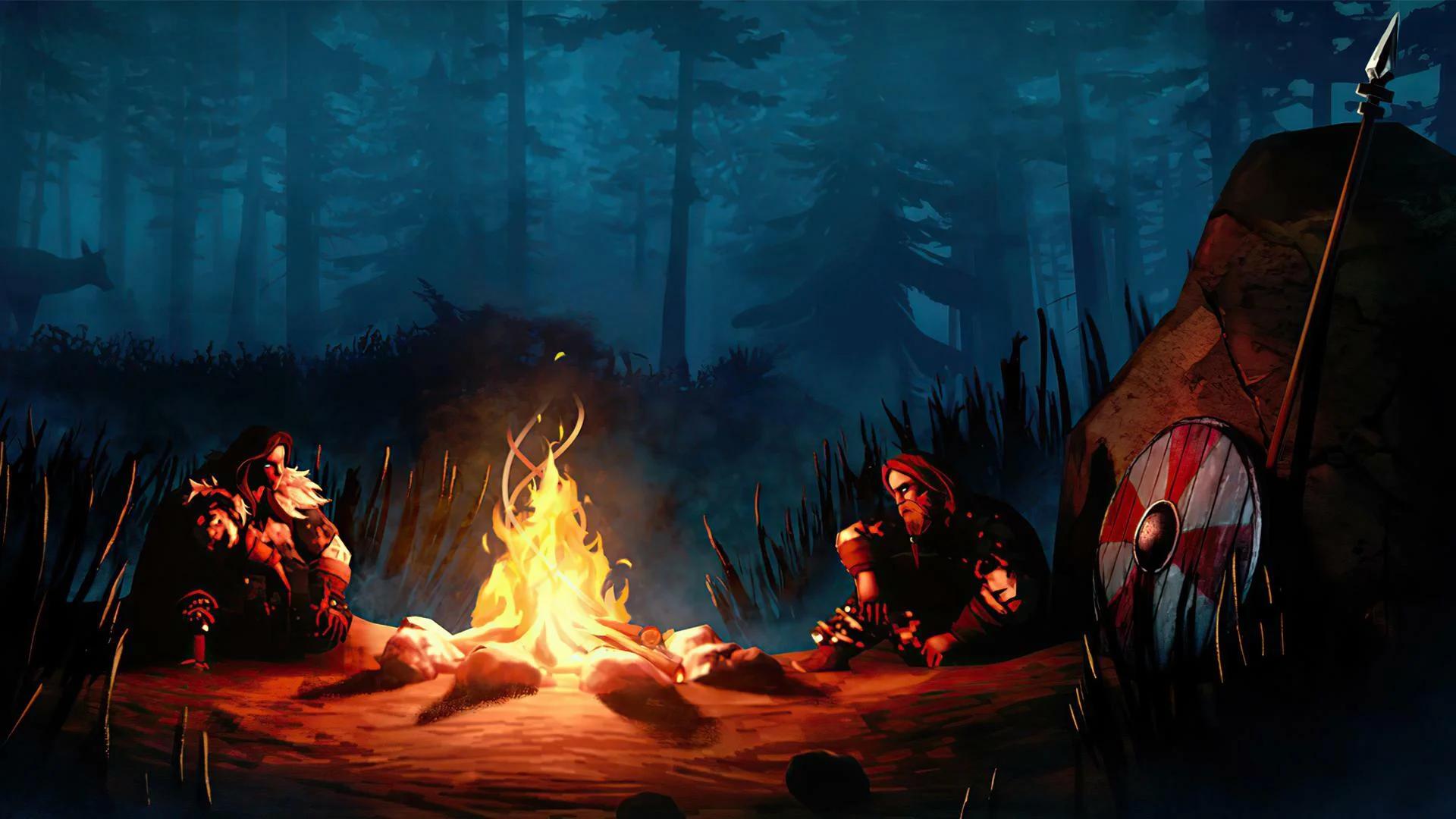
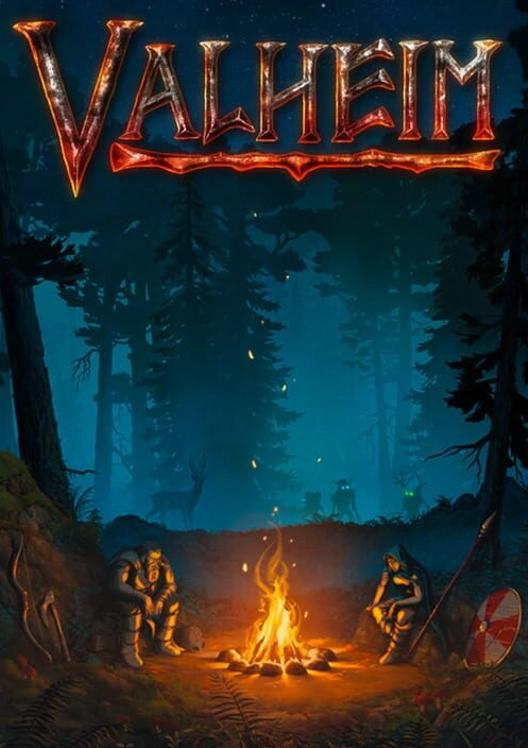







Valheim is a modern survival co-op adventure focused on exploration, base-building, and preparing together for punishing boss fights. It’s here because the co-op loop is strong—friends naturally specialize as builders, hunters, and explorers—and it remains actively supported with meaningful updates. It just missed the top 10 because it’s a more demanding 3D experience than most picks, and it benefits from careful settings and smart hosting choices to stay comfortable on integrated graphics. That extra tuning and heavier moments work against a performance-first shortlist. Best for groups who want a newer survival world and have slightly more headroom than the baseline laptop.

Valheim
Best if you want a relaxed exploration-survival loop where you and friends build Viking settlements, sail into unknown biomes, and tackle boss fights on your own schedule—all while running beautifully on modest hardware.
On This Page
Why We Recommend This Game
Valheim hooks you with a deceptively gentle learning curve: punch trees, craft a stone axe, build a workbench. Within an hour you'll have walls and a fire, and the game never stops you to explain—just nudges you with tool-tips and a progression tree unlocked by gathering new materials. That pacing is its greatest strength. You're not racing a hunger meter or fleeing constant threats; instead, you're enticed outward by boss altars that gate the next tier of gear, each demanding you venture into harsher biomes for bronze, iron, silver, and beyond. Combat sits somewhere between Dark Souls and a hack-and-slash: stamina-based blocking, dodging, and weapon timing matter, but fights are short and forgiving enough that a well-fed character can weather mistakes. Food is a pre-emptive buff system—eat three dishes to boost health and stamina pools—so you prepare before danger rather than scrambling mid-crisis. Boss encounters punctuate every ten to twenty hours and demand strategy tweaks (bring frost resistance mead, kite with arrows, build cover), making them satisfying skill checks without brutal failure loops. Building is where sessions expand. The snap-grid system is intuitive yet deep: beams need structural support, roofs require angles, and chimneys must vent smoke or your longhouse fills with choking fog. You'll lose evenings to perfecting a mead hall or a coastal dock for your karve. Sailing adds meditative rhythm—tacking into the wind, watching weather roll across procedural seas—and turns resource hauls into mini-expeditions. Co-op shines because the game scales gently and roles emerge organically: one player mines, another farms, a third scouts for the next boss altar. Up to ten can share a server, and the lack of PvP pressure (it's opt-in) keeps the vibe collaborative. Solo is equally valid but slower; expect thirty to fifty hours to see all current biomes versus twenty in a group. Two caveats: Valheim remains in Early Access, so the final three biomes are placeholders, and large bases or heavy terrain edits can stutter on older CPUs. The Vulkan renderer helps integrated GPUs, but expect 30–45 fps in dense areas. If you want taut survival tension, look elsewhere—Valheim is deliberate, not desperate, and that's its charm.
Best For
- Co-op groups who want exploration and building over harsh survival mechanics
- Players seeking boss-gated progression in a procedural Norse world
- Low-spec PC owners needing a beautiful multiplayer open-world that runs well
Not For
- Players expecting a complete experience—three late-game biomes are still under development
- Fans of high-stakes survival with constant resource scarcity
- Those wanting fast-paced action; combat and sailing are methodical, not frantic
Multiplayer & Game Modes
10 online • Partial Crossplay
Valheim has partial crossplay support, supports up to 10 players online, features co-op campaign mode.
Features
Play Modes
Single Player • Multiplayer • Co-op • PvP • Online Multiplayer • LAN Multiplayer
Player Count
- Online
- 1-10
- LAN
- 1-10
- Team Sizes
- Co-op up to 10 players; optional PvP
Additional Details
Supports up to 10 players per world via online or LAN. No couch/local split-screen. Co-op is the core mode; PvP damage can be enabled between players. Drop-in/out supported by joining friends' servers or dedicated servers while the world is running. Cross-play is available between PC (Steam/Microsoft Store/Game Pass) and Xbox; PlayStation version does not support cross-play as of 2024. Online play on consoles requires the respective subscription (e.g., Xbox Game Pass Core/Gold). Dedicated server tool available on PC.
Edition and Platform Information
Important details about which version to buy and where to play.
Platform Recommendations
PC only. Use the Vulkan renderer (in settings) for 10–15% better performance on integrated GPUs. Dedicated servers support up to ten players and can run on modest hardware. LAN play works without internet.
Accessibility Features
No difficulty settings or assist modes. Combat demands timing and stamina management, though food buffs provide a forgiving margin. Subtitles available. Colorblind players may struggle with some biome-specific resource identification. No rebindable controller support at launch, mouse-and-keyboard only initially.
Screenshots
Click any screenshot to view in full size
Featured In Our Articles
We've included this game in 3 articles.
Valheim’s Viking exploration-survival shines in co-op with procedural worlds and boss-gated progression. It’s friendly to storage and offers a Vulkan renderer that typically boosts iGPU performance by 10–15% over DX11. However, large bases, boats, and late biomes can drag frames into the 30s on budget CPUs/GPUs, and survival pressure is gentler than harsher picks here. Those two factors are why it misses the top group. If you value exploration and teamwork over constant scarcity, it remains an excellent low-end choice—use Vulkan and keep base clutter modest.
Valheim shines as a co‑op survival world that flatters low-end GPUs with a striking low‑poly style. At reduced render scales, integrated graphics can sit between 30–60 fps, and the procedural map plus up‑to‑10‑player servers make it ideal for friends. It narrowly misses the top 10 for two reasons: large bases and heavy terrain deformation can bottleneck older i3‑class CPUs, and its Early Access status means later biomes and systems are still evolving. If you accept those caveats, the blend of building, sailing, and boss progression is excellent value for low-spec groups.
Frequently Asked Questions
Common questions about this game answered by our team.
How long does it take to beat?
Twenty to thirty hours in co-op to defeat all current bosses; forty to sixty solo. Building and exploration can double that. Early Access means the full journey isn't finished yet.
Is it good for beginners?
Yes. The opening Meadows biome teaches basics gently, and you progress at your own pace. Co-op lets experienced friends guide newcomers. Combat is learnable but demands attention to stamina and blocking.
Can I play solo or do I need friends?
Solo is fully viable but slower—expect longer resource grinds and tougher boss fights. Co-op is where the game truly sings, with roles emerging naturally and shared building projects.
How punishing is death?
You drop all inventory at your corpse and lose 5% of each skill level. A no-equipment corpse run retrieves your gear. It's a speed bump, not a catastrophe, and you keep all base progress.
Will it run on my low-end PC?
Likely. The low-poly art style is GPU-friendly; use Vulkan and lower render scale. Older dual-core CPUs may stutter in large bases or late biomes. Integrated graphics can hit 30–45 fps at 720p.