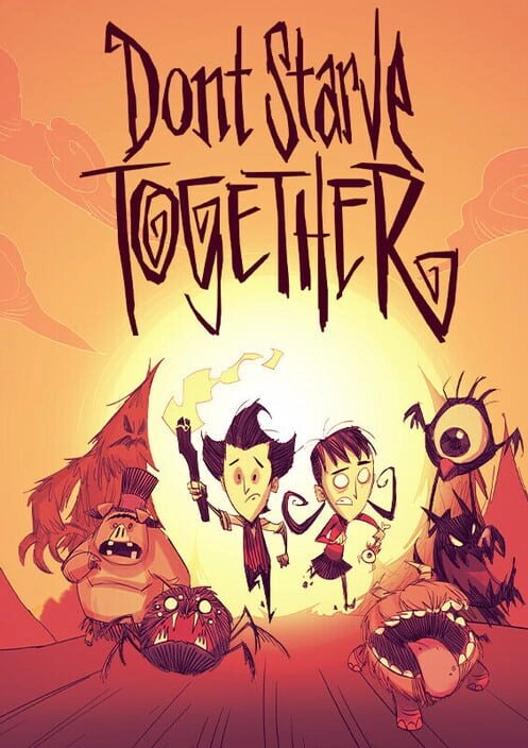

Don’t Starve Together is a deep survival game where friends specialize into roles, plan for seasons, and keep a fragile camp running under constant pressure. It ranks because the teamwork has real structure—character strengths encourage coordination, and shared preparation feels meaningful rather than optional. It’s also fairly approachable for low-end hardware early on, but longer worlds can become heavier as bases expand and the game tracks more activity. The trade-off is that hosting and mods can add friction if everyone isn’t aligned on settings. Best for groups that love survival planning and don’t mind managing a world over time.

Don't Starve Together
Best if you want a brutally challenging survival sandbox where every mistake matters, teamwork determines success, and deep crafting systems reward hundreds of hours of experimentation and strategic planning.
On This Page
Why We Recommend This Game
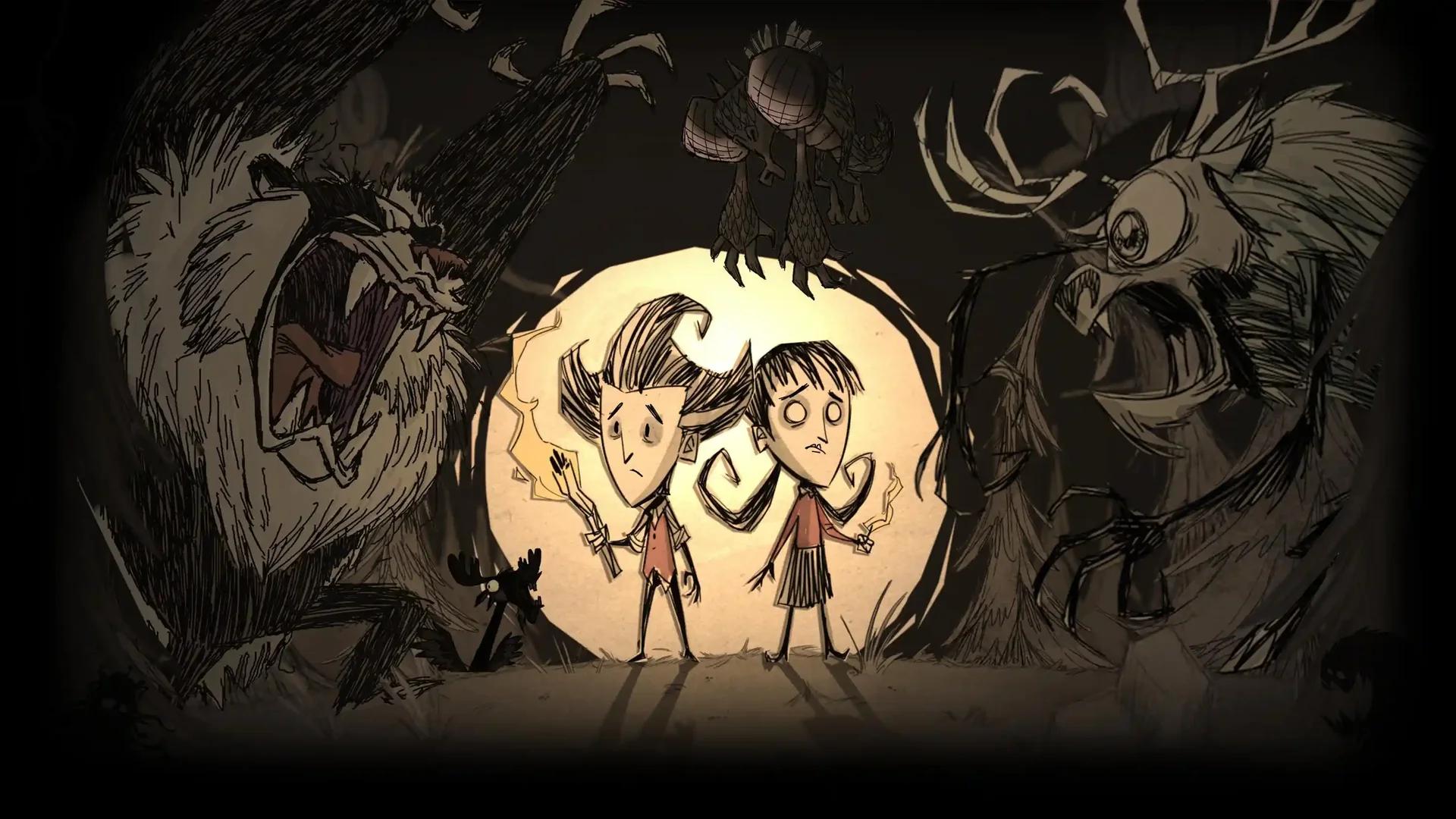
Don't Starve Together throws you into a twisted, Tim Burton-esque wilderness where everything wants you dead—and it won't hold your hand. The core loop revolves around gathering resources by day, fortifying your base before nightfall, and managing three critical meters: hunger, health, and sanity. Let darkness swallow you or let your mind slip too far, and you're done. Permadeath makes every decision feel consequential, though cooperative play softens the blow with revive mechanics that keep sessions from ending abruptly. What sets this apart from other survival games is the sheer mechanical depth. Seasonal cycles bring dramatic shifts—spring floods destroy farms, summer heat causes spontaneous combustion, winter freezes you solid without preparation. Each of the 20+ playable characters has unique perks and drawbacks that encourage role specialization: one player might focus on combat and boss kiting, another on farming and alchemy, a third on exploration and resource gathering. This creates natural team dynamics that evolve as you tackle increasingly complex challenges. The learning curve is genuinely steep. Early sessions often end in sudden death from overlooked threats—standing too close to a herd of beefalo during mating season, eating the wrong mushroom, underestimating how fast night falls. But this trial-by-fire approach creates immensely satisfying mastery moments. By your tenth world, you're efficiently planning seasonal prep, coordinating boss fights, and building elaborate megabases with automated farms and defensive perimeters. Sessions naturally run 30–90 minutes, though you'll want longer blocks for boss prep or major construction projects. Worlds persist across sessions, so you're building long-term—some groups maintain the same world for dozens of hours. Replayability comes from character variety, randomized map generation, optional bosses, seasonal events, and a steady stream of updates that add new biomes, threats, and mechanics. This isn't a game you "finish" and move on from; it's a deep well for dedicated groups seeking a survival hobby they can return to for months or years.
Best For
- Survival game veterans who want deep systems and meaningful difficulty
- Co-op groups seeking long-term projects with specialized roles
- Players who love mastering complex mechanics through experimentation and failure
Not For
- Anyone seeking gentle onboarding or forgiving difficulty
- Players who prefer narrative structure or clear objectives over sandbox freedom
- Groups wanting drop-in casual sessions without preparation or wiki research
Multiplayer & Game Modes
6 local • 64 online • Partial Crossplay
Don't Starve Together has partial crossplay support, supports up to 64 players online, features co-op campaign mode.
Features
Play Modes
Single Player • Multiplayer • Co-op • PvP • Online Multiplayer • Local Couch Co-op • LAN Multiplayer • Shared Screen
Player Count
- Local
- 1-6
- Online
- 1-64
- LAN
- 1-64
- Team Sizes
- Co-op or PvP, up to 64 players total
Additional Details
Survival/co-op focused with optional PvP via specific world settings. Official servers and player-hosted servers support up to 64 players on PC (Steam, Windows, macOS, Linux). Local couch co-op with up to 2 players per device on console (PS4/PS5, Xbox One/Series, Switch) and up to 6 on PC via multiple controllers; all local players share the same view (no split-screen). LAN play supported on PC. Partial cross-play: full cross-play within PlayStation family (PS4/PS5) and within Xbox family (Xbox One/Series), but not between PC and consoles or between different console brands. Online play on consoles typically requires platform subscription (PS Plus, Xbox Game Pass Core/Gold, Nintendo Switch Online). Drop-in/drop-out supported for online and local sessions.
Edition and Platform Information
Important details about which version to buy and where to play.
Platform Recommendations
Switch version supports online co-op only (no local split-screen). Performance can stutter in large, established worlds with extensive builds. Touchscreen isn't utilized, and controller bindings are less flexible than PC. Crossplay is not supported, limiting you to the Switch player pool.
Accessibility Features
Clear iconography and readable UI with adjustable camera zoom help with visual clarity. Controller rebinding options are limited. The game relies heavily on learned knowledge with minimal in-game tutorials, so expect to consult wikis or guides. No difficulty settings soften the survival challenge.
Screenshots
Click any screenshot to view in full size
Featured In Our Articles
We've included this game in 3 articles.
Don't Starve Together sits just outside the top 10 as a brutally challenging survival test where role division and planning are essential. Deep character perks and seasonal threats reward patient groups, though the unforgiving onboarding and stressful tone make it less approachable than lighter co-op fare. For hardcore survival fans willing to endure permadeath stakes, it's a standout challenge.
Don't Starve Together rewards specialized roles and coordination, making it a standout indie for groups seeking depth. One player kites while another crafts or manages seasons, creating strategic interplay few indies match. Switch performance dips in late-game worlds and it's online-only, but the learning curve pays off with unmatched replay value for dedicated squads.
Frequently Asked Questions
Common questions about this game answered by our team.
How hard is it really?
Genuinely punishing. Expect to die repeatedly while learning which creatures are threats, how seasons work, and what foods are safe. Cooperation helps, but the game never becomes easy—late-game bosses and seasonal hazards demand preparation and skill.
Can I play solo?
Yes, but it's significantly harder. The game is balanced for groups, so solo players face the same threats with fewer hands. Many consider it a lonelier, grindier experience without the social element that makes the challenge fun.
How long does a world last?
Indefinitely if you survive. Most groups spend 20–50 hours on a single world before either dying permanently, achieving goals, or starting fresh to try different characters or strategies. Seasonal events cycle endlessly.
Do I need to read guides?
Not required, but expect a much steeper learning curve without them. The game teaches through death, and many mechanics aren't explained in-game. Most players keep a wiki tab open or watch tutorials to accelerate the learning process.
Is there an endgame?
No traditional ending, but optional raid bosses and seasonal events provide endgame challenges. Most long-term play revolves around megabase construction, resource optimization, and mastering all characters rather than narrative closure.