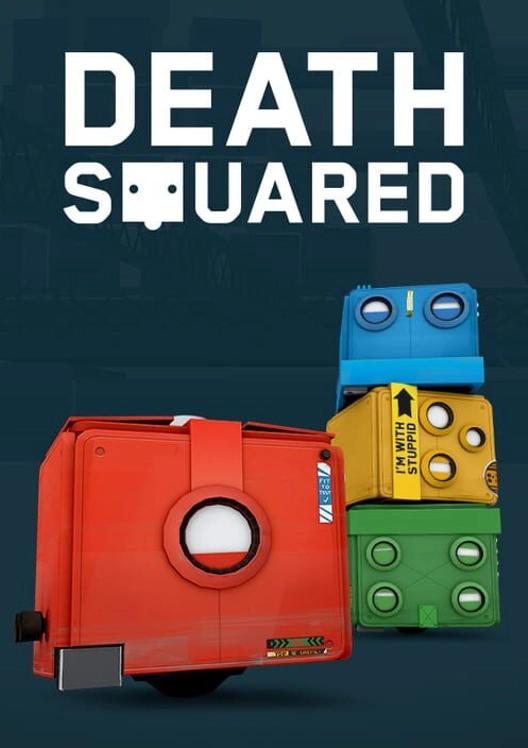
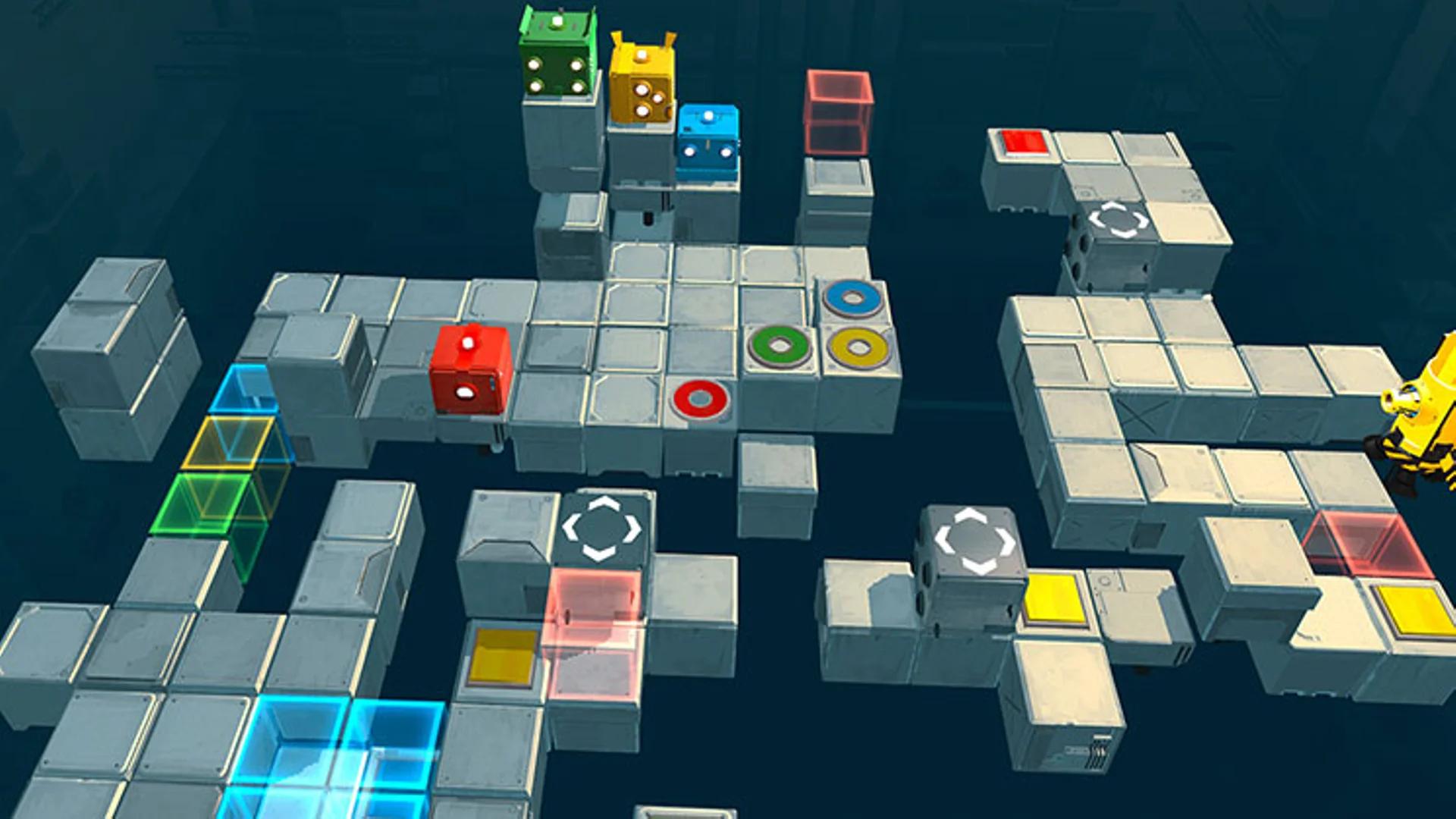
Death Squared is the pick I would install first if I were setting up a LAN station on one of the modest laptops my group actually plays on, because it needs almost nothing to run and the whole point is four players sharing one PC and one screen. Robots need to reach matching colored pads without triggering the wrong pressure plate, and one wrong move usually means watching everyone explode at once, which somehow never stops being funny. Nothing here needs a gaming PC. The stages are genuinely clever grid logic, closer to a shared puzzle box than a slapstick game. It is smaller in scale than the escape-room picks above it, no online mode, no big content library, just clean puzzle rooms in a tight local setup. For a couch-style same-PC session, nothing else on this list is this frictionless.
The Verdict
Best if you want a cooperative puzzle game that turns trust exercises and communication into laugh-out-loud moments, whether playing solo or coordinating a full couch team through color-coded death traps.

Software architect and father of two based in the Netherlands. Been gaming since MS-DOS Mario. Writes honest recommendations for people with limited evenings and too many games left to play.
What It's Like to Play
Death Squared is a cooperative puzzle game built around one brilliant tension: every move you make can kill your partner. You guide color-coded cubes to matching goals across 80 increasingly devious levels, dodging lasers, spike traps, and switches that react unpredictably to each player's position. The magic lies in how it forces constant communication—many puzzles hide their solutions until players talk through who moves first, which pressure plate to hold, and when to trust a teammate to do something seemingly suicidal. The learning curve is gentle. Early puzzles teach you the vocabulary: red cube triggers red hazards, buttons shift platforms, and spikes pop up when you least expect them. Within a few levels, you'll grasp the core loop of observation, experimentation, and coordinated execution. Then Death Squared steadily layers complexity, introducing timing challenges, multi-step sequences, and spatial puzzles that demand you think in three dimensions while your partner is simultaneously creating new obstacles. What makes it shine on the couch is how failure feels. Restarts are instant and painless, turning each death into a shared joke rather than a frustration. You'll laugh when a mistimed jump sends both cubes into the void, or groan collectively when you realize the solution required the exact opposite of what you've been attempting for ten minutes. Sessions naturally break into digestible chunks—three to six puzzles in 20–30 minutes feels satisfying without demanding marathon commitment. Solo play lets you control two cubes with separate sticks, turning it into a spatial reasoning workout. Two-player mode is the sweet spot, fostering genuine teamwork without overwhelming chaos. Four-player Party Mode cranks up the mayhem with a separate 40-level campaign designed for maximum couch chaos—perfect for groups who thrive on friendly bickering. The 30-level Vault offers brutally difficult bonus content for dedicated puzzle solvers. The minimalist presentation keeps focus laser-sharp on logic. Clean visuals, simple single-stick controls, and clear color-coding mean anyone can understand their role within seconds. Progress depends more on observation and patience than reflexes, making it accessible to non-gamers while still challenging puzzle veterans. The pacing occasionally slows when you hit a stumper, but the satisfaction of finally cracking a tough puzzle with your team makes those eureka moments memorable.
Best For
- Couples or small groups who enjoy thinking problems through together
- Puzzle enthusiasts seeking communication-driven co-op challenges
- Couch gaming sessions where patience and coordination beat reflexes
Not For
- Players seeking fast-paced action or competitive multiplayer
- Those wanting online co-op (local multiplayer only)
- Groups who prefer varied gameplay styles over focused puzzle mechanics
About Death Squared
At a glance
- Released
- March 13, 2017
- Platforms
- Xbox One, Linux, macOS, PC, PlayStation 4, Android, Nintendo Switch, iOS
- Genres
- Platformer, Puzzle, Strategy, Indie, Family, Casual
- Play modes
- Single Player, Multiplayer, Co-op, Local Couch Co-op, Shared Screen
- Age rating
- ESRB E
- Time to beat
- 3 hours
- Multiplayer
- By platform
- Metacritic
- 77
- Player rating
- 3.7
Screenshots
Click any screenshot to view it full size.
How long to beat
Player-reported completion times for Death Squared.
- Typical
- 3hoursStory plus some extras
Multiplayer by platform
How Death Squared supports playing with other people, broken down per platform.
| Platform | Local | Online | LAN | Split-screen | Co-op campaign | Drop-in/out |
|---|---|---|---|---|---|---|
| Xbox One | Yes, up to 4 players | No | No | No | No | No |
- Supported (a number is the player cap)
- Not supported
- Not documented for this platform
CrossplayNo Crossplay
Supports local shared-screen co-op for 1–4 players. Story campaign supports 1–2 players; 4-player Party Mode is separate. No online multiplayer or LAN play listed on Steam/PCGamingWiki.
Age ratings
How rating boards around the world have classified Death Squared. Open a board for its content descriptors.
ESRBE
- Alcohol Reference
GRAC15+
- Alcohol, Tobacco, Drug
PEGI3
The content of this game is suitable for all persons.
Edition and platform notes
Which version to buy, and what differs between platforms.
Accessibility Features
Single-stick movement with one main action keeps input simple. Color-coding is central to gameplay, which may challenge colorblind players. Instant, painless restarts turn trial-and-error into a low-stress learning process. No time pressure or complex button combinations required.
Games similar to Death Squared
Titles we've handpicked for readers who liked Death Squared, grouped by what they share with it — a similar vibe, more challenge, or the same multiplayer setup.
Perfect for Parties
4Social multiplayer games perfect for game nights and group gatherings, building on the party-friendly aspects of Death Squared.

Chaotic couch co-op where players scramble between ship stations. Like a party version of teamwork puzzling—constant shouting, role swaps, and clutch saves in short missions.
Team coordination under time pressure turns every level into a comedy of errors. Easy to learn, hard to perfect, and perfect for loud couch sessions with 2–4 players.
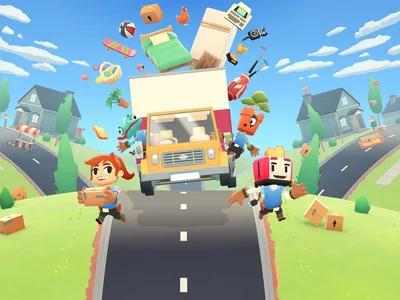
Physics-driven co-op “搬家” chaos with bite-sized objectives. Great for groups: quick levels, lots of slapstick coordination, and optional assists to keep it friendly.
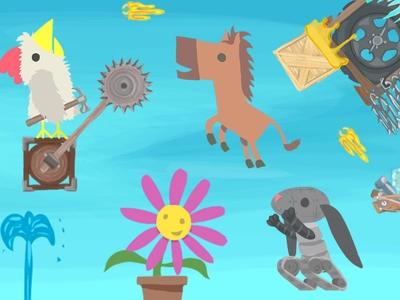
Build the level together, then try to survive it. Competitive-but-silly rounds create the same shared-screen energy, with constant remixing that keeps sessions fresh.
Great for Co-op
3Cooperative multiplayer games that emphasize teamwork and shared objectives, building on the social aspects of Death Squared.

Pure communication co-op: one player defuses a bomb while others read the manual. Great for couples/groups, fast retries, and hilarious miscommunication moments.

Two-player co-op platform puzzles with a forgiving pace and easy drop-in/out. The yarn tether creates constant teamwork moments without punishing failures too hard.
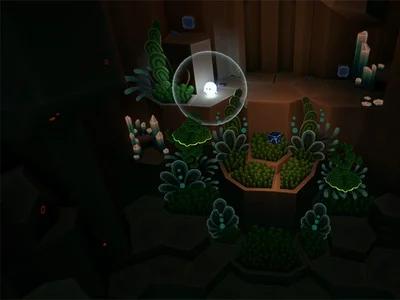
Gentle co-op puzzle adventure where each player has distinct powers. Bright, low-stress challenges make it ideal for mixed-skill pairs who want teamwork over pressure.
Quick Play Sessions
3Perfect for quick gaming sessions, these games offer the satisfaction of Death Squared in bite-sized 15-30 minute chunks.
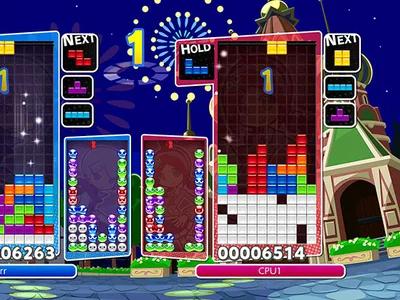
Instant competitive puzzle dopamine: quick matches, simple rules, deep skill ceiling. Perfect between bigger games when you want a fast, energetic couch puzzle fix.
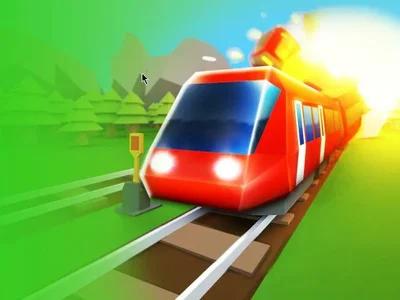
Manage trains with quick taps, timing, and route planning in compact stages. Easy to start, hilarious when plans collide, and great for rapid ‘one more level’ sessions.
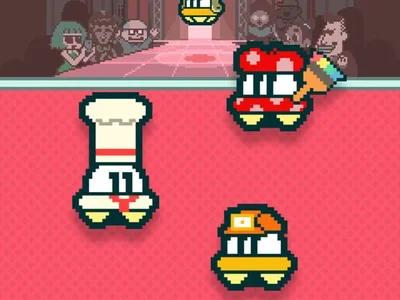
Short, cheerful physics puzzles with optional co-op that’s easy to read on one screen. Each job is a compact challenge—ideal for 10–15 minute play bursts.
Puzzle & Brain Teasers
2Logic and puzzle games that challenge your problem-solving skills in ways similar to Death Squared.

Clever co-op puzzling built around cutting paper characters into tools. Similar “talk it out” solutions, but more tactile and playful with constant mini ‘aha’ moments.
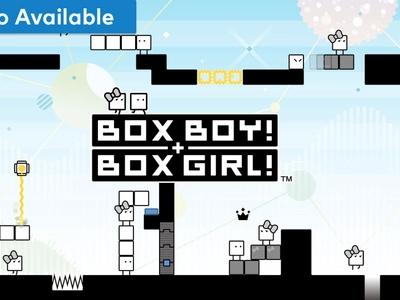
Minimalist grid puzzles that reward planning and coordination in co-op. Short stages, quick restarts, and satisfying spatial logic make it a strong brainy couch pick.
Featured in our articles
This game appears in 3 articles on this site.

Death Squared earns its spot by transforming simple cube-navigation into demanding communication exercises. Each player controls a colored cube through trap-filled stages where success demands clear callouts and patience. Clean visuals and instant restarts keep frustration low even during tricky coordination puzzles, making it ideal for couples or small groups who enjoy thinking problems through together on one screen.

This indie gem made the list for its exceptional trust-building puzzles built around color-coded logic and pressure plates. It scales smoothly from two to four players with rock-solid Switch performance and minimalist presentation that keeps focus on problem-solving. Ranked #12 because its puzzle variety is narrower than top picks and local-only play limits remote flexibility, but patient groups who value careful planning will find it rewarding.
Frequently asked questions
Common questions about this game, answered by our team.
How hard is it?
Starts gentle with tutorial-style puzzles, then steadily grows more demanding. Difficulty comes from coordination and observation rather than reflexes. The Vault levels are significantly harder, recommended only after mastering the main campaign.
Can I play it solo?
Yes—solo mode lets you control two cubes with separate analog sticks, turning it into a spatial reasoning challenge. Two-player co-op is the intended sweet spot, but solo is perfectly viable for puzzle fans who enjoy multitasking.
How long does it take to finish?
Main 80-level campaign takes 6–10 hours depending on puzzle-solving speed. Party Mode adds another 3–5 hours, and Vault levels can extend playtime significantly for completionists. Best enjoyed in short sessions rather than marathon runs.
Is it good for non-gamers?
Absolutely. Simple controls (move and one action button) and clear visual language make it approachable. Success depends on communication and logic, not gaming skills. Patient problem-solvers will thrive regardless of experience.
Does it support online play?
No—Death Squared is local multiplayer only. You'll need friends on the same couch. This limitation keeps communication organic but means remote friends can't join.
Game data and imagery provided by IGDB.com