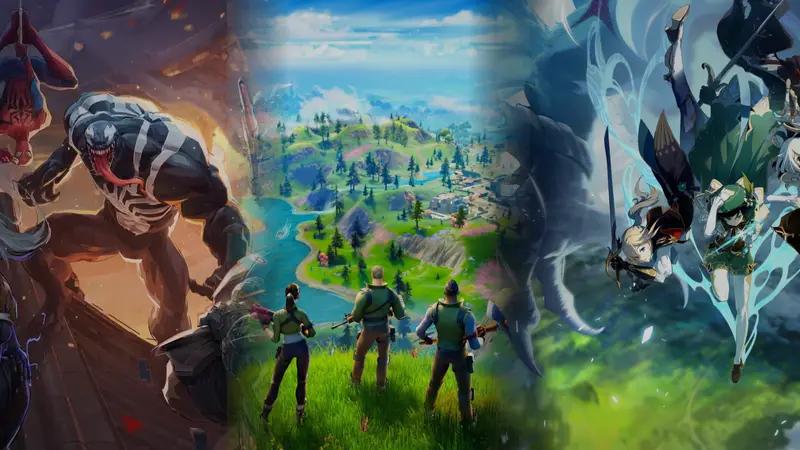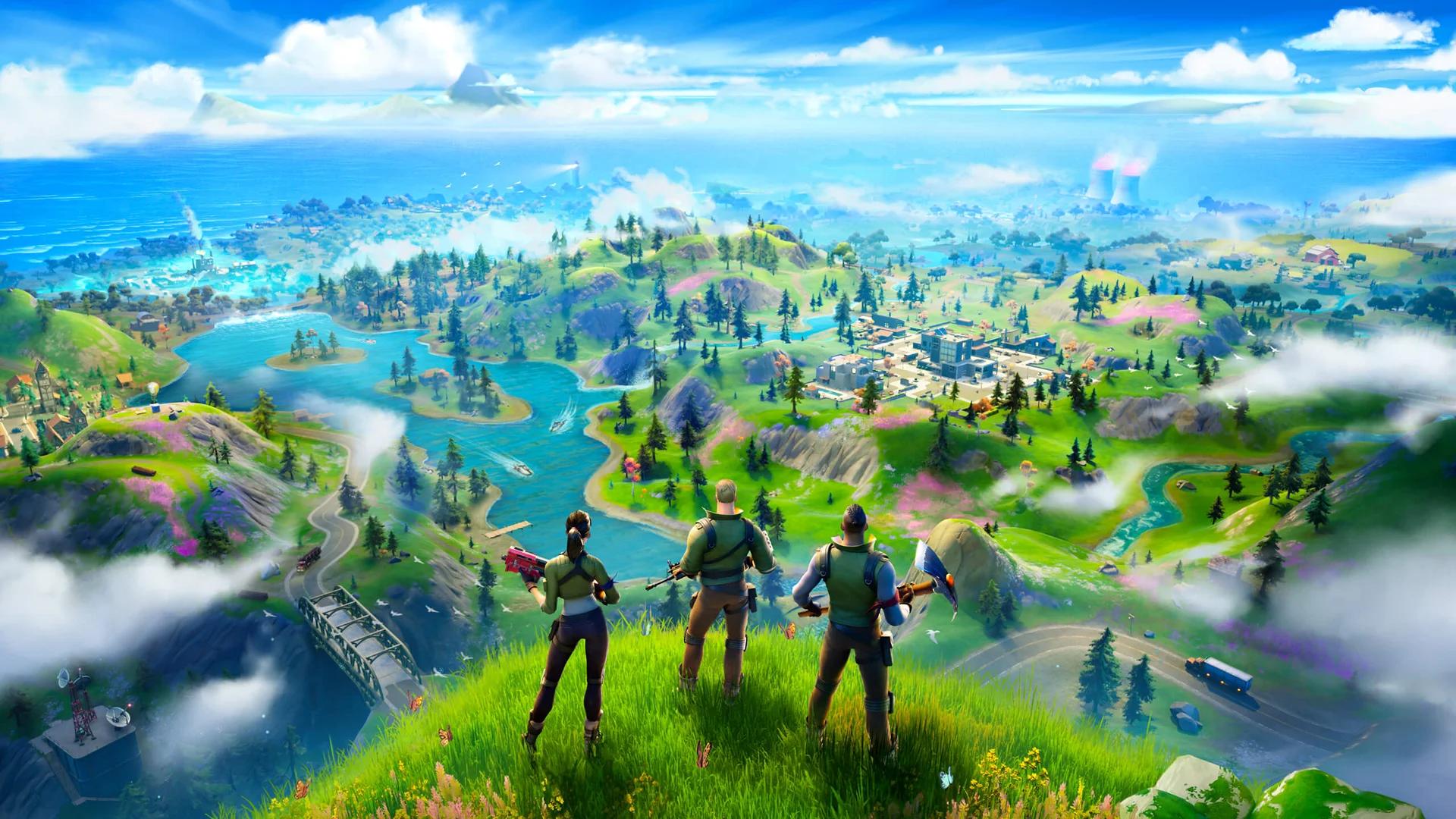









I was skeptical of Fortnite for years. Then Zero Build arrived and removed the one thing that always made me feel outclassed, the building mechanic that separated people who had 500 hours from people who had five. Without it, the gunplay underneath is actually excellent, and the sheer variety of what Epic has built around it is hard to argue with. Battle royale, creative modes, social spaces, limited-time events. It is less a game than a platform at this point. For squads wanting to drop in with no friction and no upfront cost, nothing else on PS5 comes close to this level of infrastructure.

Fortnite
Best if you want a free-to-play Battle Royale with ranked ladders, constant updates, and the flexibility to compete with or without building mechanics.
On This Page
Why We Recommend This Game
Fortnite delivers two distinct competitive experiences under one roof: traditional Battle Royale with its signature building system, and Zero Build mode for pure gunfight-focused matches. Both modes drop you into 100-player lobbies where you scavenge weapons, rotate through shrinking storm circles, and fight to be the last player standing. Matches run 20–30 minutes, and the pacing swings from quiet looting phases to explosive endgame finales packed with players in tight circles. The building system is Fortnite's defining mechanic—letting you harvest materials and erect walls, ramps, and cover mid-firefight. Mastering construction speed and editing structures under pressure creates a steep but rewarding skill ceiling. High-level build fights become intricate chess matches of positioning and resource management. If that sounds overwhelming, Zero Build strips away construction entirely, emphasizing aim, movement, and smart use of natural cover. Ranked modes in both playlists create a natural progression ladder. Early ranks are forgiving, with generous matchmaking that groups newer players together. As you climb, lobbies grow more punishing: opponents track your movements faster, capitalize on positioning mistakes, and, in build mode, construct towering fortresses in seconds. The skill gap widens dramatically past mid-tier ranks, demanding consistent mechanical practice and sharp game sense. Fortnite's greatest strength is its live-service cadence. Seasonal updates rotate weapon pools, introduce fresh map zones, and tweak the meta every few months, preventing stagnation. The trade-off is that randomness—loot quality at drop, circle luck, third-party chaos—can swing close matches unpredictably. Serious competitors accept this variance as part of the Battle Royale genre, but it frustrates players who prefer deterministic skill tests. Cross-play support keeps queues fast across platforms, and the free-to-play model removes all barriers to entry. Cosmetics are monetized, but gameplay stays completely fair—no pay-to-win advantages. Session length fits nicely into evening gaming windows, and the loop of drop-fight-learn creates strong "one more match" momentum. Whether you're grinding ranked for bragging rights or casually exploring seasonal content, Fortnite offers depth that scales with your commitment.
Best For
- Battle Royale fans seeking ranked progression and competitive ladders
- Players who want flexibility between building mechanics and pure gunplay
- Free-to-play enthusiasts looking for constantly updated content
Not For
- Players frustrated by RNG elements like loot drops and circle rotations
- Those seeking deterministic skill-based combat without third-party interference
- Gamers who dislike live-service seasonal resets and evolving metas
Multiplayer & Game Modes
2 local • 100 online • Full Crossplay
Fortnite supports full crossplay across all platforms, includes split-screen multiplayer, supports up to 100 players online, features co-op campaign mode.
Features
Play Modes
Single Player • Co-op • PvP • Online Multiplayer • Local Couch Co-op • Split-Screen • Battle Royale
Player Count
- Local
- 1-2
- Online
- 1-100
- Team Sizes
- Solo/Duo/Squads (up to 4), 100-player BR
Additional Details
Battle Royale supports up to 100 players per match online. Split-screen (2 players) is supported on PlayStation and Xbox consoles; not supported on Nintendo Switch or PC. Save the World is online co-op PvE (up to 4 players) and supports drop-in/drop-out party play. Cross-play is supported across major platforms via Epic account matchmaking. LAN play is not supported. Console online play requirements vary by platform policies; Epic notes online play is required for Fortnite modes.
Edition and Platform Information
Important details about which version to buy and where to play.
Platform Recommendations
Cross-play support ensures quick matchmaking across PlayStation, Xbox, PC, Switch, and mobile. PS5 version offers 60 FPS performance and reduced load times. Controller players receive aim assist to balance against PC keyboard-and-mouse lobbies.
Accessibility Features
Strong controller remapping, aim assist settings, and separate sensitivity sliders for building and aiming. Visual aids include colorful UI markers, generous audio cues for footsteps and gunfire, and clear ranked tier indicators. Zero Build mode removes mechanical complexity for players who struggle with fast construction inputs.
Screenshots
Click any screenshot to view in full size
Featured In Our Articles
We've included this game in 6 articles.
Every time my group needs a game everyone already has installed, Fortnite is the answer. That is not a backhanded compliment. The fact that a free game with crossplay, instant matchmaking, and a rotating roster of modes can just sit there ready to go the moment someone says 'what are we playing tonight' is genuinely useful. Zero friction from 'are you on' to 'we are in a match' is rarer than it sounds. The battle royale is still sharp, the creative modes add variety when you want something lower-stakes, and the player population is large enough that nobody is ever waiting. It tops this list not because it is the flashiest option but because it works every single time.
Fortnite sits at number one because no other game on this list solves the mixed-platform problem as cleanly. You invite someone on PC, someone on Xbox, and your PS5 lobby just fills up without a second thought. I have never had a crossplay invite fail in Fortnite. That is genuinely unusual. The battle royale mode is the obvious hook, but the creative modes and seasonal events mean there is always something pulling people back in. It is free, it runs on almost anything, and the friend onboarding is so smooth it almost feels unfair to compare it to the competition.
Fortnite has been declared dead approximately forty times and is still pulling numbers that most live-service games would consider a strong launch week. The ranked mode has real structure to it now, from Bronze through Unreal, and the zero-build playlist removed the one barrier that kept traditional shooter players away. Full crossplay across every major platform and cross-progression mean your progress follows you anywhere. I do not play Fortnite regularly, but when someone in my group wants a battle royale that everyone can join regardless of platform, this is the answer with the shortest argument. The PS5 version runs clean and the DualSense trigger feedback actually adds something when you swap weapons.
No other game on PS5 comes close to Fortnite's sheer range as a multiplayer platform. The original battle royale is still here, but Zero Build mode is what changed everything, removing the construction mechanics entirely and opening the game to players who couldn't keep up with build-edit mechanics. Creative mode adds a completely different layer, essentially a hub for user-made experiences. I've watched people who haven't touched a game in years pick this up and have a good time within an hour. The main caveat is the cosmetics shop, which is aggressive. Nothing it sells affects gameplay, but the pricing is steep.
Fortnite is a high-skill battle royale with two distinct competitive identities: Build for mechanical construction mastery and Zero Build for cleaner shooter-focused fights. It ranks well because the competitive ecosystem is huge and the ranked format gives players a consistent path to climb, learn, and find evenly matched lobbies. The island’s constant updates keep engagements fresh, and Zero Build especially improves fight readability for players who want gunfights over build battles. The trade-off is a shifting meta that can change how fights play week to week. Best for solo queue grinders and squads who want a deep, active ladder.
Frequently Asked Questions
Common questions about this game answered by our team.
How hard is Fortnite for beginners?
Early ranks and casual modes are welcoming, with matchmaking that groups newer players. Zero Build mode removes construction complexity. The challenge ramps quickly in higher ranks, where building speed and aim precision become essential.
How long does a typical match last?
Most matches run 20–30 minutes if you survive to late-game circles. Early eliminations mean 5–10 minute sessions, making it easy to squeeze in quick rounds or commit to longer ranked grinds.
Do I need to master building to compete?
Zero Build mode offers a fully competitive experience without construction. If you play traditional Battle Royale, building becomes critical in mid-to-high ranks, but casual modes are forgiving for slower learners.
Is Fortnite really free-to-play?
Yes, completely. All gameplay modes, weapons, and competitive features are free. Monetization covers cosmetics—skins, emotes, gliders—with zero pay-to-win mechanics. Battle Pass unlocks seasonal cosmetics for players who engage regularly.
What's the replay value like?
Extremely high. Seasonal updates rotate weapons, map zones, and limited-time modes every few months. Ranked ladders reset seasonally, and the competitive meta evolves constantly, rewarding long-term players who adapt.