
Cyberpunk 2077
December 10, 2020ShooterESRB M
About Cyberpunk 2077
Story setup
At a glance
Screenshots
Click any screenshot to view it full size.
How long to beat
Player-reported completion times for Cyberpunk 2077.
- Rushed
- 33hoursMain story only
- Typical
- 72hoursStory plus some extras
- Completionist
- 129hoursEvery side objective too
Estimated from 21 player reports — a small sample, so treat these as approximate.
Multiplayer & game modes
Cyberpunk 2077 offers various play modes for different gaming experiences.
Play Modes
Single Player
Age ratings
How rating boards around the world have classified Cyberpunk 2077. Open a board for its content descriptors.
ACBR 18+
High impact themes, sex, violence and references to sexual violence.
CEROZ
- Violence
- Crime
CLASS_IND18
- Conteúdo Sexual (Sexual Content)
- Drogas (Drugs)
- Violência Extrema (Extreme Violence)
ESRBM
- Intense Violence
- Blood and Gore
- Strong Language
- Strong Sexual Content
- Use of Drugs and Alcohol
- Nudity
- Use of Alcohol
- Use of Drugs
GRAC19+
- Language
- Alcohol, Tobacco, Drug
- Sexuality
- Violence
PEGI18
- Bad Language
- Violence
- Sex
Advice for consumers This game has received a PEGI 18 which restricts availability to ADULTS ONLY and is not suitable for anyone below this age. This rating has been given due to depictions of strong violence, use of strong language and depictions of sex with visible genitals. Not suitable for persons under 18 years of age. Brief outline of the game Open-world action-adventure story set in Night City, a megalopolis obsessed with power, glamour and body modification. You play as V, a mercenary outlaw seeking a one-of-a-kind implant that is the key to immortality. Explore a vast city where the choices you make shape the story and the world around you. Content specific issues This game contains frequent depictions of strong violence towards human-like characters. Powerful attacks with both bladed weapons and firearms can cause dismemberment and decapitation, accompanied by strong blood and gore effects. Wounds and other injuries are very detailed and bodies can be mutilated further after being killed. There is a side mission in which a man chooses to be killed by crucifixion, recreating the death of Jesus Christ. The player is able to hammer in the nails and then raise the cross. The man can be heard screaming in pain and continues to struggle until he dies. The game also contains frequent use of strong language ('cunt' and 'fuck'). The player's character has the ability to 'romance' various characters. Some of these 'romance' options lead to depictions of sexual activity, shown from a first person perspective. In some cases, genitals are visible after sex has taken place.
Often listed alongside Cyberpunk 2077
Titles that appear in the same guides on this site. Grouped by where they show up, not by recommendation.
Featured in our articles
This game appears in 15 articles on this site.
Cyberpunk 2077 spent its first year mostly making headlines for the wrong reasons, and I mostly ignored it because of that. The current PS5 version is a different game. Perk trees, cyberware slots, and weapon builds interact in ways that matter, and Night City is dense enough that side quests feel like they belong to real people, not filler markers. Combat leans action-first, closer to a shooter with RPG numbers than a stats-first western RPG, and that will put off players expecting Baldur's Gate 3's tactical depth. It doesn't have that. What it does have is some of the strongest quest writing here, missions with real weight and consequence.
Night City is the best-looking open world on this list, and after the Series X patches it finally runs the way it should. I went in expecting the launch mess I'd read about years ago and found a game holding a steady frame rate even downtown. The verticality got me. Grapple up a building, look down at the neon and traffic, and just sit there for a minute. It's less a sandbox you shape and more a story you walk through, closer to a linear campaign wearing an open-world coat than something like Elden Ring. Fine by me. Some worlds are built for wandering. This one is built for looking, and there's more to look at here than anywhere else on this list.
Cyberpunk 2077 earns its spot for the same reason I keep coming back to it outside the story missions: Night City is dense enough that gunfights break out in places you weren't expecting one, and the shooting holds up as a real pillar, not a side system bolted onto the RPG. I didn't expect a game this focused on dialogue trees and skill points to also have some of the best weapon feedback on PS5, from silenced pistols with real stopping power to smart guns that track around cover. It's not the tightest shooter on this list. The RPG systems occasionally get in the way of a clean firefight, and three games above it do pure gunplay better.
I went into this one wary, mostly because I remember exactly how rough the launch was, and I stayed because Night City on Series X finally runs and looks the way it always should have. V's story branches meaningfully depending on lifepath and choices, and the city itself rewards just driving around with no destination in mind, neon reflecting off wet asphalt at 2 AM. Side jobs here have more writing effort than most games put into their main quest. It's a big time investment. Sixty hours, easily, if you actually explore. I didn't rush it, and I don't regret a single hour.
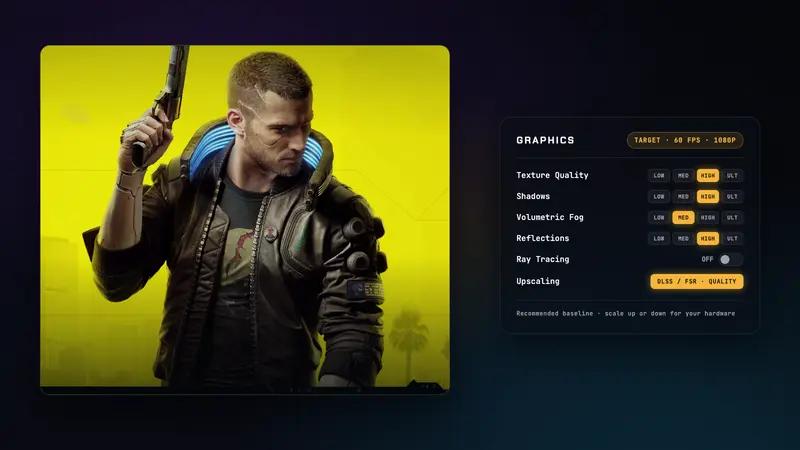
The version of Cyberpunk 2077 that exists now is not the game that launched. Night City is one of the most realised urban open worlds in gaming, the quest writing across the main story is excellent, and the Phantom Liberty expansion added a second act that the base game was missing. It sits outside the top ten mainly because its legacy is still complicated and because several entries above it are simply stronger all-round. On modern hardware with the 2.0 update, it is a confident recommendation. Just go in on a current-generation machine and manage expectations on total playtime.
Cyberpunk 2077 had a rough launch and the reputation stuck longer than the actual problems did. On PS5 right now it is a different game: stable, visually striking, and deep enough in its quest design to hold you for 50 hours without repeating itself. The build variety is where it earns real staying power. I played a stealth-hack build through most of the game and only started understanding what a full netrunner setup could do near the end. Night City is one of the more convincing open-world environments in recent memory, dense and loud and always giving you somewhere new to end up. The systems density does require patience upfront, but it pays out.
Night City is one of the best open worlds built for solo play. Not because of its size, but because every street corner has a detail that feels considered rather than procedurally generated. I went in expecting a competent redemption story after a troubled launch and stayed for forty hours because the quests kept surprising me. The Ultimate Edition includes the Phantom Liberty expansion, which is worth playing separately even if you have already done the main story. Build variety is real here, not just cosmetic. A shooter build and a stealth build feel genuinely different. One of the few open-world games where the depth of the city justifies the time you put in.
Night City is the most convincing urban open world I have ever walked around in. Not because it is the most fun at every moment, but because it feels like a city that exists for reasons beyond the game needing a map. The density of environmental detail, the way districts have distinct personalities, the sidequest that suddenly turns into an hour-long storyline about a detective you did not expect to care about. Post-2.0, the perk overhaul and cyberware rework mean the build variety is genuinely interesting now in a way it was not at launch. I ran a stealth-hacking build through Phantom Liberty and barely touched a gun for 20 hours. The sci-fi setting makes it a natural companion pick to the fantasy-heavy top four, and it currently plays better than it ever has.
I avoided Cyberpunk for a long time because of the launch. Eventually picked it up post-2.0 on the strength of what the community was saying, and the community was right. Night City is one of those rare open worlds where simply walking around has texture. Neon, crowds, vertical geography, a dozen radio stations you will cycle through more than you expect. The 2.0 overhaul rebuilt the skill system from scratch, and Phantom Liberty adds a spy-thriller district that is arguably the best-written section in the whole game. It is more of an immersive urban sandbox than a freeform systemic one, meaning the world reacts to you through narrative more than through simulation. That is worth knowing before you go in.

The launch version of Cyberpunk 2077 is not the game you are playing in 2026. That distinction matters. What CD Projekt RED eventually delivered through patches and the Phantom Liberty expansion is a Western RPG with buildcraft that actually rewards experimentation: a netrunner build and a street brawler build play so differently they almost feel like separate games. Night City is one of the best-realized open worlds I have spent time in. Dense, vertical, full of things to find. My main criticism is that the role-playing choices are shallower than the world implies they should be. But the quest writing in the main arc and Phantom Liberty is strong enough that I did not put it down until it was finished.

Night City is one of the most densely realised open worlds in recent memory, and the fact that it runs on Steam Deck at all still slightly surprises me. The gap between what Cyberpunk 2077 demands and what the Deck can comfortably deliver is wider than any other game on this list, and that is the honest reason it lands here rather than in the top ten. Battery drains faster, settings need careful balancing, and the small screen loses some of the visual impact that makes the city so striking on a large display. Worth it if you are patient with the setup. Just go in knowing it is one of the more demanding games this hardware can carry.

Night City is the most convincing fictional city I have walked around in a game. Not driven through, not fast-travelled across. Walked. There are apartment blocks with their own visual logic, street vendors, alleyway gangs, and radio broadcasts that make the world feel like it exists when you are not looking at it. I started this at launch and it was a mess. Coming back on PS5 after the patches and the Phantom Liberty expansion is a fundamentally different game. The RPG systems take time to open up, which is the honest reason it sits at four rather than two. Give it five hours before you decide.
Cyberpunk took me a while. The opening hours are dense with systems and lore, and I nearly walked away before Night City clicked. Stick with it and you get one of the best urban open worlds in recent memory: a city that feels inhabited, a build system that rewards commitment, and a main story that actually lands. The PS5 version runs well and looks great on a good display. Worth flagging: the Phantom Liberty expansion is not included in the base catalog entry, so the game you get here is the core campaign. That is still thirty-plus hours of strong material. Just go in knowing what you have rather than expecting the full package.
Game data and imagery provided by IGDB.com