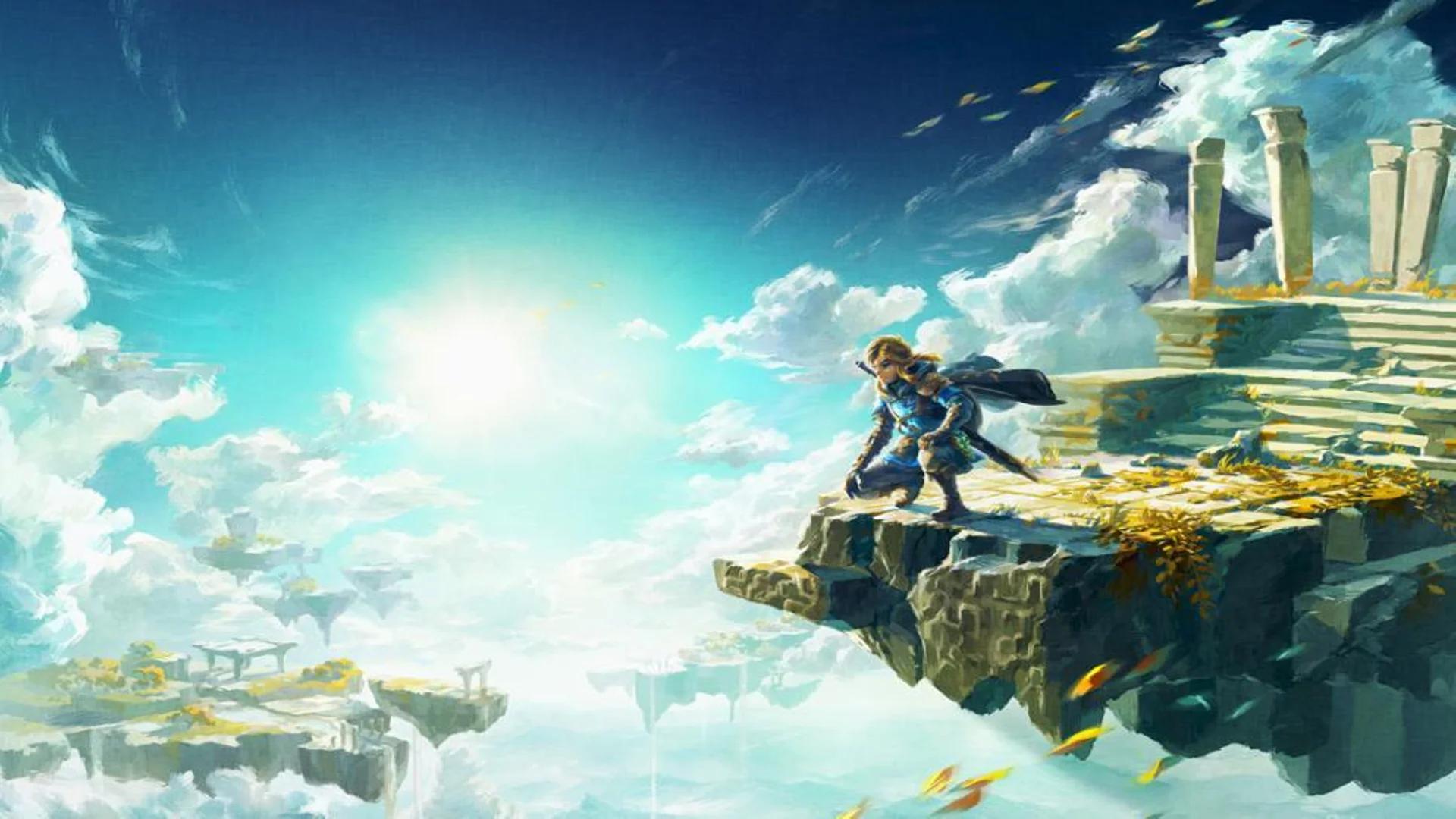
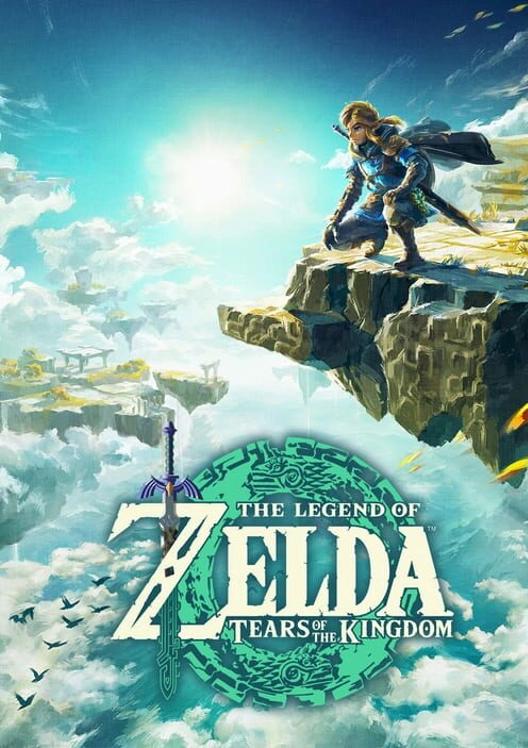
Tears of the Kingdom is why I put two Zelda games in this top three without apology. I love open worlds that reward curiosity over checklists, and this reworked Hyrule adds sky islands and a chasm-riddled underground, three vertical layers instead of one flat map. Ultrahand lets you bolt a fan to a raft or a rocket to a shield, and the first time I built something that actually flew, I just sat there staring at it. Fusing weapons on the fly fixes the durability spiral that wore me down in Breath of the Wild. The Depths get repetitive fast. Same gloom, same rock formations everywhere. Even so, nothing else on Switch hands you this much room to solve problems your own way.
The Legend of Zelda: Tears of the Kingdom
May 12, 2023PuzzleESRB E10+
About The Legend of Zelda: Tears of the Kingdom
Story setup
At a glance
- Released
- May 12, 2023
- Platforms
- Nintendo Switch
- Genres
- Puzzle, Adventure, Action
- Play modes
- Single Player
- Age rating
- ESRB E10+
- Time to beat
- ~117 hours
Screenshots
Click any screenshot to view it full size.
How long to beat
Player-reported completion times for The Legend of Zelda: Tears of the Kingdom.
- Rushed
- 55hoursMain story only
- Typical
- 117hoursStory plus some extras
- Completionist
- 176hoursEvery side objective too
Estimated from 16 player reports — a small sample, so treat these as approximate.
Multiplayer & game modes
The Legend of Zelda: Tears of the Kingdom offers various play modes for different gaming experiences.
Play Modes
Single Player
Age ratings
How rating boards around the world have classified The Legend of Zelda: Tears of the Kingdom. Open a board for its content descriptors.
ACBM
Fantasy themes and violence
CEROB
- Sexual Content
- Violence
- Crime
CLASS_IND10
- Violência (Violence)
ESRBE10+
- Fantasy Violence
- Mild Suggestive Themes
GRAC12+
- Violence
PEGI12
- Violence
This game has received a PEGI 12 because it features moderate violence. Not suitable for persons under 12 years of age. Action role-playing sequel to The Legend of Zelda: Breath of the Wild, set both in the lands of Hyrule and in the skies above. Players explore the environment, solve puzzles, collect items and battle monsters. This game contains frequent depictions of non-realistic looking violence towards both human-like and animal-like characters. Violence can be inflicted using melee weapons, projectiles, explosives and magical spells. Regardless of the type of weapon used, the reaction to the violence remains unrealistic in nature, with no blood or injuries shown. Bright lights and magical effects appear when characters are hit. When enemy characters have been defeated, they fall to the floor and immediately vanish into a puff of smoke, leaving behind various items for the player to take. When the player's character is defeated, it falls down without visible injuries. Some characters are slightly frightening and the music used to accompany these characters is creepy and menacing.
Often listed alongside The Legend of Zelda: Tears of the Kingdom
Titles that appear in the same guides on this site. Grouped by where they show up, not by recommendation.
Featured in our articles
This game appears in 6 articles on this site.
Tears of the Kingdom is among my favourite games of all time. That is not hyperbole dressed up as a review. I finished it and immediately wanted to go back in. The Ultrahand mechanic alone generates more creativity per hour than most entire game libraries, and piling that on top of a Hyrule that now has sky islands above and depths below means you are never actually done discovering something. It runs well in handheld, which still surprises me given the scale. The crafting complexity can slow down newcomers early on, which is the only reason it does not feel instantly approachable. Give it two hours. After that, it owns you.
The first hour of Tears of the Kingdom, where the game hands you a stick and some rocks and trusts you to figure out the rest, tells you everything you need to know. This is a game about curiosity. The Ultrahand and Ascend abilities mean you will never encounter an obstacle the same way twice, and no solution is wrong if it works. Occasional frame dips show up in busier scenes, but they rarely break the flow. It asks for a serious time investment, which is the one honest caveat for anyone with limited evenings. If you can give it the time, though, it pays back with interest.
Zelda was one of my first open-world experiences on the N64, and I have played every mainline entry since. Tears of the Kingdom might be the best one. The physics sandbox at the centre of it is genuinely unlike anything else in gaming. You solve puzzles by building vehicles and contraptions that nobody at Nintendo anticipated, and the game just lets you. It rewards curiosity in a way that most open-world games only claim to. Switch exclusive is the real limit here. If you own one, this is non-negotiable. My kids have watched me play this more than any other game on this list.
Tears of the Kingdom is the game I kept thinking about between sessions. Not because of where the story was going, but because I had built something embarrassing out of Zonai parts and was genuinely curious whether it would solve the next cave puzzle. The Ultrahand and Fuse systems reward people who like to think sideways, and the vertical world design means even returning to familiar ground from Breath of the Wild felt new. The Switch version does drop frames in dense areas, which is worth knowing. It is not game-breaking, but it is noticeable. Still the more ambitious and systems-rich of the two Zelda open worlds on this list, which is why it ranks above its predecessor despite that caveat.
Tears of the Kingdom does something I have not seen another open world attempt at this scale: it stacks three versions of the same space on top of each other and makes all three worth exploring. The surface, the sky islands, the depths underneath. What keeps it from the very top of this list is that Elden Ring's world feels like it was discovered, while Hyrule here feels engineered, which it obviously is, but you notice it more. That said, the Ultrahand building system turns traversal into a problem-solving sandbox that rewards genuine creativity rather than checklist completion. This is the Zelda recommendation for anyone who has not played the series, and it holds up even if you have.
Game data and imagery provided by IGDB.com