Fantasy is my favourite genre, and Baldur's Gate 3 is fantasy done properly, but a hundred hours is a hard sell with two kids and a job. Our campaign is still in the early acts because scheduling four adults is the actual boss. When we do sit down, it is the only game here where players argue in character: one of us pickpockets the quest giver while another is mid-dialogue promising help. Menus are heavy on a controller, and sessions need two hours to feel productive. It ranks eighth on friction, not quality.
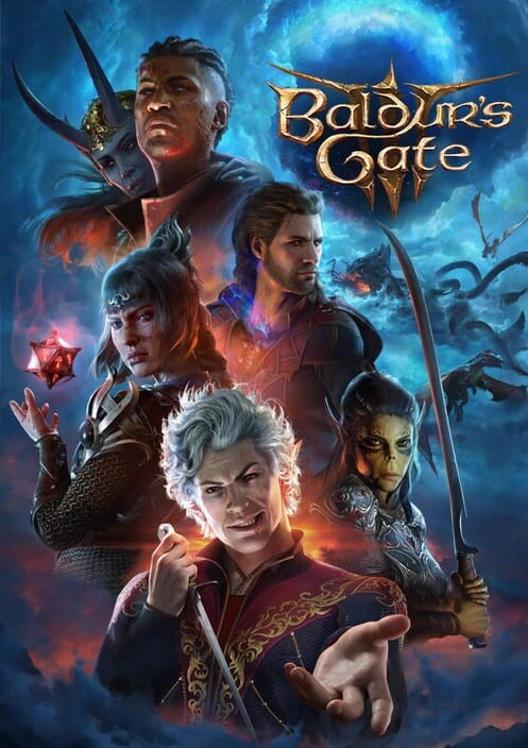
Baldur's Gate III
August 3, 2023RPGESRB M
About Baldur's Gate III
Story setup
At a glance
- Released
- August 3, 2023
- Platforms
- PlayStation 5, Xbox Series X/S, Linux, PC, macOS
- Genres
- RPG, Strategy, Action
- Play modes
- Single Player, Multiplayer, Co-op, Online Multiplayer, Local Couch Co-op, LAN Multiplayer, Split-Screen
- Age rating
- ESRB M
- Time to beat
- 132 hours
- Multiplayer
- By platform
Screenshots
Click any screenshot to view it full size.
How long to beat
Player-reported completion times for Baldur's Gate III.
- Rushed
- 128hoursMain story only
- Typical
- 132hoursStory plus some extras
- Completionist
- 5650hoursEvery side objective too
Based on 28 player reports.
Multiplayer by platform
How Baldur's Gate III supports playing with other people, broken down per platform.
| Platform | Local | Online | LAN | Split-screen | Co-op campaign | Drop-in/out |
|---|---|---|---|---|---|---|
| PlayStation 5 | Yes, up to 2 players | Yes, up to 4 players | No | Yes | Yes | Yes |
| PC | Yes, up to 2 players | Yes, up to 4 players | Yes | Yes | Yes | Yes |
- Supported (a number is the player cap)
- Not supported
- Not documented for this platform
Age ratings
How rating boards around the world have classified Baldur's Gate III. Open a board for its content descriptors.
ACBMA 15+
Strong Sex Scenes, Strong Nudity, Sexualised Imagery
CEROZ
- Violence
CLASS_IND16
- Violência (Violence)
- Conteúdo Sexual (Sexual Content)
- Linguagem Imprópria (Inappropriate Language)
ESRBM
- Blood and Gore
- Intense Violence
- Nudity
- Sexual Content
- Strong Language
- Strong Sexual Content
- Users Interact
GRAC19+
- Language
- Crime, Anti-Social
- Alcohol, Tobacco, Drug
- Sexuality
- Violence
PEGI18
- Bad Language
- Sex
- Violence
Role-playing game in which players must fight against an ancient evil that has returned to Baldur's Gate.
Often listed alongside Baldur's Gate III
Titles that appear in the same guides on this site. Grouped by where they show up, not by recommendation.
Featured in our articles
This game appears in 28 articles on this site.
Fantasy is my favourite genre across every medium, and Baldur's Gate 3 might be the best fantasy RPG I have played, co-op or not. Two players can build genuinely complementary characters, one tanking while the other controls the battlefield with spells, and the Xbox version handles split decision trees well, letting each player pursue dialogue choices the other disagrees with. That tension is where the game earns its replay value. The catch is the runtime. This is not a drop-in-for-an-evening game. You need a dedicated co-op partner willing to commit for months, not a casual squad looking for a quick session. If you have that partner, nothing else on this list matches its depth.
I've played every Baldur's Gate going back to the original two, and this is clearly the best one Larian has made. It's also better in co-op than it is alone. A full playthrough runs past 80 hours, and it works as a duo because you build around each other, one tanking and talking through every conversation, the other hanging back with a crossbow. That's not small, given how much I usually resist long RPGs. Xbox handles split-screen and online cleanly, though the sheer number of systems means new players need a session before it clicks. This is not a drop-in game. It rewards the pair who commit to finishing it, and for us, it was worth every evening.
Baldur's Gate 3 on Xbox Series X|S supports genuine two-player split-screen for the entire campaign, and it's the best-looking deep RPG on this list by a wide margin. I didn't finish Diablo IV, and this asks for a lot more of your evenings than that ever did, so it only works if you and your co-op partner both know what you're signing up for. The split-screen itself works fine. What keeps it out of the top ten is accessibility. The interface gets dense fast, and casual drop-in players will bounce off the menus before they ever get to a real fight. Worth it for committed pairs, less so for a quick Tuesday session.
I have played every Baldur's Gate game going back to the original two, and this is the best by a wide margin. Co-op actually improves on the solo campaign, because splitting party members between real people means dialogue choices contradict each other mid-conversation in ways AI companions never would. My group ran this over several months, one or two sessions a week. Worth it, every time. It ranks third and not first for one honest reason: this is not a drop-in game. You need three friends willing to commit to a hundred-hour campaign, and matching four adult schedules is its own boss fight. If you have that group, nothing else here touches it for role-playing depth.
Baldur's Gate 3 is the game I measure every other multiplayer RPG against. I ran a full campaign with a friend, two sessions a week for months, and the thing that surprised me is how much better it plays with someone else than alone. One of us picks locks mid-conversation while the other tries to talk a vampire out of murder, and neither of us knows what the other is about to say. No shortcuts here. The class system runs deep without demanding a spreadsheet, and every dialogue choice actually branches the story. It wants real time, closer to a hundred hours than fifty, so bring a patient co-op partner and clear your calendar.
Baldur's Gate 3 is the game every other party RPG on this list gets measured against, and it's not close. Full class builds, companions with real arcs, and tactical combat that rewards actual thinking rather than bigger numbers. My regular group, the same crew that shows up for Helldivers 2, played a chunk of this in co-op, and it held up just as well split between us as it did solo. The catch is time. A hundred-plus-hour campaign took me months to see through, evening gaps at a time. There's no brutal skill tree to study, which keeps it from feeling like homework. One CRPG this generation. This is it.
Baldur's Gate 3 is one of the best co-op RPGs ever made, full stop, and I do not say that lightly given how much time I have put into fantasy games over the years. The problem for this specific list is crossplay. Xbox pairs cleanly with PC, but the platform reach stops well short of the universal setups higher up this ranking. It also demands a serious time commitment. This is not a game you drop into for one session between work and bedtime, it wants a regular group over months. If you already have that dedicated crew and platform overlap, nothing else compares. For a looser, mixed-platform friend group, it asks for more than most people have to give.
I've played every Baldur's Gate solo, making every decision for the whole party myself. BG3 is the first one where I'd actually tell you to play it with someone else on the couch instead. The dynamic split-screen lets you wander into a different corner of the same dungeon, and the game keeps up: camera adjusting, dialogue running independently, no waiting on someone else's tooltip. Pair a Cleric with a Rogue and fights click in a way solo play never quite manages. The catch hasn't changed. This is a hundred-plus-hour campaign, and split-screen only pays off with a genuinely committed second player. Casual drop-in guests need not apply.
Baldur's Gate 3 topping this list is not exactly a surprise. I'm a big fan of the series going back years, but this is the first entry that actually made it onto our LAN table, and it plays like it was built for exactly that setup. Four players, four classes, and a camp full of decisions nobody agreed on beforehand, and the arguments that follow beat any scripted cutscene. For a game this size, the onboarding is surprisingly forgiving. You are not staring down a spreadsheet of a skill tree before you can throw your first spell. The catch is time: a single LAN weekend only gets you through the opening act. Plan for a recurring group, not a one-off night.
Baldur's Gate 3 is exactly the kind of hundred-hour commitment I usually question before starting, the same instinct that got Diablo IV shelved on my end. This one earns the time. Party co-op means your choices and your partner's choices can genuinely contradict each other mid-conversation, which turns a great RPG into something you're still arguing about days later. It supports up to four online or two in local split-screen, and builds are deep enough that four players end up with four completely different parties. Where it costs points against the top of this list is onboarding. This isn't a game to hand someone who's never touched a d20, and the density of systems up front will lose a casual partner fast. Committed groups get one of the best co-op RPGs ever made.
I know people who put 300 hours into this before finishing Act One, and I'm not one of them, but I got 40 hours in without once checking the clock, which tells you plenty about how well this thing is paced for something this size. Every conversation branches on class, race, and choices you made an hour ago, and the game remembers all of it. It runs a little heavier on Series S than Series X, worth knowing if that's your box. This is a CRPG at heart, turn-based combat and all, so it asks more upfront than most games on this list. Stick with it past the first act. It's worth every hour.
A hundred hours is a serious ask. I know that because I feel it every time I sit down to a long RPG and wonder whether I will actually reach the end. BG3 in co-op with one other person is worth the commitment in a way few games manage, because the two of you are making decisions together that genuinely diverge, argue over dialogue choices, and occasionally sabotage each other by accident. Two players each controlling two characters gives you a full party without the coordination overhead of four separate people. Not a game for drop-in sessions. You need a dedicated partner, patience for systems, and evenings free enough to actually breathe inside it.
I have been playing Baldur's Gate since the first one was too hard for me as a teenager. BG3 is the best the series has ever been, and playing it with a friend on the same couch adds a layer the solo experience cannot replicate. When your companion makes a dialogue choice that completely contradicts your plan and accidentally starts a fight with an NPC you needed, the couch becomes a negotiation table. The split-screen UI is dense and the readability takes adjustment. This is not a drop-in game. Budget a full evening just to get through character creation together. After that, it is one of the richest split-screen campaigns available.
I have been following this series since the original came on what I think was six discs, and BG3 is the one that finally dragged it into a format a broad audience can get into without a manual. The depth here is staggering. Every major choice branches in ways that still surprise you on a second playthrough. Solo, it is a complete and enormous RPG. The accessibility score takes a small hit because the first act is genuinely overwhelming if you have never played a turn-based RPG before. The systems click eventually. Give it time and do not feel bad about playing on a lower difficulty.
I played the first two Baldur's Gate games when I was young and they were honestly a bit too complex for me at the time. I enjoyed them anyway, but I knew I was missing things. Coming back to BG3 with more RPG hours behind me made the difference. The reactivity of this world is what separates it from other games that claim to offer choice: decisions made in Act 1 surface three acts later in ways you genuinely did not anticipate. I spent a lot of hours on this one. The CRPG complexity means it is not for everyone, and the PS5 controller adaptation, while good, takes some adjustment. Worth every hour.
Fantasy is my favourite genre across games, books, and film, and Baldur's Gate 3 is the most complete expression of it I have ever played. You build a character, make choices that genuinely branch the story, and discover that the sixth hour plays completely differently depending on what you did in the second. The solo campaign is not a stripped-down version of something designed for groups. It is the point. Three separate playthroughs in and I still have not seen every major outcome. The only honest caveat: this is not a pick-up-and-play game. It asks for patience, and it rewards it at a scale very few games manage.
Fantasy is my favourite genre, and even I struggled with the session overhead here for the first few weeks. Character creation alone can take an evening. But when a co-op campaign actually gets moving in BG3, there is nothing like watching your friend make a dialogue choice you completely disagree with and having to live with the consequences together for the next five hours. The content depth score is as high as any game on this list because a full campaign is genuinely enormous. The honest caveat: this is a game for a committed pair or small group with the patience to let it breathe between sessions. If your co-op partner loses interest after two hours of learning systems, look elsewhere first.
I started a co-op run of Baldur's Gate 3 with a friend who plays on PC while I was on PS5. The crossplay integration genuinely surprised me. Full campaign, shared decisions, and the specific tension of watching your party member make a dialogue choice you absolutely would not have made. That tension is the point. The game is a hundred hours minimum and every one of those hours asks something of you, which is why it ranks here and not higher on a list that covers mixed-skill groups and casual sessions. For a committed RPG party with patience and matching schedules, though, there is nothing quite like it in co-op right now.
I started a BG3 campaign with a friend playing a couple of evenings a week, and months later we were still mid-Act 2 talking about it between sessions. That almost never happens. What makes this the clear number one is that co-op does not sit alongside the main game here, it is threaded through every dialogue choice, every camp conversation, every moment where your partner decides to do something entirely different than you expected. Classes are deep, builds matter, and every run with a different party composition feels genuinely new. The split-screen local option on PS5 is better implemented than most games twice its budget manage.
Baldur's Gate 3 co-op is extraordinary. A group of four making independent dialogue decisions, building complementary party compositions, and arguing about whether to let the vampire companion do his thing is one of the richest co-op experiences available on PC right now. I started a campaign with a friend and we talked about it between sessions for months. It misses the top ten because it is a poor fit for a casual LAN party: the pacing is slow, the onboarding is steep, and you need the same four people across multiple long sessions to get the most out of it. For a dedicated weekend LAN with an RPG-friendly group, though, there is nothing quite like it.
Fantasy is my genre. I knew I was going to play Baldur's Gate 3 the moment it was announced for PS5. What I did not anticipate was how well the co-op tension actually works, because your partner can make a dialogue choice that undercuts everything you have been building toward, and you cannot stop them. That friction is by design and it turns a great RPG into something you actively discuss between sessions. Two players in split-screen on the couch works, though the interface is clearly optimised for online. Up to four players online, PS5 only. Onboarding is genuinely heavy, not a pick-up-and-play game under any circumstances. For RPG fans willing to invest, the depth here is unmatched on this platform.
Baldur's Gate 3 narrowly missed the top ten because its multiplayer is campaign co-op rather than the kind of repeatable, session-based play that most multiplayer games offer. It's not built for quick matches or randoms, it's built for a group of two to four friends running a full RPG campaign together, making decisions that genuinely branch the story. Split-screen for two players locally on PS5 is a real differentiator. The trade-off is time commitment: this is a 100-plus hour experience. But for groups who want something with weight and shared narrative instead of another shooter, it belongs on the radar.
The story here is genuinely exceptional, the characters, the branching choices, the way decisions made in Act One echo later. In co-op, there's real texture to having another person react to the same moments you do. I'd personally rank it higher on pure story quality alone, but the length and some co-op friction pulled it to third. The campaign runs 50-plus hours, choices can diverge in ways that create friction, and Act III performance on PS5 has had documented rough patches. Go in as a consistent duo with patience for long sessions and it's one of the best things you'll play together.
Baldur's Gate 3 is the deepest co-op campaign on PS5. Full stop. A hundred hours of shared story, turn-based tactical combat, and collaborative decision-making — your group votes on dialogue choices, rolls dice together, and builds complementary class combinations that matter in every fight. It ranks fourth rather than higher because it's not a game-night pick: sessions run 1–3 hours and the story context matters. Two things to know before buying: couch co-op is two players only (online handles 3–4), and there's no matchmaking. This is strictly for a pre-formed squad with a regular schedule.
A hundred hours of shared story decisions, class synergy, and genuinely surprising moments — Baldur's Gate 3 in co-op is something I'd call unmissable for anyone who loves RPGs. You can split duties naturally: one player handles dialogue and stealth, the other manages combat positioning, and suddenly the game feels like it was designed for exactly that. Both local split-screen and online co-op are supported across the full campaign. That said, the split-screen performance has been inconsistent at times, and the turn-based pace is a dealbreaker for players expecting action. Explorer difficulty exists and makes it far more approachable for mixed-skill pairs. Go in knowing this is a long commitment.
There's nothing else like Baldur's Gate 3 on this list. A full 100-hour D&D campaign, playable start to finish with up to three friends online, where every decision your group makes together shapes the story. The co-op is built around conversation, turn-based tactics, and the kind of shared storytelling that makes people quote sessions for months afterward. I played through Act 1 with two friends and we spent more time debating one dialogue choice than we did fighting the boss. The honest limitation: save files are tied to the host's campaign, which is real friction for groups with unpredictable schedules. Best for dedicated groups who can commit to consistent sessions.
Baldur’s Gate 3 is here because, in terms of co-op choices and story consequences, almost nothing touches it. You’re making big calls together, arguing over dialogue options, and then dealing with the fallout for the next 20 hours. That’s the magic. The reason it lands at #6 instead of higher is couch practicality. Split-screen can be visually busy, and in dense late-game areas it’s not always the smoothest couch hang. I also wouldn’t play it on a small TV. Best for dedicated duos who want a long, decision-heavy campaign.
Game data and imagery provided by IGDB.com